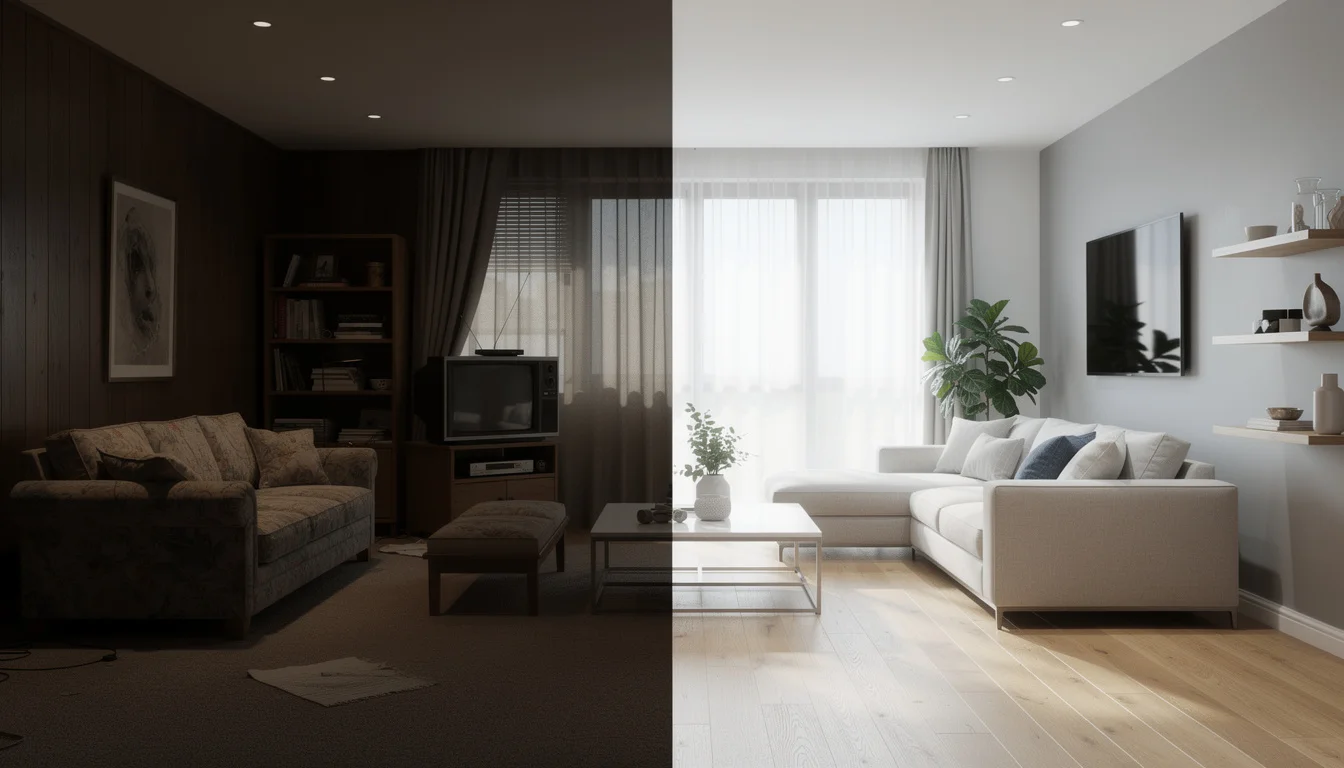
Why Before & After Transformations Matter
Before-and-after images are the most powerful tool in design communication. They bypass the imagination gap — the frustrating distance between what a designer describes and what a homeowner actually envisions. When you see your own living room transformed from a dated 1990s space into a sleek modern retreat, the emotional response is immediate and visceral. It goes from "maybe someday" to "let's do this."
This power is well-documented. Pinterest reports that before-and-after content receives 3x more engagement than standard design inspiration posts. On Instagram, interior design accounts that feature transformations grow followers 2.5x faster than those posting only finished rooms. The human brain is wired to respond to contrast — seeing the journey from "before" to "after" triggers a satisfaction response that a beautiful room alone cannot achieve.
For homeowners, before-and-after visualizations serve a deeply practical purpose: they build confidence. Renovating a room is expensive, disruptive, and stressful. Most homeowners hesitate because they can't be certain the end result will justify the cost and chaos. AI-generated before-and-after images eliminate this uncertainty by showing you the exact outcome before you commit a dollar, sign a contract, or swing a hammer.
For real estate professionals, before-and-after images help buyers see past a property's current condition to its potential. A dated kitchen that would cause most buyers to walk away becomes an exciting opportunity when they can see it transformed into a modern showpiece. This expands the buyer pool and reduces time on market for properties that need cosmetic updates.
How AI Room Transformations Work
Every transformation in this guide was created using Deqor's AI design agent. The process is remarkably simple: upload a photo, choose a style or describe your vision, and receive a photorealistic transformation in under 30 seconds. But the technology behind that simplicity is sophisticated.
Deqor's AI analyzes the uploaded photo using computer vision to identify every element in the room: walls, floor, ceiling, windows, doors, furniture, lighting fixtures, and architectural features. It creates a semantic map that understands what each pixel represents. Then, based on the requested style, it generates a new image that replaces surfaces, furniture, and decor while maintaining the room's actual proportions, lighting conditions, and spatial geometry.
What makes this different from simple photo filters is the AI's understanding of interior design principles. It doesn't just change colors — it composes a coherent design. When you select "Modern Minimalist," the AI coordinates furniture scale with room proportions, ensures the color palette is harmonious, positions lighting logically, and creates a composition that an actual interior designer would approve. This design intelligence is what separates photorealistic AI transformations from the gimmicky filter apps of a few years ago.
Upload Any Room Photo
Any smartphone photo works. The AI handles varying angles, lighting conditions, and room sizes. Landscape orientation with good natural light produces the most dramatic results.
Choose Your Transformation
Select from 24 curated design styles, or describe your vision in natural language: "Convert to a warm Scandinavian style with oak furniture, white walls, and wool textiles."
Receive Your Before & After
In 30 seconds, the AI delivers a photorealistic transformation. Compare it side-by-side with the original. Generate multiple versions to explore different directions.
Living Room Makeovers
The living room is where most homeowners start their design journey — and where AI transformations produce the most dramatic results. As the largest and most visible room in most homes, even subtle changes to the living room have an outsized visual and emotional impact.
1. 1980s Colonial to Modern Farmhouse
Before
Brass chandelier, floral sofa, dark wood paneling, wall-to-wall carpet
After
White shiplap accent wall, linen sectional, wide-plank oak floors, iron chandelier, neutral layered textiles
Impact: The room went from dark and dated to bright, warm, and magazine-worthy. The architectural bones were identical — only finishes and furnishings changed.
2. Builder-Grade Beige to Warm Contemporary
Before
Beige walls, beige carpet, basic builder sofa, no personality
After
Warm white walls, walnut media console, camel leather sofa, abstract art, woven rug, brass accents
Impact: Zero structural changes. The transformation proved that color, texture, and quality furnishings can turn a generic space into a designer showcase.
3. Cluttered Traditional to Scandinavian Minimal
Before
Heavy drapes, dark furniture, multiple patterns competing, crowded floor plan
After
Sheer linen curtains, light oak furniture, single statement rug, clean sight lines, breathing room throughout
Impact: The room felt 50% larger despite zero spatial changes. Minimalism isn't about having less — it's about having better.
4. Dark Den to Bright Japandi Retreat
Before
Dark brown leather furniture, heavy blinds, dark carpet, minimal natural light
After
Low-profile platform seating, light linen fabrics, paper shoji screens, natural wood tones, plants throughout
Impact: By lightening every surface and lowering the furniture height, the ceiling felt higher and the room felt twice as spacious. The Japandi style brought calm without coldness.
5. Vacant Apartment to Styled Showpiece
Before
Completely empty room, white walls, generic apartment finishes
After
Fully staged with mid-century modern furniture, gallery wall, area rug, pendant lighting, and styled shelving
Impact: This transformation demonstrates AI virtual staging at its best — turning an empty space into a lifestyle-selling photograph in seconds.
Bedroom Transformations
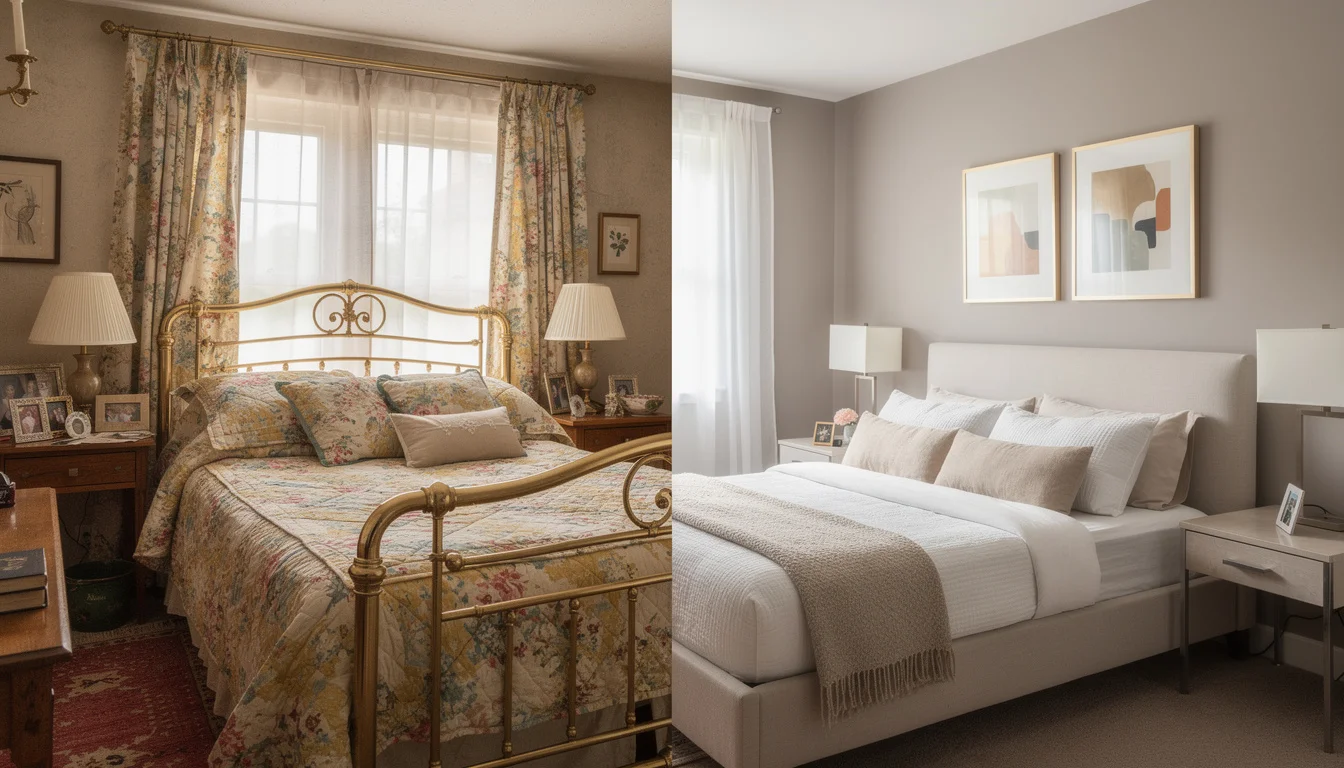
The bedroom is a deeply personal space, and its design directly impacts sleep quality and daily well-being. These transformations show how AI can reimagine bedrooms from restless to restful — creating environments that promote the calm and comfort that every bedroom should deliver.
6. Cramped Guest Room to Boutique Hotel Suite
Before
Mismatched furniture, busy bedspread, no headboard, overhead fluorescent light
After
Upholstered headboard, matching nightstands with sconces, layered neutral bedding, blackout curtains, warm ambient lighting
Impact: The room went from "spare bedroom" to "somewhere you'd actually want to sleep." Every element was coordinated, creating a cohesive hospitality-level experience.
7. Teen Room to Minimalist Adult Bedroom
Before
Posters, gaming setup, bright colors, cluttered desk, twin bed
After
Queen platform bed in black walnut, white linen bedding, single piece of artwork, integrated reading light, clean desk area
Impact: A complete identity shift. The AI understood the prompt "mature minimalist" and delivered a room that felt grown-up without being boring.
8. Dark Master to Airy Coastal Retreat
Before
Dark cherry furniture, heavy maroon drapes, dark carpet, brass fixtures
After
White bed frame, light blue accents, sheer curtains, light wood floors, woven textures, coastal artwork
Impact: The color palette change alone transformed the room's energy from heavy and enclosed to open and refreshing. Same windows, same room size — completely different atmosphere.
9. 1990s Suburban to Modern Luxury
Before
Matching golden oak furniture set, floral wallpaper border, ceiling fan, pink carpet
After
Upholstered platform bed, marble-topped nightstands, statement pendant, grasscloth wallpaper, wide-plank oak flooring
Impact: Every single surface and piece of furniture was reimagined. The AI maintained the room's proportions perfectly while delivering a full luxury renovation visualization.
10. Empty Bedroom to Styled Staging
Before
Empty room, beige carpet, white walls, basic window
After
King bed with layered bedding, nightstands, table lamps, area rug, artwork, curtains, and styled accessories
Impact: Perfect virtual staging example. The empty room gained warmth, scale reference, and lifestyle appeal — everything a buyer needs to envision living there.
Kitchen Makeovers
Kitchens are the most transformative room for AI makeovers because they involve so many interconnected surfaces — cabinets, countertops, backsplash, flooring, appliances, and lighting all interact in a compact space. Changing even two elements can completely alter the kitchen's character. For detailed kitchen renovation guidance, see our AI kitchen remodel guide.
11. Honey Oak 90s Kitchen to White Contemporary
Before: Golden oak cabinets, beige laminate counters, terracotta tile floor, fluorescent box light
After: White shaker cabinets, quartz counters, marble subway backsplash, pendant lights, engineered wood floor
The kitchen went from the #1 thing buyers dislike in older homes to the #1 thing that sells homes. Same layout, completely different impression.
12. Galley Kitchen to Modern Open Feel
Before: Dark cabinets, small tile backsplash, limited counter space, dated laminate
After: Light gray cabinets, full-height quartz backsplash, under-cabinet lighting, brushed gold hardware
Without changing the galley layout, the AI brightened every surface and added strategic lighting. The kitchen felt twice as spacious while remaining fully functional.
13. All-White Kitchen to Warm Two-Tone
Before: White everything — cabinets, counters, backsplash, walls. Clean but cold
After: White uppers with walnut lower cabinets, warm brass hardware, zellige tile backsplash, statement pendant over island
This transformation adds personality and warmth without sacrificing the brightness of an all-white kitchen. The two-tone approach gives the space visual grounding.
14. Vintage Farmhouse to Industrial Modern
Before: Country floral wallpaper, wood cabinets, butcher block island, pendant lanterns
After: Exposed brick wall, flat-panel dark green cabinets, concrete countertops, steel shelving, Edison pendants
A dramatic style pivot. The AI maintained the room's charming proportions while completely shifting the aesthetic from country cottage to urban loft kitchen.
15. Builder-Grade to Designer Kitchen
Before: Generic flat white cabinets, basic laminate counters, standard tile backsplash
After: Shaker cabinets to ceiling, waterfall quartz island, herringbone backsplash, integrated appliances, recessed lighting
The builder-grade kitchen received a $40K-look renovation visualization. The AI demonstrated that design-forward choices within the existing layout could rival a gut renovation.
Bathroom Transformations
Bathrooms pack maximum design impact into minimum square footage. A small bathroom with the right tile, vanity, and lighting can feel like a luxury spa. These transformations demonstrate how AI visualizations help homeowners make confident bathroom design decisions — where every choice is amplified by the compact space.
16. Pink Tile 1960s to Modern Spa
Before: Pink ceramic tile, pink tub, pink vanity, fluorescent vanity light
After: Large-format gray porcelain, floating walnut vanity, curbless shower, backlit mirror, rain showerhead
The most dramatic transformation in this collection. Every surface was reimagined, turning a time-capsule bathroom into a contemporary spa retreat.
17. Basic Builder Bath to Hotel-Inspired
Before: Fiberglass shower insert, cultured marble vanity top, builder mirror, chrome fixtures
After: Tiled shower with glass panel, quartz counter, framed mirror with sconces, matte black fixtures, patterned floor tile
Mid-range updates that collectively create a boutique hotel experience. The AI coordinated all finishes for a cohesive, elevated result.
18. Small Powder Room to Statement Space
Before: White pedestal sink, basic oval mirror, plain white walls
After: Floating vanity, bold patterned wallpaper, oversized round mirror, sculptural sconce, statement tile floor
Powder rooms are the best place to take design risks. The AI embraced bold choices that would overwhelm a large room but make a small powder room unforgettable.
Exterior Transformations
Exterior transformations are where AI design produces the most emotionally impactful results. Changing a home's facade, landscaping, and curb appeal in a single visualization can literally change how you feel about your home — and add significant value. For a deep dive into exterior design, read our AI exterior design guide.
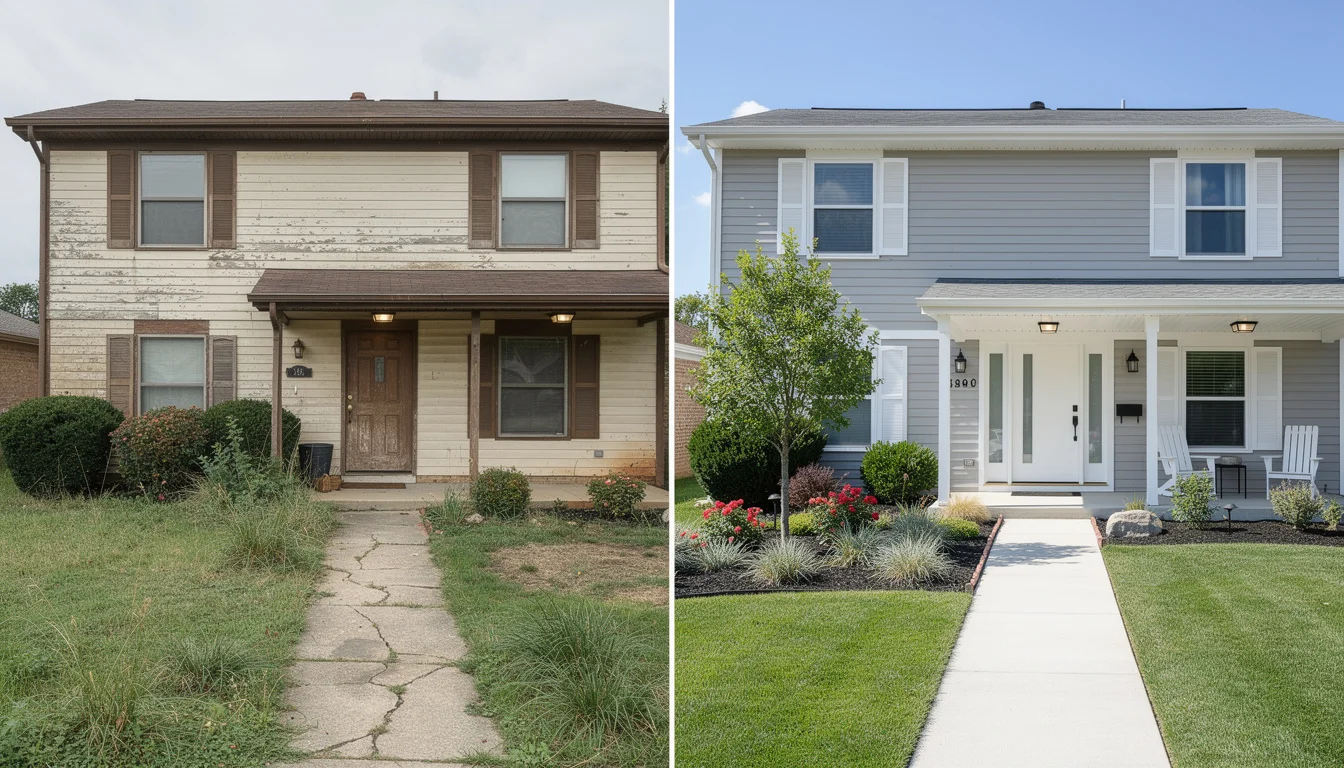
19. Vinyl Ranch to Modern Farmhouse
Before: Faded vinyl siding, basic landscaping, concrete walkway, dated front door
After: Board-and-batten siding, metal roof accents, stone path, landscaped garden beds, statement front door
The home's perceived value increased dramatically. Same structure, same footprint — completely different street presence and emotional impact.
20. Overgrown Colonial to Polished Estate
Before: Overgrown shrubs, cracked walkway, faded paint, cluttered yard
After: Manicured landscaping, restored facade paint, new stone walkway, outdoor lighting, clean hardscaping
This transformation required no structural changes — just maintenance, paint, and landscaping. The most budget-friendly exterior makeover type.
21. 1970s Split-Level to Contemporary
Before: Dated brown brick, aluminum windows, basic concrete steps, sparse landscaping
After: Painted brick (white), black window frames, modern front entry, architectural landscaping, path lighting
Painting brick is controversial but transformative. The AI showed how a color change plus updated landscaping could make a 50-year-old home look 5 years old.
Style-to-Style Transformations
Some of the most fascinating AI transformations involve converting a room from one distinct design style to another. These demonstrate the AI's understanding of design language — how each style has its own vocabulary of materials, colors, proportions, and finishing details.
22. Traditional English to Japanese Minimalist
A formal living room with wingback chairs, dark wood, heavy drapes, and ornate molding was transformed into a Japanese-inspired space with low platform seating, shoji screens, a single ikebana arrangement, and warm wood tones. The AI removed visual weight while adding intentional warmth through natural materials.
23. Industrial Loft to Art Deco Glamour
Exposed brick, concrete floors, and metal shelving gave way to velvet furnishings, geometric patterns, lacquered surfaces, brass accents, and statement lighting. The transformation shows how the same architectural shell can support completely opposite design languages.
24. Mediterranean Villa to Scandinavian Clean
Terracotta tile, wrought iron, arched doorways, and warm earth tones were reimagined with white oak floors, minimal furniture, clean lines, and a cool neutral palette. The arched doorways were retained, creating a beautiful fusion of Mediterranean architecture with Nordic simplicity.
Style transformations are where AI truly shines because exploring a completely different aesthetic is virtually impossible to do mentally. You might love the idea of Japandi but have no idea how it would feel in your specific home with its specific architecture. AI removes the guesswork entirely. Explore all available styles in the Deqor style library.
Budget-Friendly Makeovers Under $5,000
Not every transformation requires a full renovation budget. Some of the most dramatic makeovers in our collection were achievable for under $5,000 — proving that smart design choices outweigh expensive materials. AI visualization helps you identify which budget-friendly changes deliver maximum impact for your specific space.
25. Paint & Textiles Living Room Refresh ($800–$1,500)
The walls went from builder beige to warm white. New throw pillows, a textured area rug, and linen curtains replaced dated accessories. A gallery wall of simple frames added personality. Total transformation for the cost of a weekend project.
26. Kitchen Cabinet Paint & Hardware Swap ($2,000–$4,000)
Dated oak cabinets were painted warm white, old brass knobs were replaced with matte black pulls, and under-cabinet LED lights were added. No new cabinets, no new counters — yet the kitchen looked completely renewed.
27. Bedroom Lighting & Bedding Upgrade ($500–$1,500)
A ceiling fan with a light kit was replaced by a pendant fixture. Matching bedside sconces replaced table lamps. New white hotel-quality bedding replaced a dated comforter. The room went from "college apartment" to "boutique hotel."
Commercial Space Transformations
AI design isn't limited to residential spaces. Businesses, hospitality operators, and commercial real estate professionals are using the same tools to visualize office redesigns, restaurant concepts, retail spaces, and hotel renovations. The ability to present stakeholders with photorealistic concepts in seconds rather than weeks of 3D modeling has accelerated commercial design decision-making dramatically.
28. Cubicle Office to Open-Plan Creative Studio
A traditional office with rows of cubicles was transformed into an open-plan space with collaborative zones, lounge seating, standing desks, a greenery wall, and warm overhead lighting. The AI demonstrated how the same square footage could feel completely different with modern workplace design principles.
29. Empty Retail Shell to Boutique Concept
An empty commercial space was virtually staged as a boutique clothing store with fixtures, lighting, product displays, and branding elements. The concept helped the tenant secure a lease by presenting the landlord with a clear vision for the space.
30. Dated Hotel Lobby to Contemporary Welcome
A hotel lobby with 1990s carpet, heavy wood furniture, and brass fixtures was reimagined with a modern reception area, statement lighting, comfortable seating pods, and a curated art wall. The transformation helped the hotel chain visualize their planned renovation across 200+ properties.
How to Create Your Own AI Makeover
Ready to create your own before-and-after transformation? Here's how to get the most dramatic results:
Take a Great "Before" Photo
Landscape orientation, natural daylight, wide angle showing the full room. Stand in the doorway or corner. The better the photo, the more dramatic the transformation.
Upload to Deqor Studio
Visit the studio, upload via Smart Upload. The AI agent detects the room type, current style, and all elements automatically.
Go Bold with Your Style Choice
For the most dramatic before-and-after, choose a style that contrasts with your current room. Traditional → Modern, Dark → Light, Cluttered → Minimal.
Generate Multiple Versions
Create 3–5 transformations in different styles. Compare them all against the original. You might discover a style you never considered.
Download & Share
Export your favorite before-and-after pairs. Share on social media, with your contractor, or with family for input.
Frequently Asked Questions
How realistic are AI room makeovers?
Modern AI produces photorealistic transformations that are virtually indistinguishable from professional interior photography. The AI maintains accurate room proportions, realistic lighting and shadows, and material textures. Results are suitable for design planning, contractor briefs, and real estate marketing.
How long does an AI room transformation take?
With Deqor, each transformation generates in approximately 30 seconds. You can create multiple variations of the same room in minutes, comparing different styles and finishes side by side. Traditional interior design renderings take 1–3 weeks for comparable results.
Can I use AI makeover images for real estate listings?
Yes. AI-generated images are widely used in real estate for virtual staging and renovation visualization. Be sure to include proper disclosure that images are "virtually staged" or "AI-generated visualization" per your MLS rules and local regulations.
What types of rooms can AI transform?
AI works with any room type: living rooms, bedrooms, kitchens, bathrooms, dining rooms, home offices, exteriors, and even commercial spaces. The technology handles both empty rooms (virtual staging) and furnished rooms (redesign/restyling).
How much does an AI room makeover cost?
With Deqor, each AI transformation costs approximately $1–2, depending on your plan. You get 3 free transformations to start. Compare this to $500–$5,000 for a traditional interior design rendering or $2,000–$5,000 for physical staging.
Can I specify exactly what changes I want?
Yes. You can select a complete design style for a full transformation, or use natural language chat to specify individual changes: "Keep the layout but change to white oak cabinets, add marble countertops, and install pendant lights." The AI interprets specific and general instructions.
Will the AI change the room layout?
The AI can visualize furniture layout changes (rearranging or replacing pieces) but maintains the room's architectural structure — walls, windows, and doors stay where they are. For layout changes in kitchens or bathrooms, describe the change you want and the AI will visualize it while respecting the existing architecture.
Can I share AI makeover images with my contractor?
Absolutely — this is one of the best uses of AI transformations. Contractors report that AI-generated images are excellent visual briefs that reduce miscommunication. Share the before photo alongside your preferred transformation to clearly communicate your renovation vision.
Do I need a professional photo or will a phone photo work?
Standard smartphone photos work excellently. For the best results, use landscape orientation, natural daylight, and capture the full room from a corner or doorway. No special equipment, tripod, or photography skills needed.
How many styles can I try on the same room?
With Deqor, you can try all 24 design styles on the same photo. Each generation takes seconds and costs $1–2. Most users generate 5–10 variations to compare before selecting their favorite direction.
Written by Deqor Editorial
The Deqor editorial team covers AI room transformations, before-and-after design inspiration, and practical renovation guides.
Last updated: February 12, 2026 · Reviewed for accuracy by the Deqor product team