High-Tech Design
Smart systems, integrated technology, and precision engineering merge with sophisticated aesthetics in homes that are as intelligent as they are beautiful.
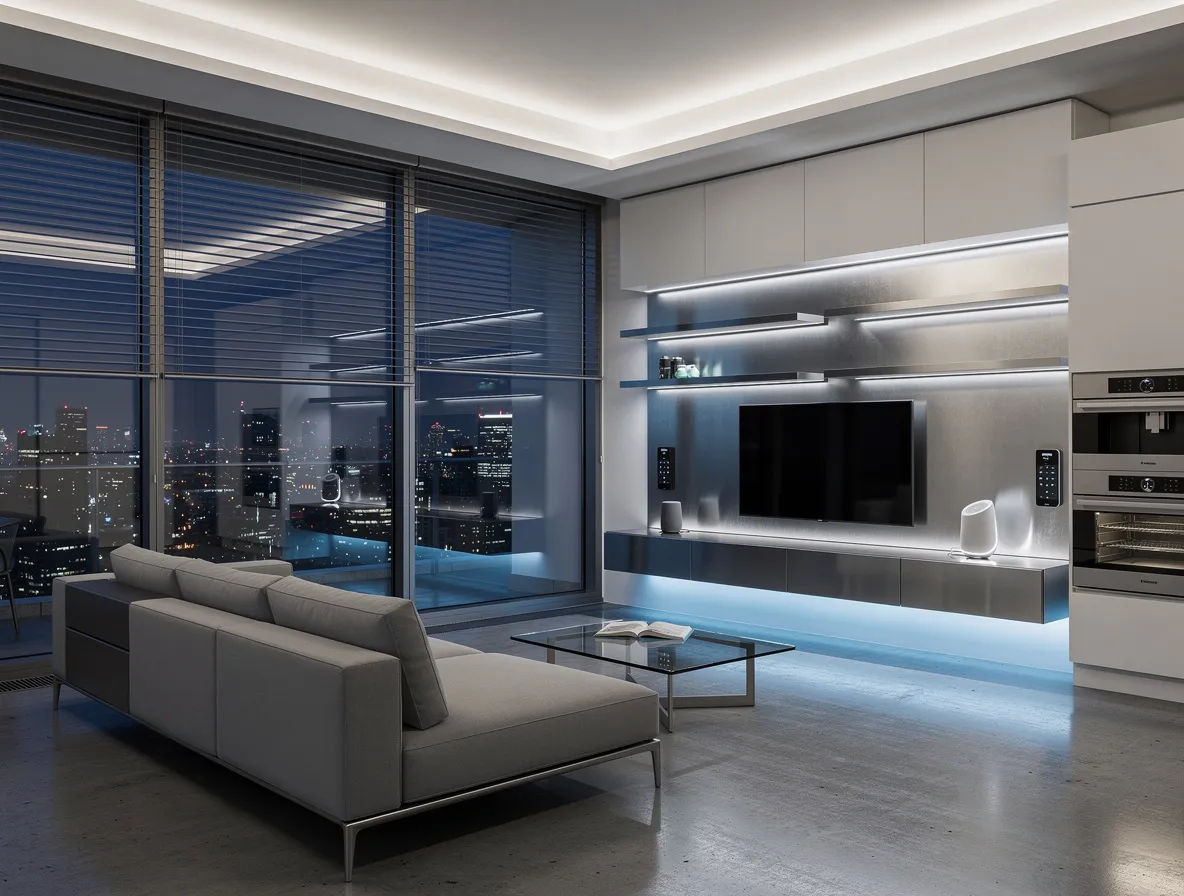
About the Style
What Is High-Tech Design?
High-tech design treats technology not as an afterthought but as the central organizing principle. Motorized blinds, lighting scenes, climate control, and entertainment systems are seamlessly embedded behind flush surfaces. The aesthetic is clean and modern, but the real design work happens in the infrastructure - concealed wiring, control panels disguised as art, and voice or app-controlled environments.
Why People Love It
-
One button or voice command controls lighting, temperature, blinds, and music
-
Technology is invisible - the space looks pristine while functioning brilliantly
-
Energy efficiency from automated climate and lighting control saves costs
-
Future-ready infrastructure adapts easily as technology continues to evolve
Key Characteristics
-
Fully integrated smart home automation
-
Motorized blinds and programmable lighting scenes
-
Flush-mounted technology control panels
-
Concealed speaker and AV systems
-
Climate control integrated into architecture
-
Charging points and connectivity built into furniture
Color Palette
Materials
Ideal For
Room-by-Room
High-Tech Design in Every Room
How high-tech design translates across every space in your home
Living Room
Concealed projector screen, automated blackout shades, surround sound behind acoustic panels, and a single touch keypad controlling the entire room experience.
Kitchen
Under-cabinet LED strips on programmable scenes, integrated speakers, a smart refrigerator, and a charging drawer built into the island keep the kitchen connected.
Bedroom
Wake-up lighting scene that gradually brightens, motorized blackout blinds, climate zone control, and a single glass panel controlling everything from bed.
Bathroom
Heated floors with programmable timer, chromotherapy lighting in the shower, built-in Bluetooth speakers behind tile, and a smart mirror with weather display.
Exterior
Automated lighting triggered by motion or sunset, smart lock entry, security cameras concealed in architectural features, and automated irrigation systems.
Visualize It First
See High-Tech Design in Your Space
Upload any photo and our AI transforms it into high-tech style in seconds
Upload a photo
Any room, any angle. Interior or exterior - phone photo is fine.
Select "High-Tech"
Choose this style from our library or describe it to the AI in plain language.
Get your design
Photorealistic result in seconds. Download in HD or 4K resolution.
Expert Advice
How to Achieve High-Tech Design
Practical tips from designers who work with high-tech style every day.
Plan all technology infrastructure at the architectural stage - retrofitting smart systems into finished walls is expensive and disruptive.
Choose a single ecosystem (Control4, Crestron, Lutron, or Apple Home) and commit to it - mixing platforms creates integration headaches.
Conceal every cable from day one - trunking through walls, floor boxes in open-plan spaces, and furniture with built-in cable management.
Use motorized Lutron shades rather than standard blinds - they are the single biggest high-tech upgrade with the greatest daily benefit.
Design one clean minimal control panel location per room rather than scattering keypads across walls, which undermines the aesthetic.
Key Designers
The Architects Who Made Technology Beautiful
High-tech design has a small group of founders whose buildings and philosophy directly define how exposed structure and engineering systems became an aesthetic language.
Richard Rogers
Rogers co-designed the Centre Pompidou in Paris (1977) with Renzo Piano, turning the building inside out - structural elements, escalators, and mechanical systems on the exterior, color-coded by function. The building was initially scandalous and is now one of the most visited in the world. Rogers brought the same philosophy to domestic interiors: celebrate the mechanism.
Norman Foster
Foster designed the Hong Kong and Shanghai Bank (1985) with a visible external suspension structure that carries the entire building. His domestic work brought the same rigour to smaller scale - exposed steel connections, visible rooflights, and surfaces chosen for engineering performance rather than decoration. His Nomos desk system for Tecno became a design classic.
Renzo Piano
Piano's post-Pompidou career moved high-tech toward warmth - his Menil Collection museum (Houston, 1987) used an innovative roof structure of 'leaves' to diffuse natural light. He demonstrated that exposed engineering could serve human comfort rather than just announce its own existence, which influenced how high-tech is applied in residential interiors.
Future Systems
Jan Kaplicky and Amanda Levete designed the Selfridges building in Birmingham (2003) - a blob of 15,000 aluminium discs on a curved frame - and brought high-tech into the fashion and retail world. Their residential projects brought organic curved forms to high-tech interiors, bridging the gap between pure engineering and biomorphic design.
Style Pairings
Styles That Complement High-Tech
Mix high-tech with these styles for a layered, personal look.
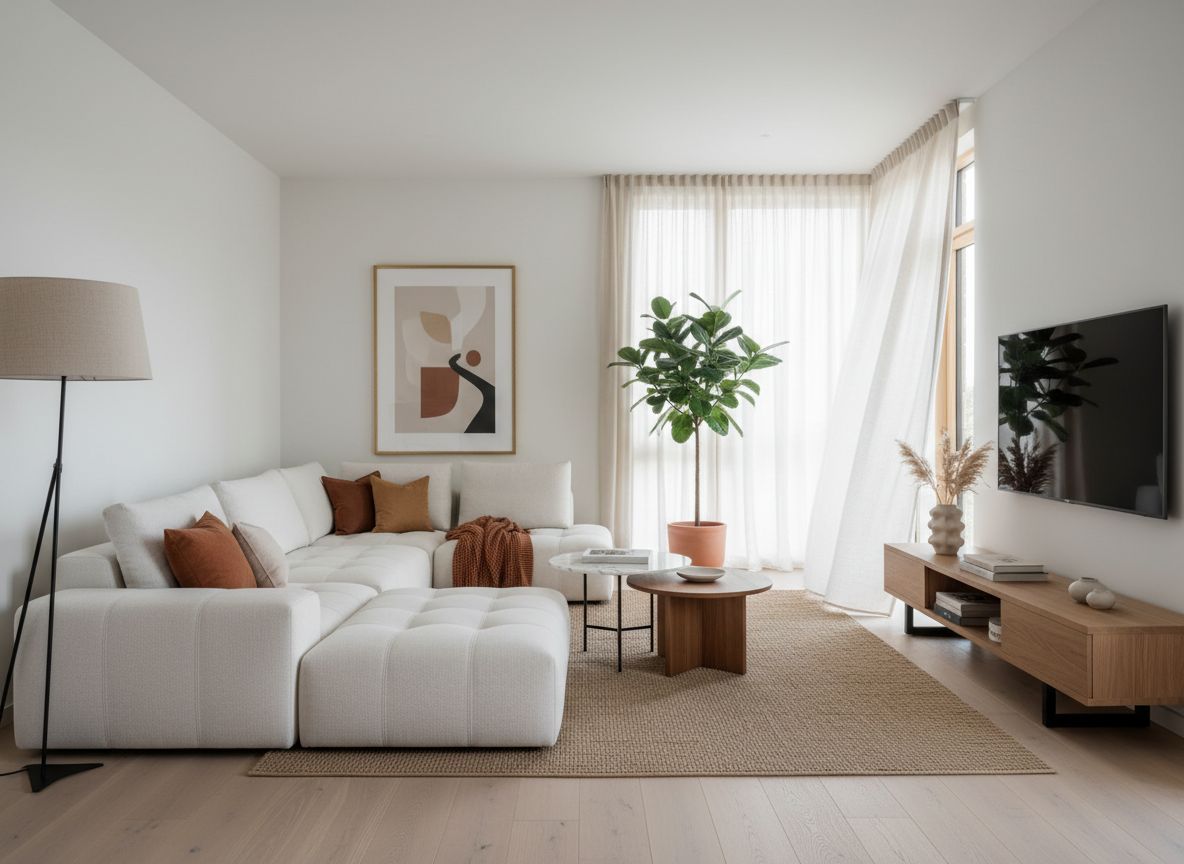
Modern
Clean lines, minimalist aesthetics, and cutting-edge functionality. Flat-panel surfaces, integrated elements, and a neutral palette with bold accents.
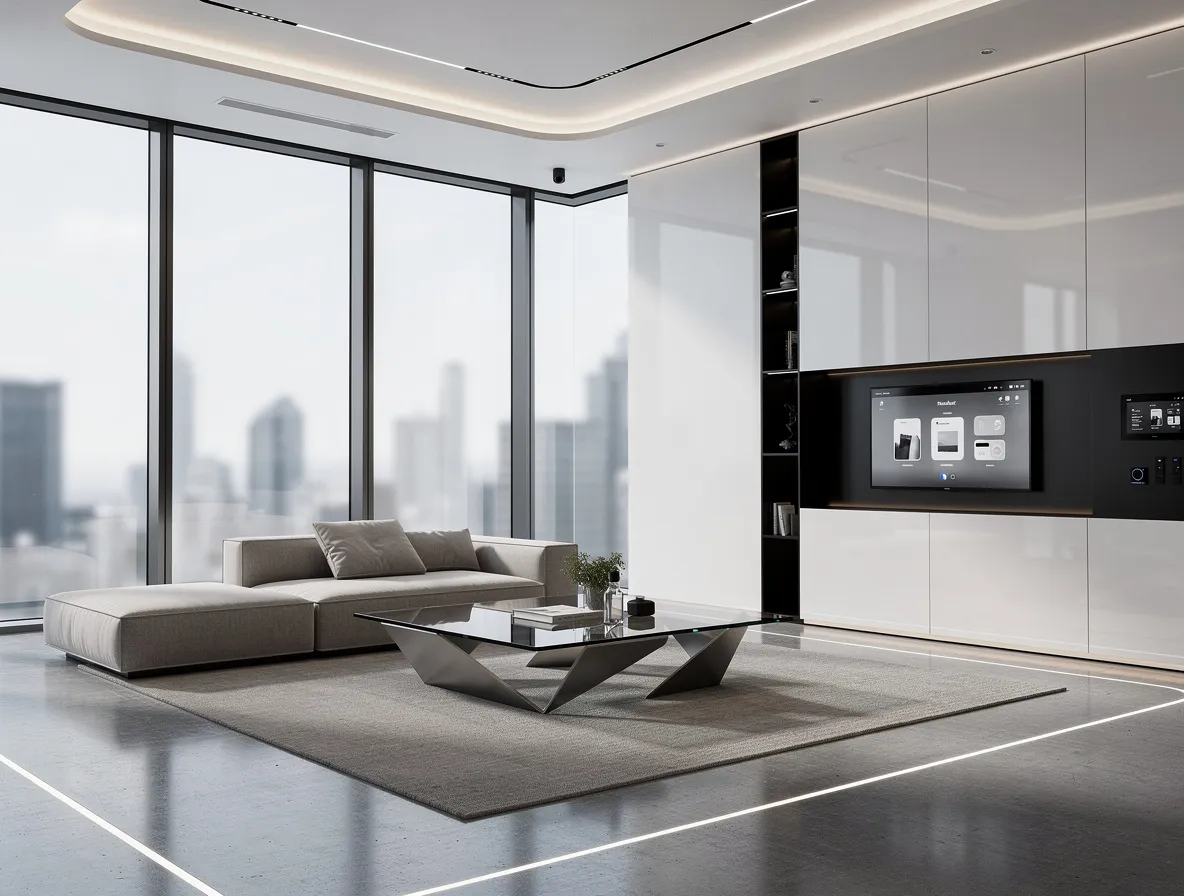
Ultra-Modern
Cutting-edge design with geometric forms, sleek surfaces, and smart home technology for spaces that feel like the future.
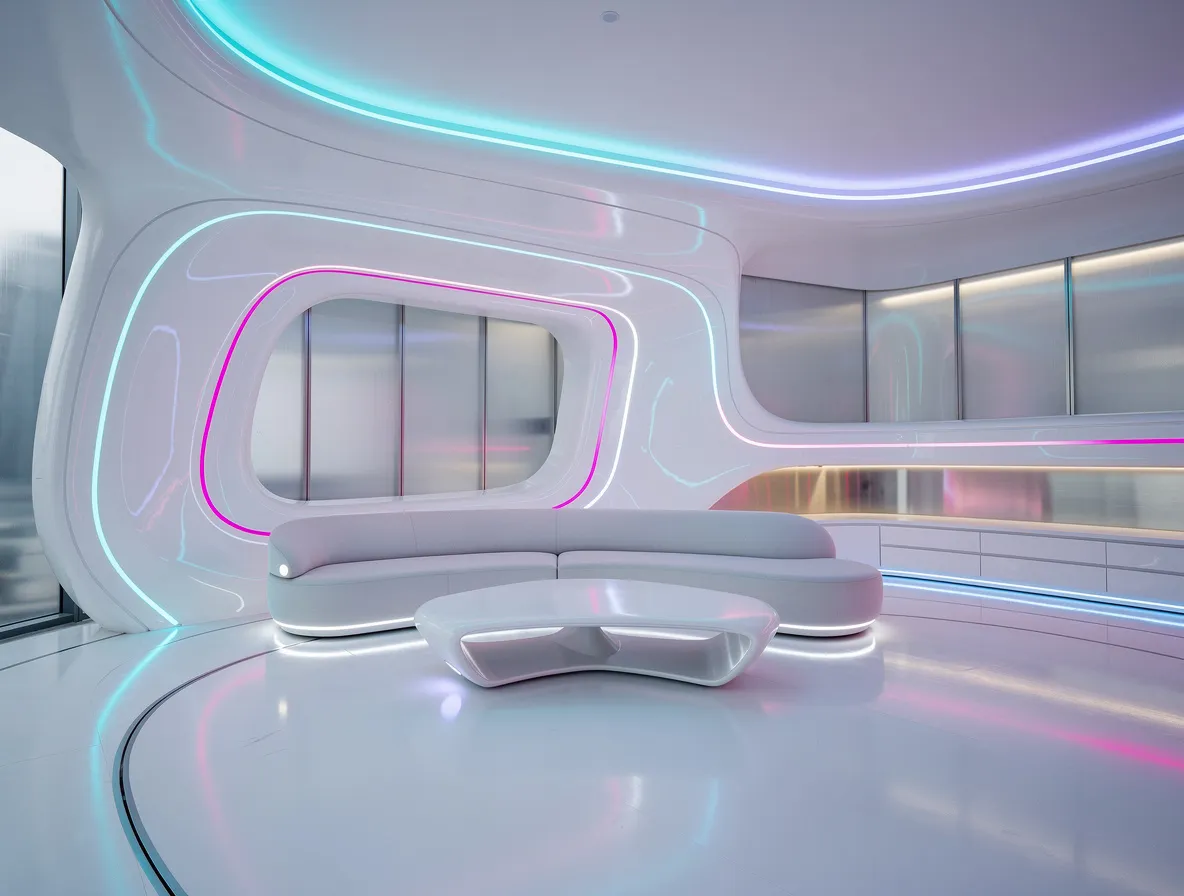
Futuristic
Curved organic forms, innovative materials, and holographic-like lighting effects for spaces that defy convention.
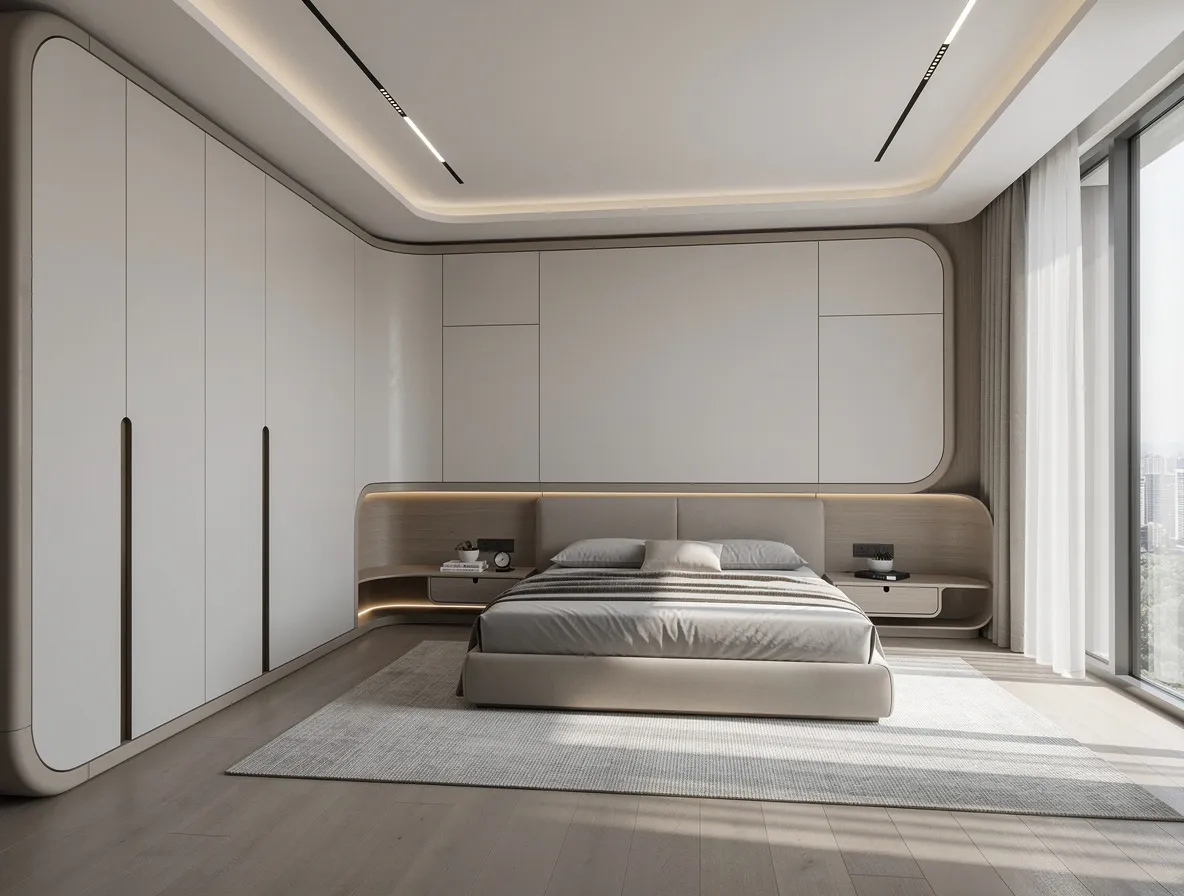
Streamlined
Flowing lines, built-in furniture, and hidden storage create a calm, uninterrupted visual flow throughout the space.
Common Questions
High-Tech Design: FAQ
Can I apply high-tech design in a residential home?
Yes, though it requires commitment. Exposed structural steel, retractable partitions, smart home systems, and industrial-grade materials are all achievable at residential scale with the right contractor and budget.
What does high-tech design look like in a living room?
Exposed ceiling structure with integrated technical lighting, cantilevered shelving on steel brackets, polished concrete floors, and furniture with visible engineered connections. The room should look like someone thought carefully about every mechanical detail.
What is the difference between high-tech and futuristic design?
High-tech celebrates real engineering and existing technology - it is grounded in what is buildable now. Futuristic imagines what technology might look like, often with fantasy elements that cannot be built with current techniques.
Ready to Transform Your Space?
Upload a photo and see it in high-tech style - or any of our 80+ other styles - in seconds.