Hybrid Design
Deliberately combining two or more distinct styles into a single coherent vision - hybrid design creates genuinely original interiors that cannot be categorized.
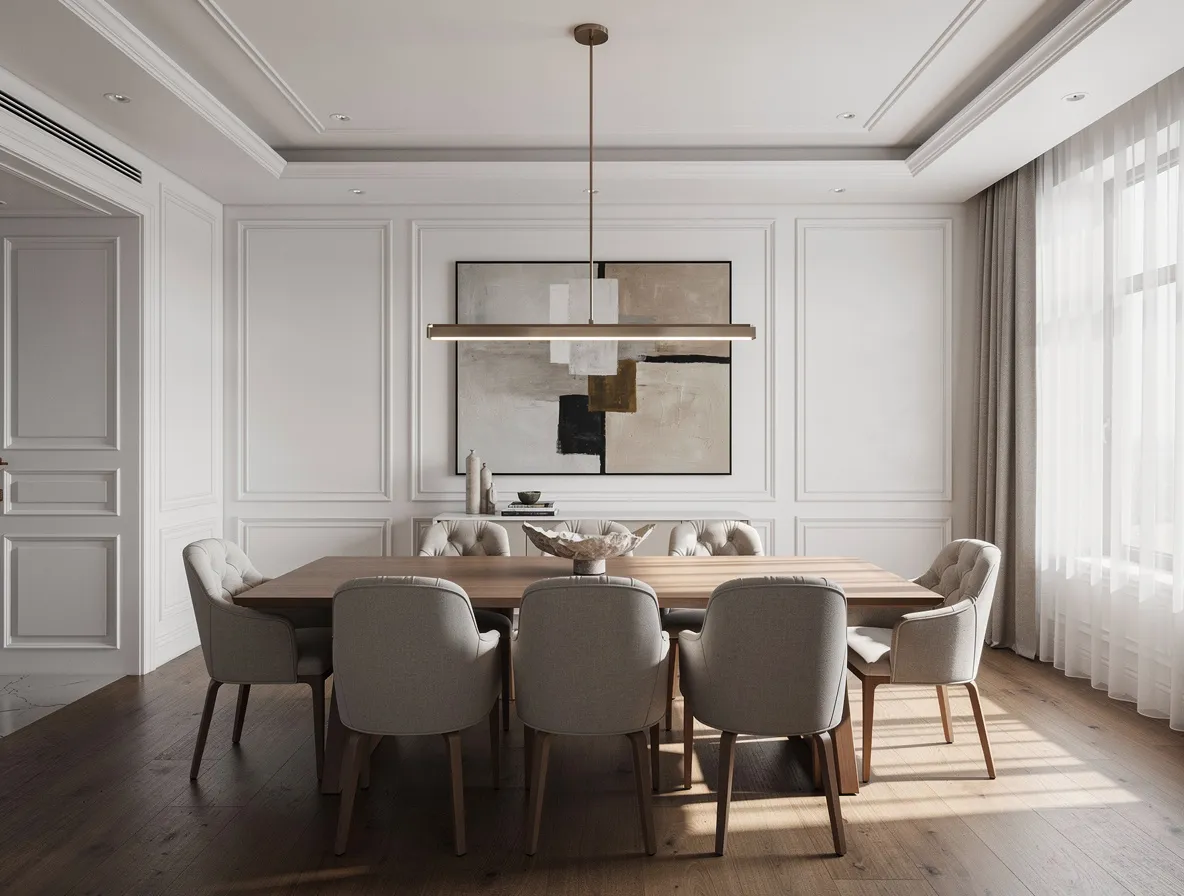
About the Style
What Is Hybrid Design?
Hybrid interior design is the intentional fusion of two or more distinct design traditions into a new, coherent aesthetic. Japandi (Japanese and Scandinavian), Industrial Bohemian, Modern Mediterranean, and Rustic Contemporary are all hybrid approaches that have developed their own identities. The key word is intentional: hybrid design requires understanding both source traditions well enough to synthesize them rather than simply mixing at random.
Why People Love It
-
Creates genuinely original interiors that cannot be copied without the same knowledge and vision
-
Rewards deep knowledge of multiple design traditions
-
The friction between different traditions creates visual energy and interest
-
Most successful hybrid designs become new named styles in their own right
Key Characteristics
-
Two or more design traditions synthesized into one
-
Clear intention and coherence within the mix
-
Unique aesthetic that cannot be assigned to one tradition
-
Materials and forms from each tradition in dialogue
-
A new vocabulary emerging from the combination
-
Personal vision that unites apparently incompatible elements
Color Palette
Materials
Ideal For
Room-by-Room
Hybrid Design in Every Room
How hybrid design translates across every space in your home
Living Room
Depends on the hybrid - a Japandi room has minimal Japanese furniture with Scandinavian pale wood and linen; Industrial Bohemian has exposed brick with kilim rugs.
Kitchen
The hybrid identity expressed in the primary working surface and cabinetry color - Japandi: pale timber with minimal handles; Modern Mediterranean: terracotta tile and warm plaster.
Bedroom
The hybrid philosophy expressed most personally - the place where both traditions feel most at home simultaneously.
Bathroom
Natural materials from both traditions meeting in a single space - stone and timber, European and Eastern, classic and contemporary.
Exterior
The exterior expresses the dominant tradition of the two, with accents of the secondary informing the planting and material selection.
Visualize It First
See Hybrid Design in Your Space
Upload any photo and our AI transforms it into hybrid style in seconds
Upload a photo
Any room, any angle. Interior or exterior - phone photo is fine.
Select "Hybrid"
Choose this style from our library or describe it to the AI in plain language.
Get your design
Photorealistic result in seconds. Download in HD or 4K resolution.
Expert Advice
How to Achieve Hybrid Design
Practical tips from designers who work with hybrid style every day.
Study both source traditions thoroughly before combining them - surface-level knowledge creates confusion, not synthesis.
Identify the binding principle: a shared material (natural stone in Japanese and Mediterranean), a shared philosophy (simplicity in Japandi), or a shared color.
Start with one room as a laboratory - perfect the hybrid in one space before committing to the whole home.
Allow the combination to evolve organically - the most successful hybrids emerge from living with both traditions simultaneously rather than planning the fusion rationally.
Name your hybrid privately - defining "my style is Japandi with Moroccan warmth" gives you a clear curatorial framework for every subsequent decision.
Common Myths
Hybrid vs Eclectic vs Transitional - The Real Differences
Three terms are frequently confused in interior design discussions - hybrid, eclectic, and transitional - but they describe three fundamentally different design approaches.
What Transitional Actually Means
Transitional design is specifically a blend of traditional and contemporary styles - it is a defined category with specific characteristics (traditional furniture forms in contemporary materials and palette). It does not describe any mix of styles; it describes this particular one.
What Eclectic Actually Means
Eclectic design means drawing from multiple different styles without being defined by any single one. It is an approach (draw from many) rather than a style (look like this). An eclectic room might be half Victorian, half Japanese, and half mid-century modern - the diversity is the point.
What Hybrid Actually Means
Hybrid design is the most specific term: it refers to the deliberate, structured blending of exactly two design systems. Japandi (Japanese plus Scandinavian) is a hybrid. Coastal-industrial is a hybrid. The hybrid has rules: both contributing styles are present in roughly equal measure, and the result is consistently different from either parent style.
The Common Mistake
The most common mistake is calling any mixed room 'eclectic' as a euphemism for 'I haven't decided on a style'. Genuine eclecticism requires a strong design intelligence to pull it off - the disparate elements must be unified by something (color, scale, or quality) even if not by style. A room that is mixed by default rather than by decision is simply unfocused, not eclectic.
Style Pairings
Styles That Complement Hybrid
Mix hybrid with these styles for a layered, personal look.
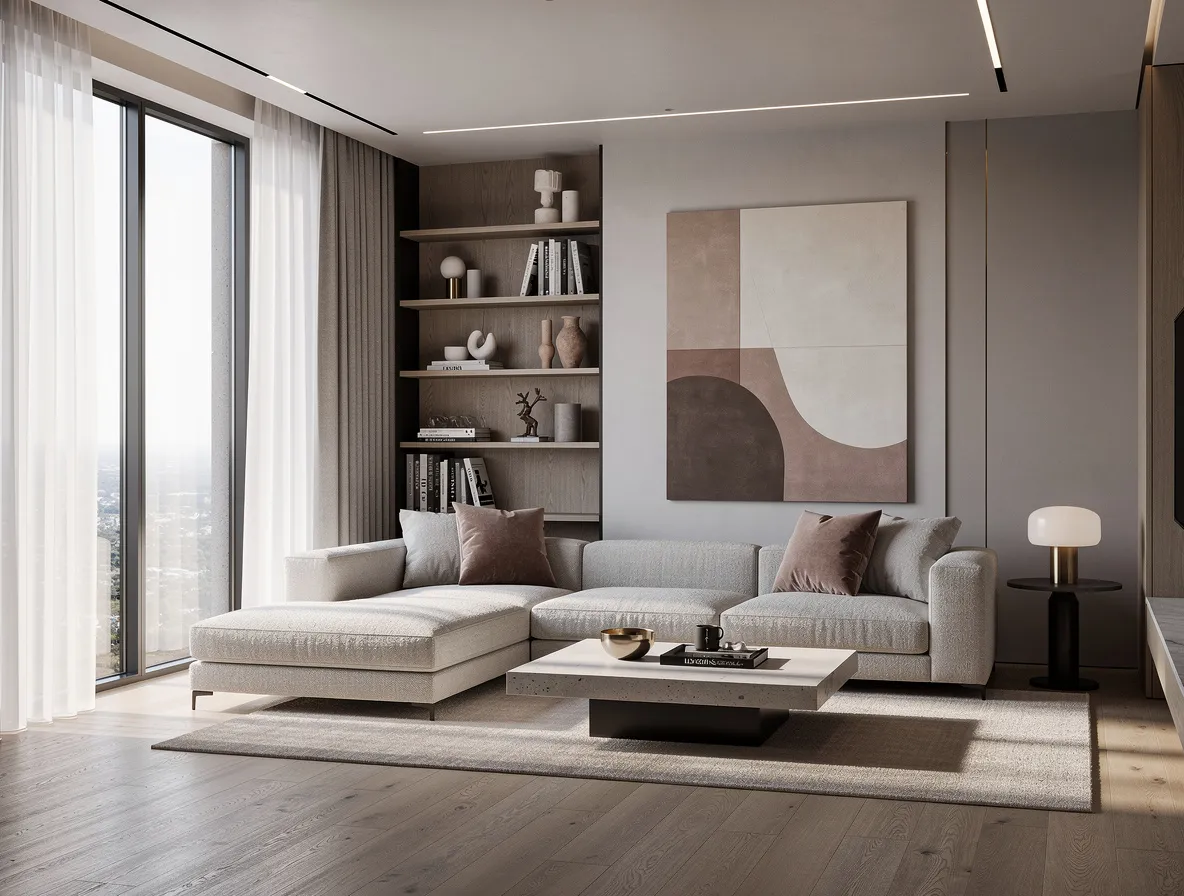
Contemporary
Current and ever-evolving aesthetics that reflect today's design trends. Mixed materials, sophisticated palettes, and forward-thinking layouts.
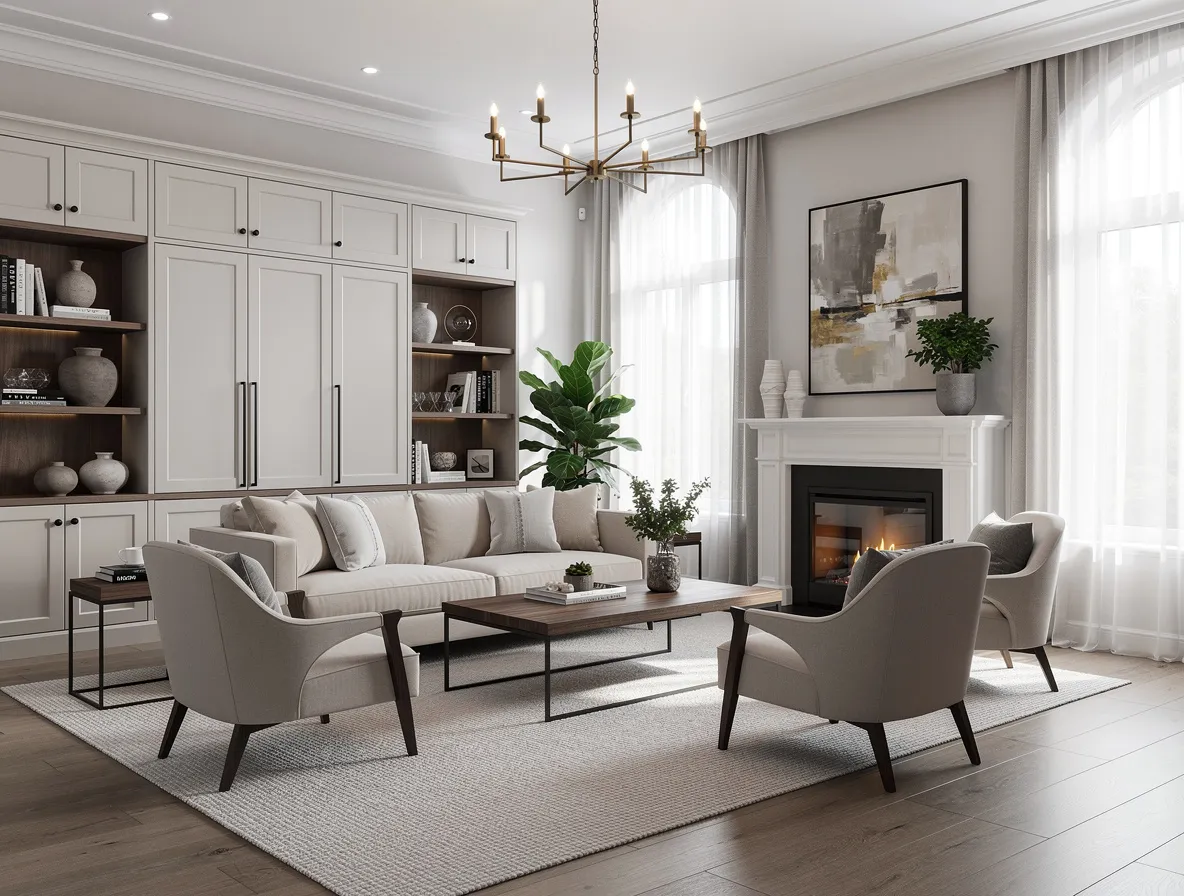
Transitional
The best of both worlds — clean modern lines meet traditional comfort for a balanced, versatile look.
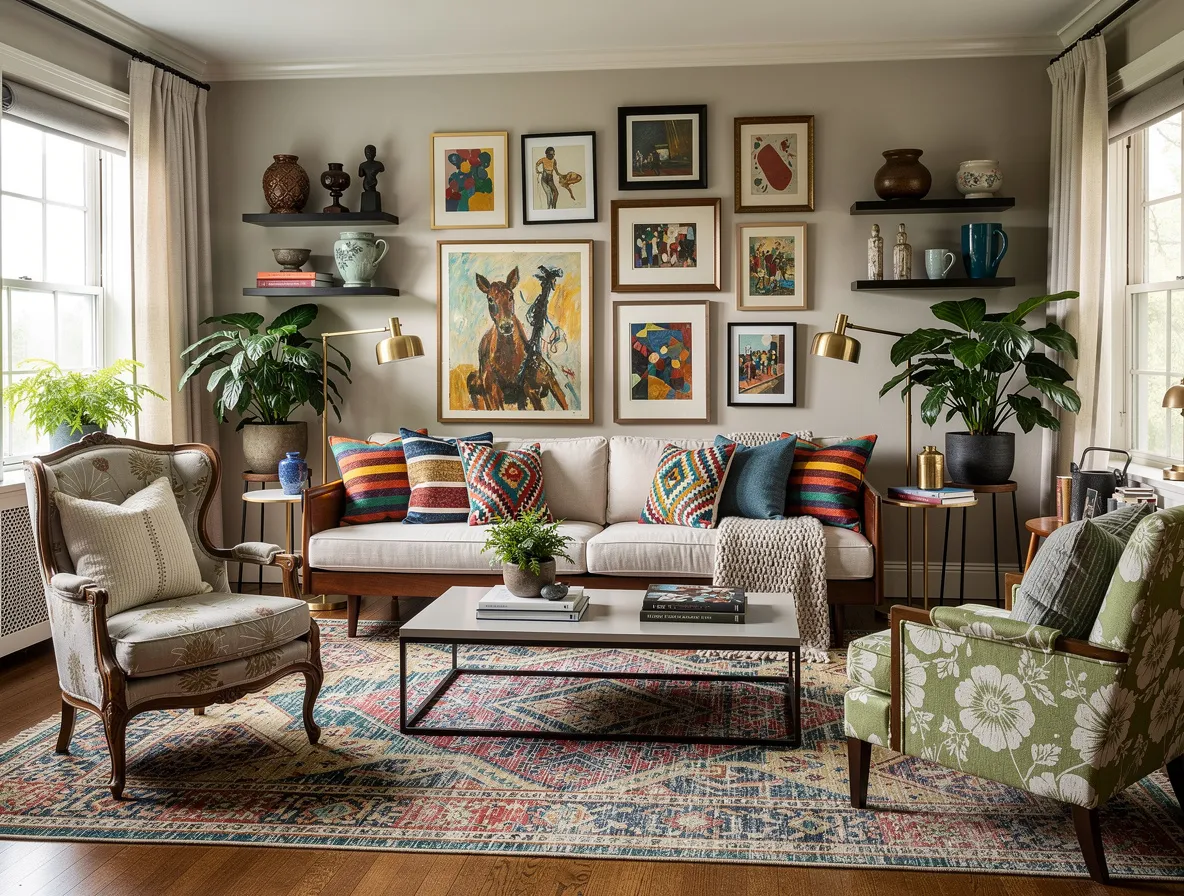
Eclectic
Mixed patterns, collected artwork, and bold colors create a curated, one-of-a-kind space full of personality.
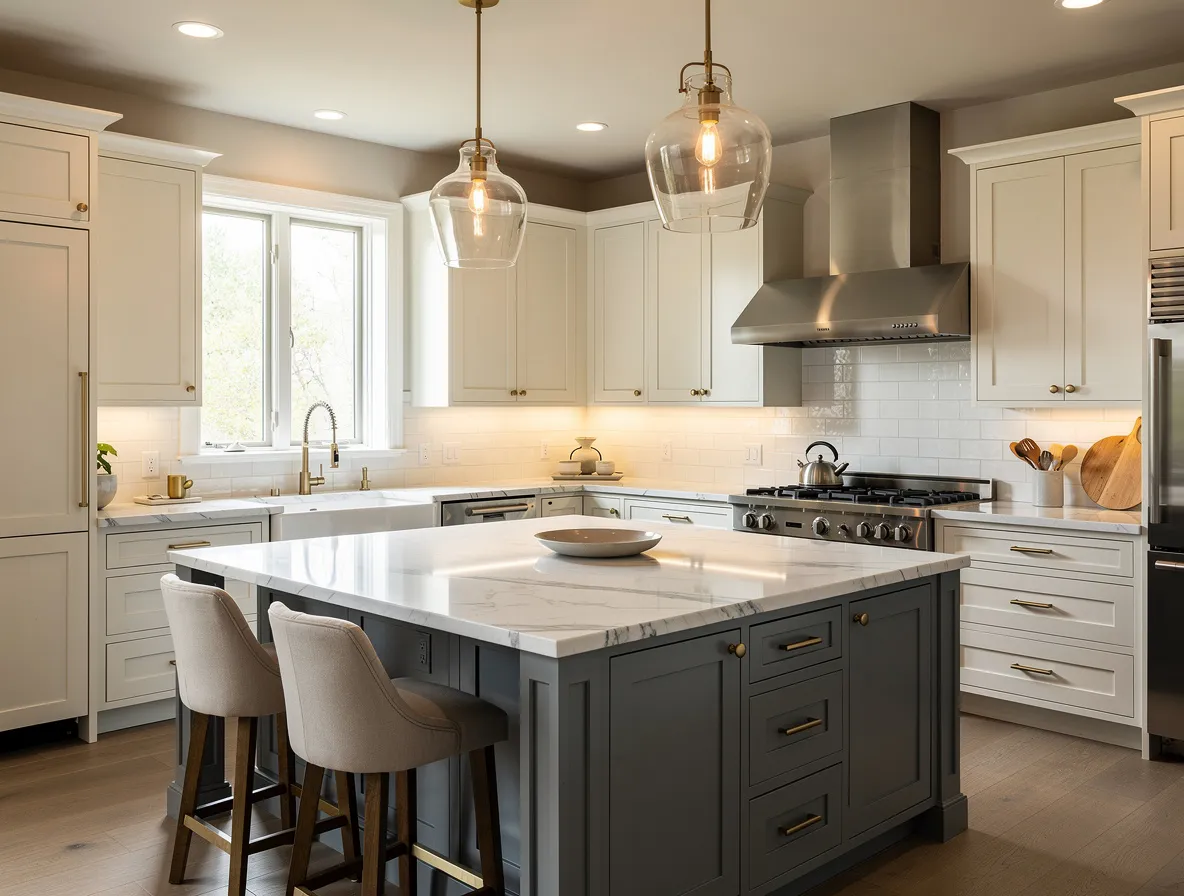
Updated Traditional
Classic cabinetry in modern colors, marble counters, and contemporary lighting breathe new life into tradition.
Common Questions
Hybrid Design: FAQ
What is hybrid interior design?
A deliberate blend of exactly two design systems in roughly equal measure, creating a new aesthetic that is consistently different from either parent. Japandi is the most widely recognised contemporary hybrid style.
How do you create a successful hybrid design?
Choose two design systems with genuine complementary qualities - one that provides structure and one that provides warmth, or one that is formal and one that is casual. Commit equally to both, do not let one overwhelm the other.
What is Japandi design?
A hybrid of Japanese and Scandinavian design - combining Japanese spatial philosophy (ma, negative space, imperfection) with Scandinavian material warmth (pale wood, linen, cozy textiles). The result is minimalist but warm, restrained but inviting.
Is eclectic design the same as a mix-and-match approach?
No. Mix-and-match without a unifying principle is just disorganised. True eclectic design has internal logic - a color story, a consistent quality level, a clear perspective. If you can't articulate the principle that links your choices, the room is unfocused rather than eclectic.
Ready to Transform Your Space?
Upload a photo and see it in hybrid style - or any of our 80+ other styles - in seconds.