Southwest Design
Adobe warmth, Navajo textile patterns, turquoise accents, and the sun-baked earth of the American desert define Southwest style - ancient, rooted, and powerfully beautiful.
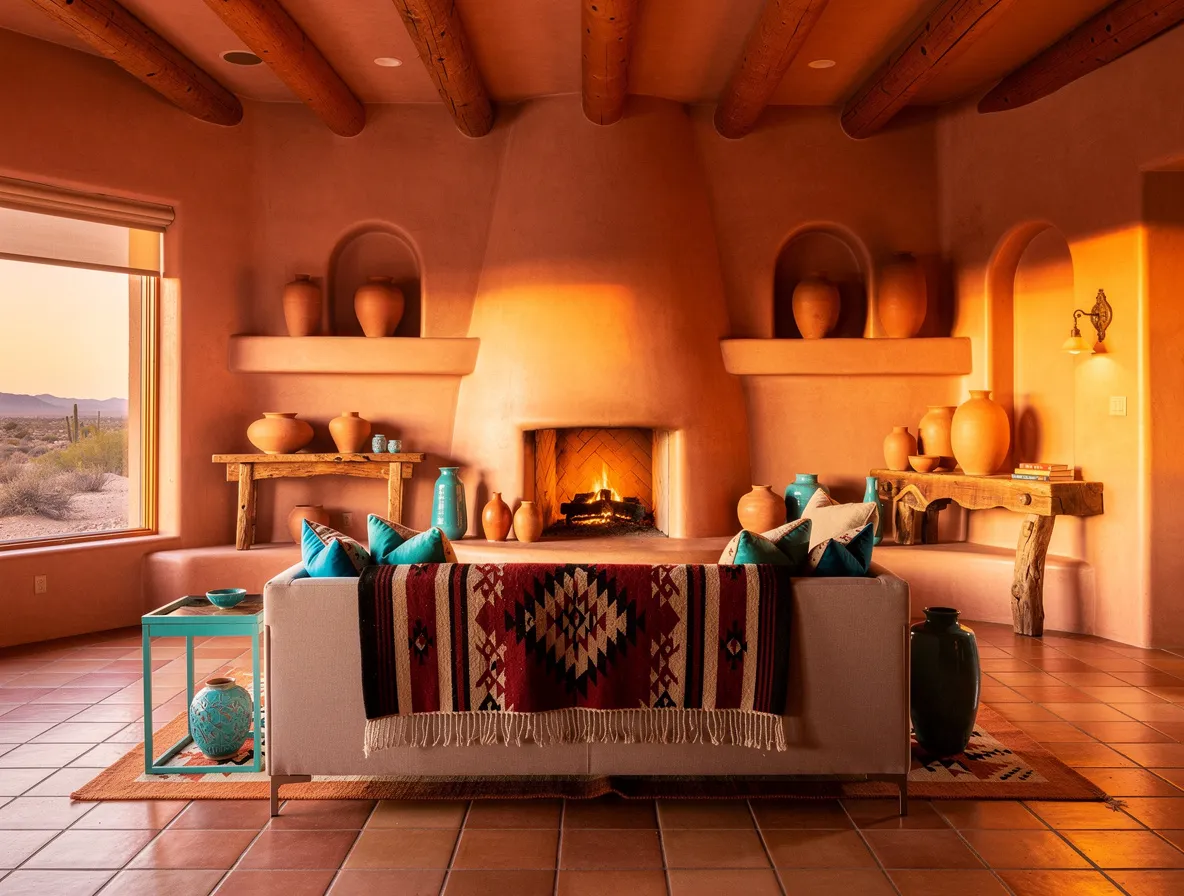
About the Style
What Is Southwest Design?
Southwest design draws from the centuries-old architecture and craft traditions of the American Southwest - Pueblo Native American building, Spanish Colonial mission architecture, and the cowboy and ranching culture of New Mexico, Arizona, and Texas. Adobe construction, Navajo woven textiles, turquoise and silver jewelry-inspired accents, terracotta pottery, and a palette of canyon earth tones define the aesthetic.
Why People Love It
-
The combination of turquoise and terracotta is one of the most powerful color combinations in design history
-
Navajo and Pueblo textiles represent the highest level of Indigenous American craft
-
Adobe architecture naturally regulates temperature - cool in summer, warm in winter
-
The Southwest landscape - canyon, desert, and sky - is among the most dramatically beautiful in the world
Key Characteristics
-
Adobe or stucco walls in warm earth tones
-
Navajo and Pueblo textile patterns
-
Turquoise accents in hardware and accessories
-
Terracotta tile floors and Saltillo tile
-
Wrought iron and hammered tin details
-
Native American pottery and craft collected prominently
Color Palette
Materials
Ideal For
Room-by-Room
Southwest Design in Every Room
How southwest design translates across every space in your home
Living Room
Adobe walls in warm sienna, saltillo tile floor with a Navajo rug, vigas overhead, a kiva fireplace in a corner, and turquoise accents.
Kitchen
Saltillo tile floor, stucco walls in warm terracotta, wrought iron hardware, a Talavera tile splashback, and terracotta pottery displayed openly.
Bedroom
Adobe walls, a vigas ceiling, Navajo pattern bedding, turquoise lamp, and a terracotta tile floor with a woven rug.
Bathroom
Saltillo or Talavera tile, Adobe plaster walls, hammered tin mirror frame, copper or wrought iron fixtures.
Exterior
Adobe or stucco walls in earth tones, a flat or low-pitched tiled roof, vigas extending from the wall, a portal (covered porch), and native desert planting.
Visualize It First
See Southwest Design in Your Space
Upload any photo and our AI transforms it into southwest style in seconds
Upload a photo
Any room, any angle. Interior or exterior - phone photo is fine.
Select "Southwest"
Choose this style from our library or describe it to the AI in plain language.
Get your design
Photorealistic result in seconds. Download in HD or 4K resolution.
Expert Advice
How to Achieve Southwest Design
Practical tips from designers who work with southwest style every day.
Apply warm-toned stucco or adobe plaster to walls rather than standard paint - the texture and thermal mass are specific to Southwest character.
Lay saltillo or terracotta tile throughout the ground floor with a tonal variation pattern - the warm color and natural texture are the foundation of Southwest design.
Use turquoise as the single consistent accent color in hardware, ceramics, and textile accents - it is the most specific and beautiful Southwest design element.
Collect genuine Navajo and Pueblo woven textiles - a Navajo rug is the single most important design investment in a Southwest interior.
Install vigas (exposed round timber ceiling beams) over a flat plaster ceiling - it is the most characteristic Pueblo and Spanish Colonial ceiling treatment.
Around the World
Southwest Design - Three States, Three Different Traditions
Southwest design is not one style - it is a regional concept that manifests very differently across three states with distinct cultural and architectural histories.
Adobe, Pueblo Tradition, and Santa Fe Style
New Mexico's design tradition is rooted in Pueblo architecture - multi-story adobe structures built by Ancestral Puebloans over centuries, with organic forms, earth-plaster walls, and interior spaces that grow from the earth rather than being imposed on it. Santa Fe style fused this native tradition with Spanish Colonial and then with the market preferences of wealthy 20th-century Anglo arrivals, creating a commercial version of the authentic regional style.
Desert Modern and Organic Architecture
The Arizona desert produced its own design tradition through Frank Lloyd Wright's Taliesin West (1937) and the subsequent generation of desert modernists who built low, horizontal houses that borrowed from the landscape's palette (terracotta, adobe, sage, sky). Phoenix and Scottsdale's architectural culture is specifically desert-adapted modernism rather than the Spanish colonial tradition of New Mexico.
Texas Hill Country and Rustic Limestone
The Texas Hill Country between Austin and San Antonio has developed its own design vernacular - German immigrant limestone construction, cedar and live oak wood, a palette drawn from the Hill Country landscape (limestone cream, cedar rust, blue sage, wildflower yellow), and a ranch-influenced furniture aesthetic that is more rustic and Western than either New Mexico or Arizona.
What They Share
All three traditions share certain characteristics: a deep response to a specific landscape and climate, the use of regional materials rather than imported ones, Native American design influence in pattern and craft, and a relationship between indoor and outdoor space that is necessitated by the intensity of the sun and the beauty of the landscape.
Style Pairings
Styles That Complement Southwest
Mix southwest with these styles for a layered, personal look.
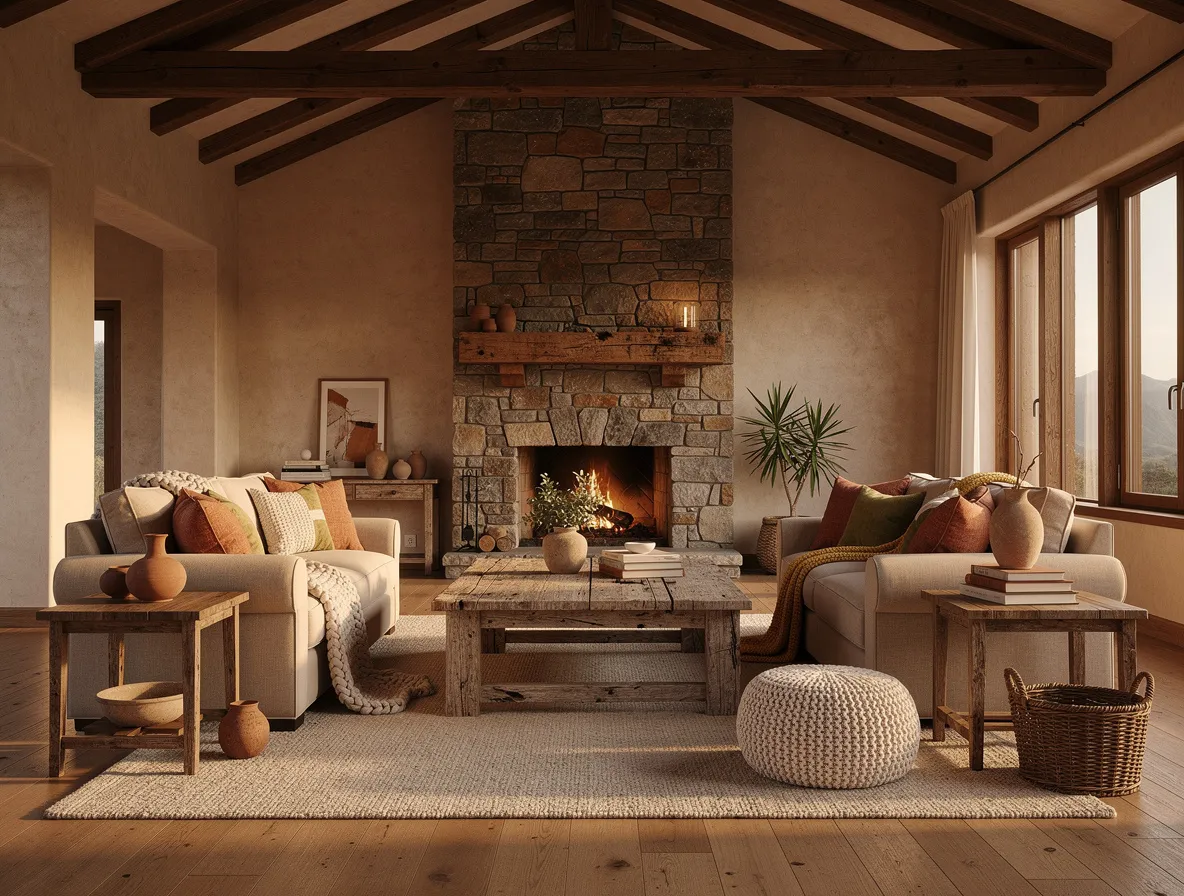
Rustic
Exposed wooden beams, stone fireplaces, and reclaimed wood furniture bring raw, organic beauty to every room.
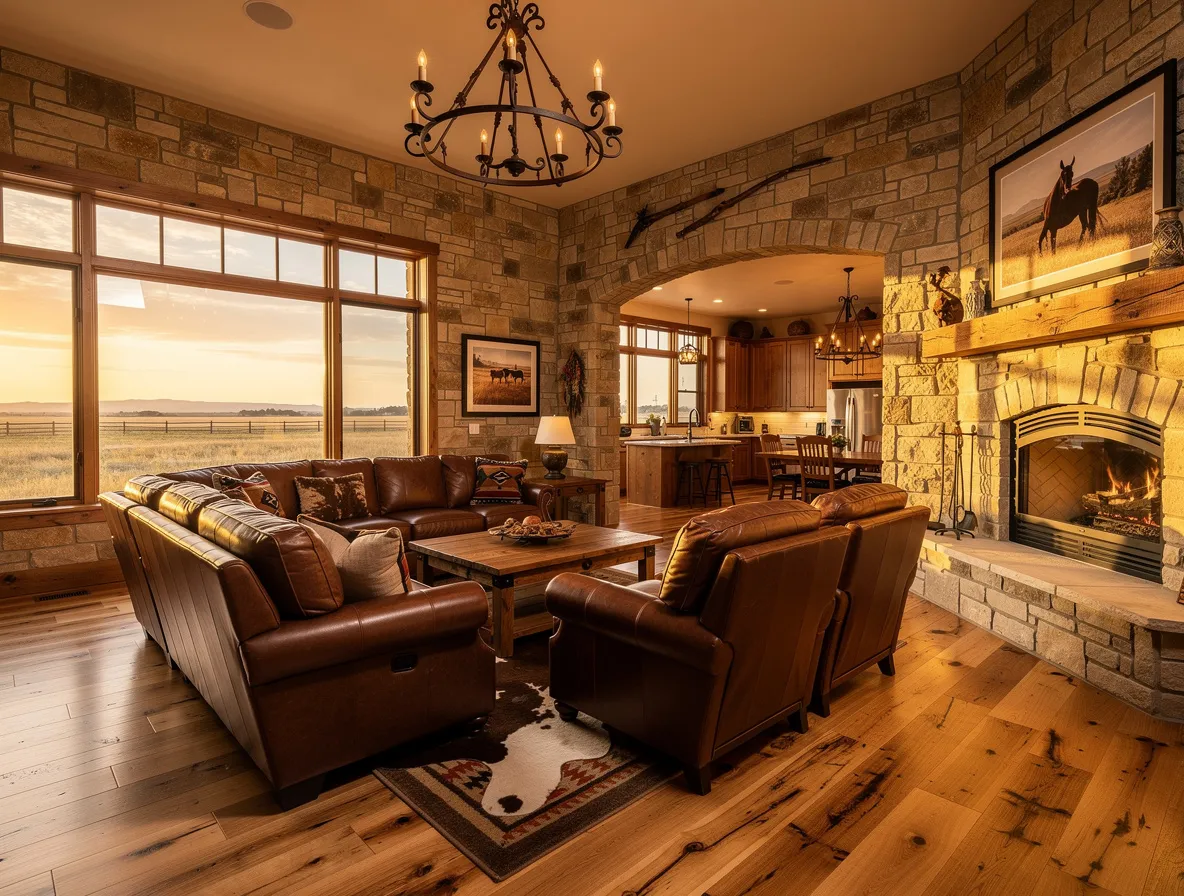
Ranch
Open floor plans, natural stone, and leather seating capture the spirit of the American West in a modern setting.
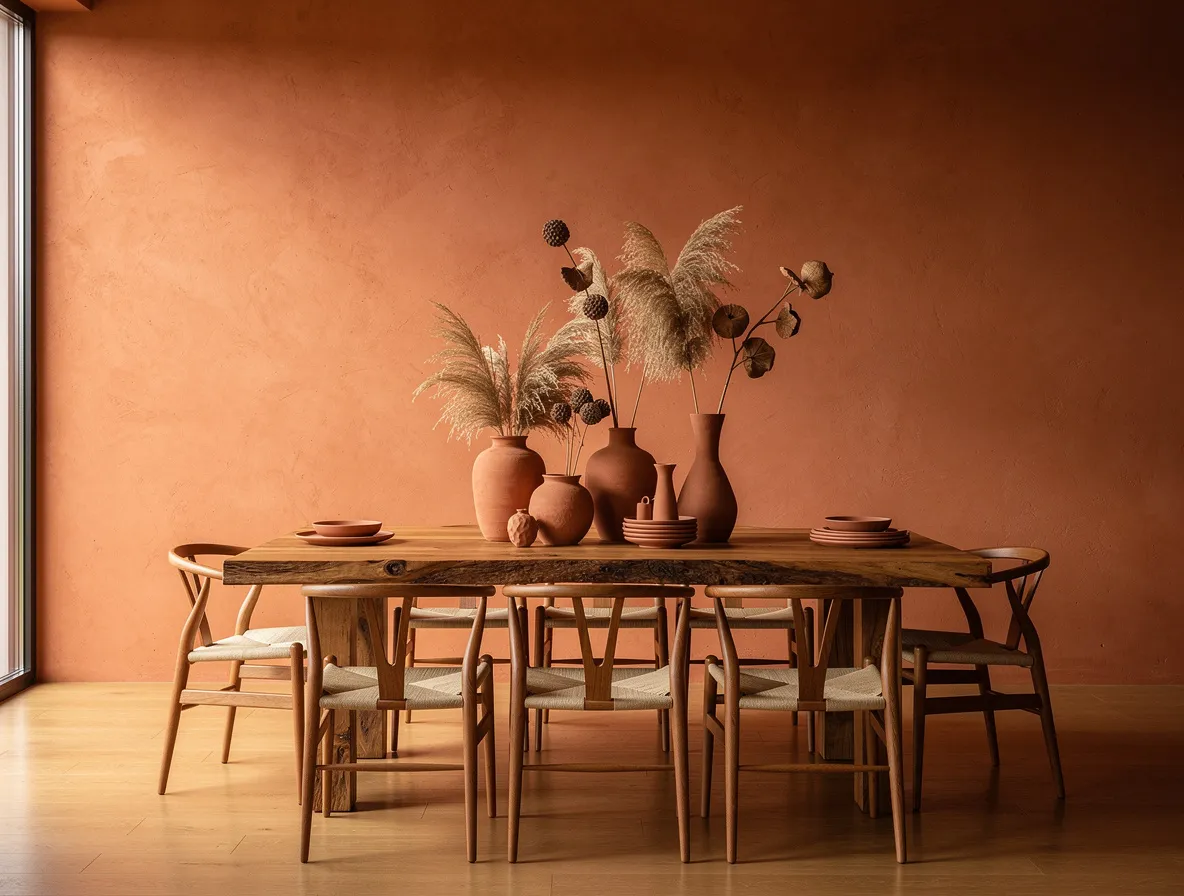
Earthy
Terracotta walls, raw wood tables, and clay pottery create a warm, grounded atmosphere inspired by the earth.
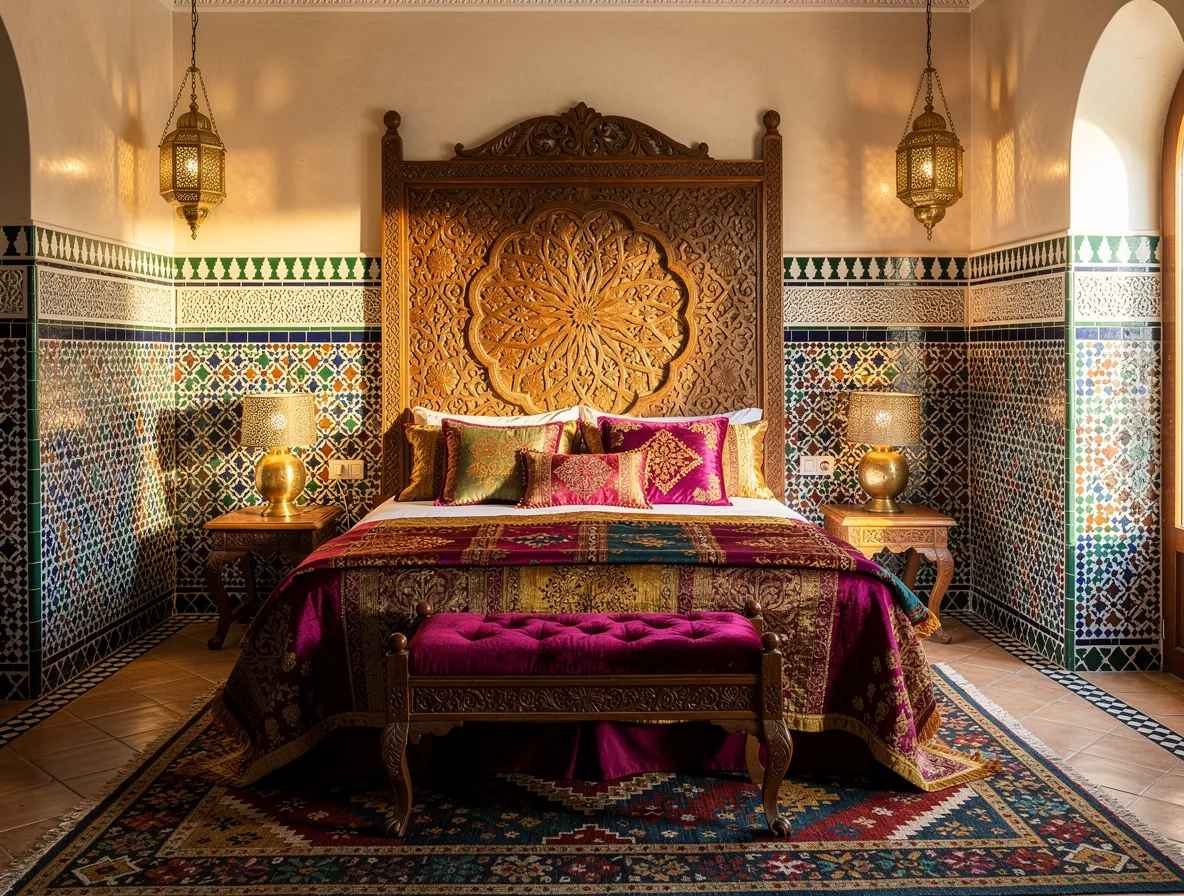
Moroccan
Ornate carved headboards, colorful mosaic tiles, and brass lanterns immerse your space in exotic, jewel-toned beauty.
Common Questions
Southwest Design: FAQ
What defines Southwest interior design?
Adobe or stucco walls in warm earth tones, Saltillo tile or stone floors, exposed wooden vigas (ceiling beams), Native American-inspired geometric patterns in rugs and textiles, turquoise and terracotta accents, and a strong indoor-outdoor connection.
What colors are used in Southwest design?
Terracotta, adobe tan, dusty turquoise, sage green, warm cream, rust red, and deep cobalt blue inspired by Talavera pottery. The palette is drawn directly from the desert landscape and its native craft traditions.
What is Saltillo tile and why is it associated with Southwest design?
Saltillo tile is handmade terracotta tile from Saltillo, Mexico - uneven in thickness, warm in color, and variable in finish. It is the most characteristic Southwest floor tile and ages beautifully with a linseed oil seal rather than a hard chemical finish.
What is the difference between Southwest and Tuscan design?
Both use terracotta tiles and warm plaster walls, but Southwest has Native American geometric pattern influence, turquoise accents, and a drier, more minimalist character. Tuscan is more vine-and-olive-rich, with more carved wood and a more baroque southern European feel.
Ready to Transform Your Space?
Upload a photo and see it in southwest style - or any of our 80+ other styles - in seconds.