Moroccan Design
Zellige mosaic, carved plaster muqarnas, hammered brass lanterns, and an intoxicating layering of pattern, color, and light create the most sensory-rich interior tradition in the world.
About the Style
What Is Moroccan Design?
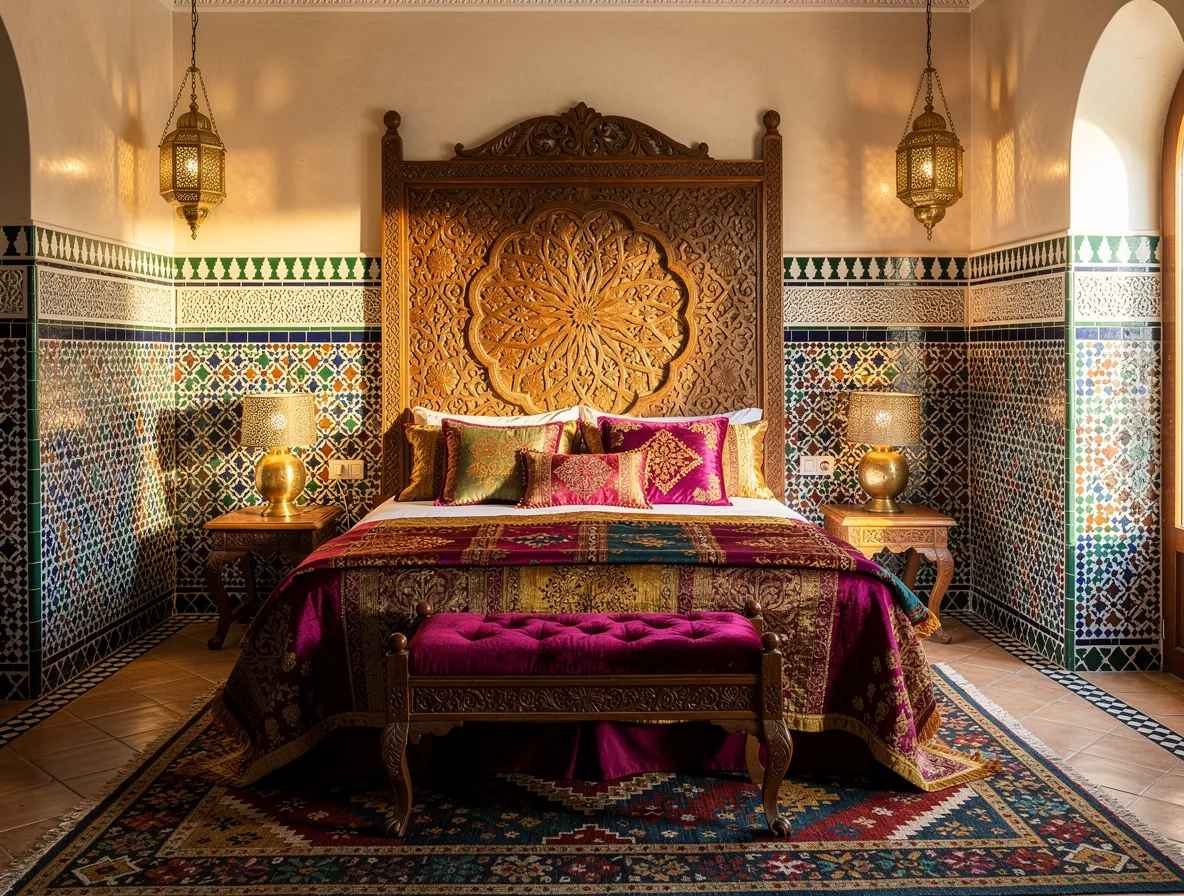
Moroccan interior design is the product of a unique cultural synthesis - Berber, Arab, Andalusian, and Sub-Saharan African traditions meeting in the medinas of Marrakech, Fez, and Meknes. Zellige mosaic tile floors and lower walls, carved plaster honeycomb (muqarnas) ceilings, arched doorways, pierced brass lanterns, silk and woven textiles, and a palette of jewel tones define the Moroccan riad (traditional courtyard house). No other interior tradition is more sensory or more beautiful.
Why People Love It
-
No other interior tradition creates pattern, color, and light in such abundance and such beauty
-
Zellige mosaic is handmade - each tile individually cut and laid, creating unique floors and walls
-
Pierced lanterns cast geometric light patterns that transform every surface at night
-
The riad model of a private courtyard with a fountain is among the most beautiful domestic architectural concepts
Key Characteristics
-
Zellige mosaic tile in geometric patterns
-
Carved plaster muqarnas (honeycomb) ceilings
-
Arched doorways and horseshoe arches
-
Pierced brass and copper lanterns
-
Central courtyard with fountain (riad model)
-
Layered textiles in jewel tones
Color Palette
Materials
Ideal For
Room-by-Room
Moroccan Design in Every Room
How moroccan design translates across every space in your home
Living Room
Zellige tile floor, a low banquette (douiria) with silk cushions, a pierced brass lantern, carved plaster arch, and a central geometric pattern rug.
Kitchen
Zellige tile splashback in cobalt or terracotta, brass hardware, hammered copper cookware hanging openly, and a simple clay or stone worktop.
Bedroom
A carved cedar or wrought iron bed, silk bedding in jewel tones, a pierced lantern as bedside lamp, arched mirror, and zellige tile floor with a rug.
Bathroom
Tadellakt lime plaster walls, zellige tile floor, a hammered brass sink, arched mirror, and a pierced lantern over the bath.
Exterior
A riad-style courtyard with a central fountain, zellige tile surround, carved plaster screen, orange or lemon trees in terracotta pots, and jasmine on the walls.
Visualize It First
See Moroccan Design in Your Space
Upload any photo and our AI transforms it into moroccan style in seconds
Upload a photo
Any room, any angle. Interior or exterior - phone photo is fine.
Select "Moroccan"
Choose this style from our library or describe it to the AI in plain language.
Get your design
Photorealistic result in seconds. Download in HD or 4K resolution.
Expert Advice
How to Achieve Moroccan Design
Practical tips from designers who work with moroccan style every day.
Commission a zellige mosaic panel or floor from a Moroccan artisan supplier - even a small panel of authentic zellige creates an extraordinary focal point.
Install a pierced brass or copper lantern as the primary light source in at least one room - the patterned light it casts is the definitive Moroccan interior experience.
Use jewel-toned silk or brocade cushions generously in layers on low seating - the layering of rich textiles is fundamental to Moroccan hospitality and design.
Create an arched doorway or horseshoe arch in plaster as a threshold between rooms - even a painted archway reference transforms the spatial experience.
Apply tadellakt (traditional Moroccan lime plaster) to bathroom walls - it is waterproof, beautiful, and uniquely Moroccan.
Signature Materials
The Artisan Materials That Make Moroccan Design Irreproducible
Moroccan interior design is defined by three handmade materials that require skills passed through generations - skills that simply cannot be replicated by industrial processes.
Zellige Tile - Geometry Cut by Hand
Zellige is a form of enamelled mosaic tilework made from individually hand-cut pieces of glazed terracotta. Each piece (tessera) is cut by a craftsman (maalem) with a sharp hammer from a larger fired tile, then fitted into a pattern bed with plaster. A skilled zellige maalem can execute patterns of extraordinary complexity, but the slight variation in each piece - the micro-irregularity of handwork - is precisely what makes zellige walls different from machine-cut tile. Authentic zellige takes weeks to install a single bathroom.
Tadelakt Plaster - Waterproof Lime That Breathes
Tadelakt is a lime plaster traditional to the Marrakech region - polished with a smooth stone and treated with black soap to create a naturally waterproof surface that can be used in bathrooms and even showers. The colour range is naturally earthy (the lime can be tinted with natural pigments) and the surface has a subtle depth and sheen that makes it look like polished stone. It takes 5-6 coats, days of work, and the skill of a trained artisan (tadelakteur) to execute correctly.
Moucharabieh - Privacy Through Pattern
Moucharabieh (mashrabiyya) is the carved wooden lattice screen found in windows and room dividers throughout Moroccan and North African architecture. Its function is to allow ventilation and interior observation of the street without allowing external observation of the interior - a practical privacy solution. The geometric patterns cast extraordinary shadow on interior floors as light passes through them. Each panel is individually carved, making every moucharabieh screen unique.
Copper and Brass Lanterns
Moroccan lanterns - perforated copper or brass with colored glass panels - produce one of the most distinctive effects in interior design: when lit, they project complex geometric star patterns across walls and ceiling, transforming a room into something completely different from its appearance in daylight. The lanterns are still made in the Fez medina by craftsmen using the same tools and techniques used for centuries.
Style Pairings
Styles That Complement Moroccan
Mix moroccan with these styles for a layered, personal look.
Spanish
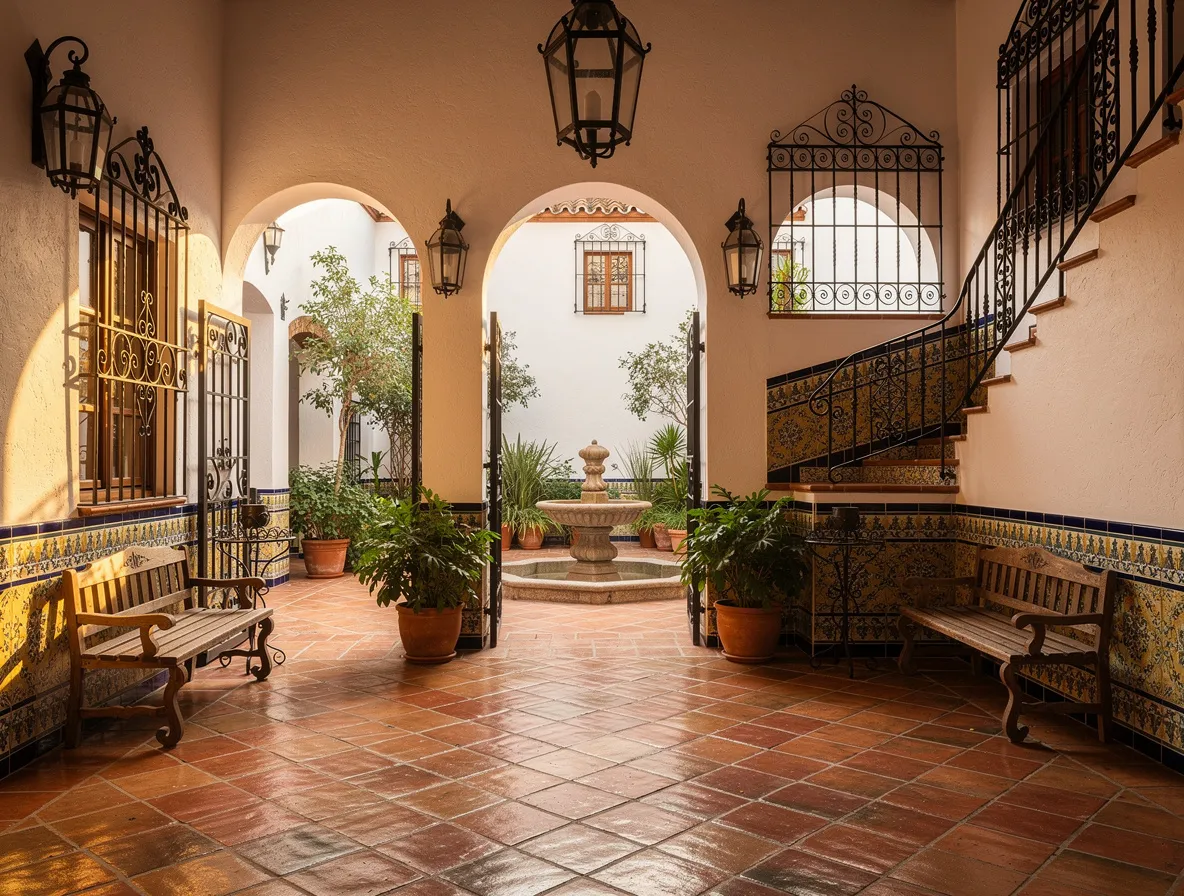
Terracotta tiles, wrought iron, arched doorways, and colorful ceramic tiles celebrate Spanish colonial warmth.
Bohemian
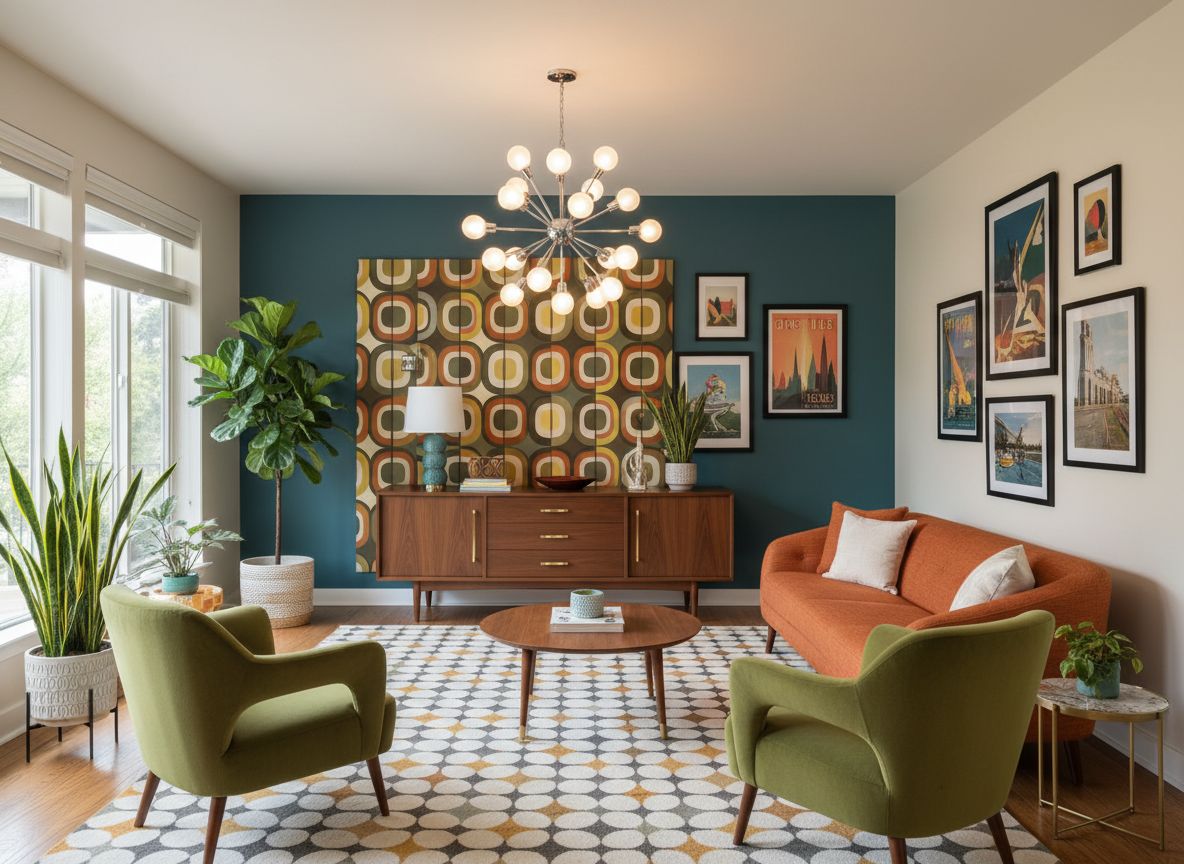
Free-spirited and eclectic with layered textiles, global patterns, and a collected-over-time aesthetic for any space.
Oriental
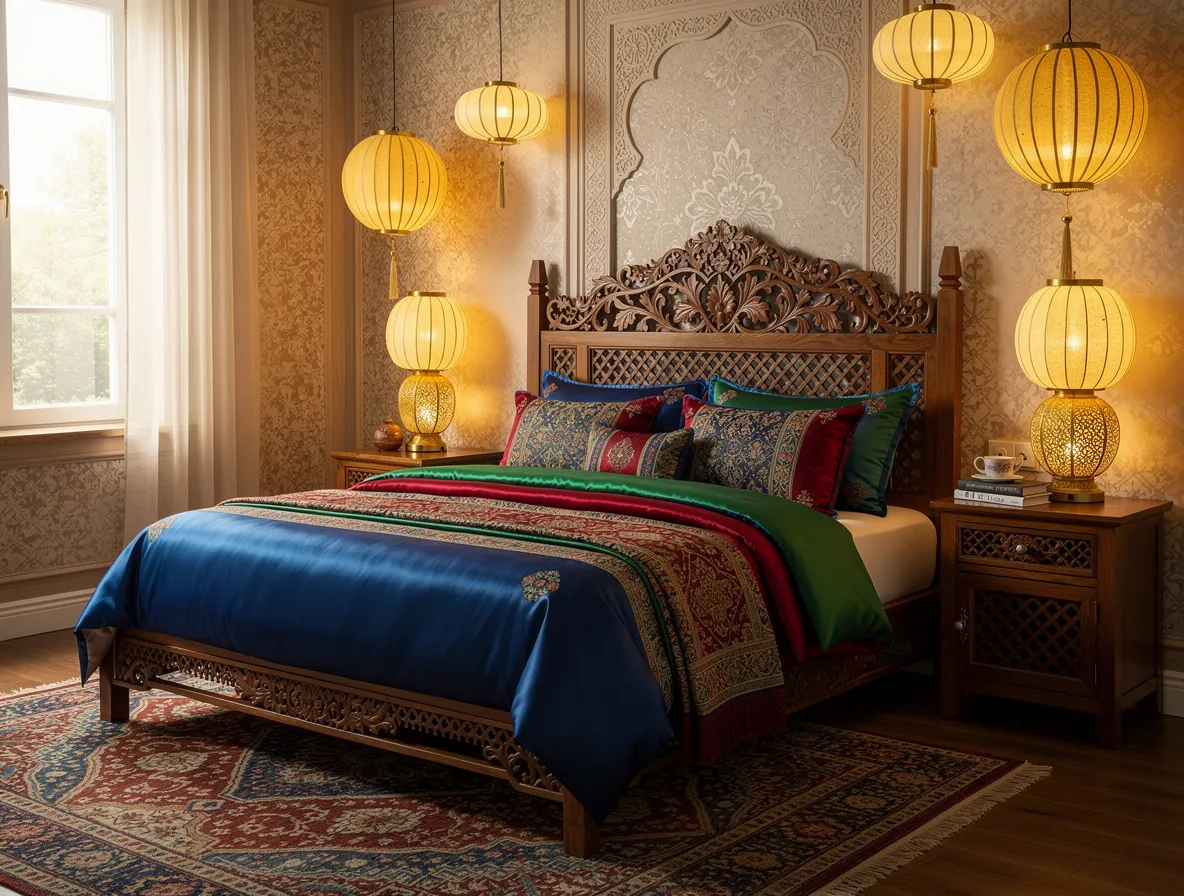
Silk bedding, carved teak furniture, and paper lanterns immerse any room in rich, jewel-toned Eastern luxury.
Southwest
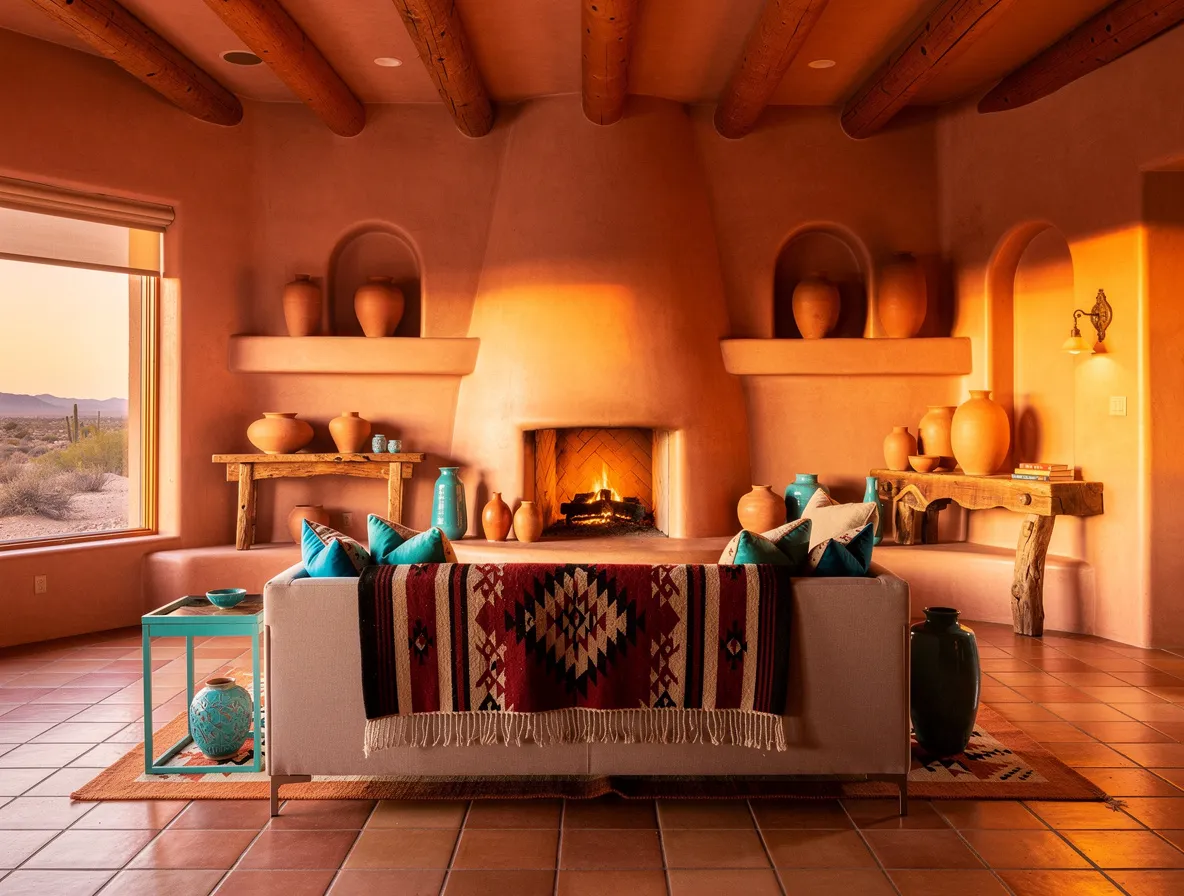
Adobe walls, Navajo textiles, and turquoise accents bring the vibrant spirit of the American desert into your home.
Common Questions
Moroccan Design: FAQ
What defines Moroccan interior design?
Geometric tile patterns (zellige), intricate carved plasterwork, richly colored textiles and cushions, lanterns that project pattern as light, and an architecture that centers on an interior courtyard (riad) as the heart of the home.
What colors are used in Moroccan design?
Rich and saturated: terracotta and burnt orange, cobalt blue and turquoise, saffron yellow and gold, deep emerald green, and the warm cream of plaster. Colors are often used in bold combinations.
What is a riad and how does it influence Moroccan interior design?
A riad is a traditional Moroccan house built around an interior courtyard or garden. All rooms face inward to the courtyard rather than outward to the street. This arrangement creates the defining Moroccan interior characteristic - a private world of beauty hidden behind an anonymous exterior facade.
How do I incorporate Moroccan design elements without a full renovation?
A single perforated metal lantern, a Beni Ourain rug, and a set of hand-painted ceramic plates will establish Moroccan character in any space. Zellige tile in a kitchen backsplash and tadelakt in a bathroom are more committed but transformative choices.
Ready to Transform Your Space?
Upload a photo and see it in moroccan style - or any of our 80+ other styles - in seconds.