Spanish Design
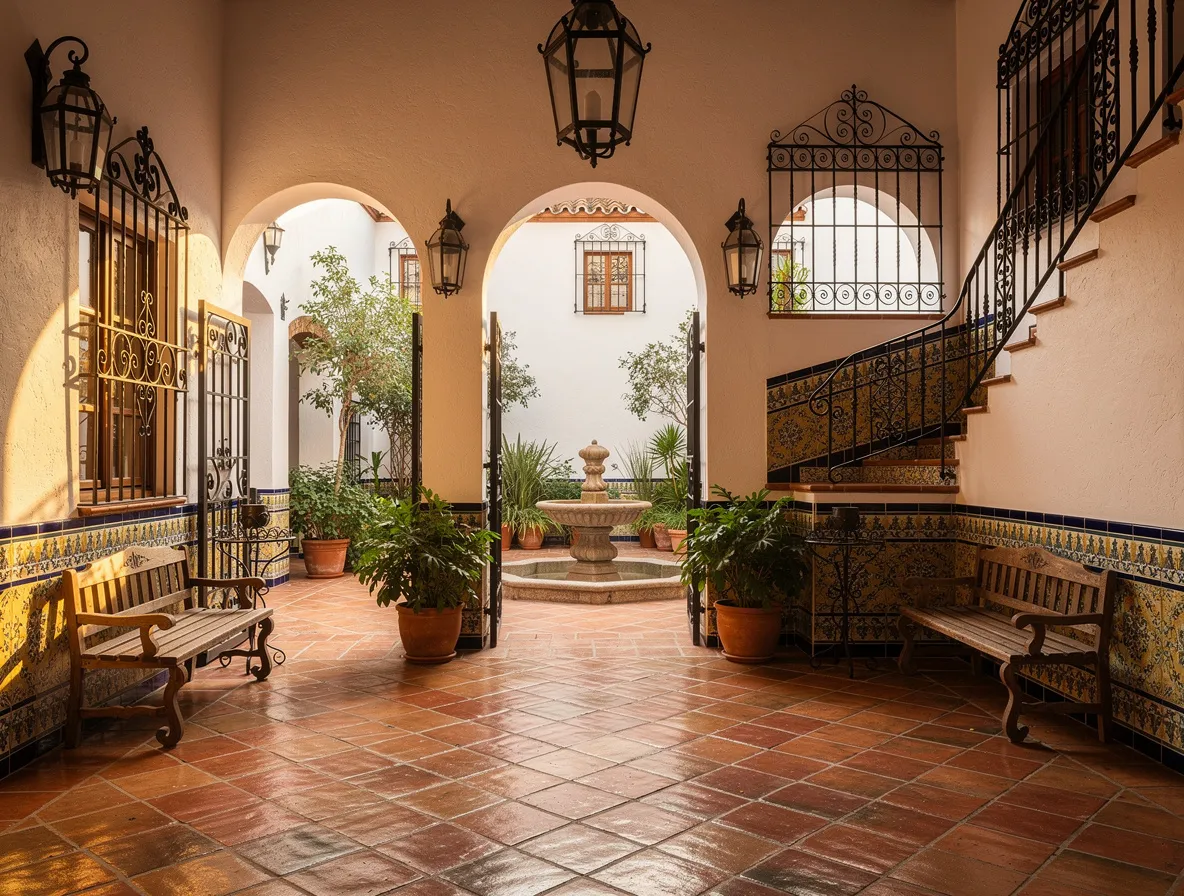
Moorish arches, hand-painted azulejo tiles, wrought iron, and sun-warmed ochre plaster create a rich, sensory aesthetic rooted in eight centuries of cultural fusion.
About the Style
What Is Spanish Design?
Spanish interior design is uniquely the product of eight centuries of Moorish presence in Iberia, fused with Catholic baroque tradition and Mediterranean climate. Geometric zellige mosaic, hand-painted azulejo tiles, stucco carved in Arabic patterns (mudejar style), wrought iron screens, terracotta roofs, and interior courtyards (patios) define the Spanish home. The result is complex, beautiful, and unlike any other European tradition.
Why People Love It
-
The Moorish-Catholic fusion creates the richest pattern vocabulary of any European tradition
-
Azulejo tiles are handmade and unique - no two surfaces are identical
-
Interior courtyards with fountains are among the most civilized features in domestic architecture
-
Thick stucco walls naturally regulate temperature - cool in summer, warm in winter
Key Characteristics
-
Hand-painted azulejo tile accents
-
Carved stucco or mudejar geometric patterns
-
Interior courtyard or patio with fountain
-
Wrought iron window screens and chandeliers
-
Thick white stucco or plaster walls
-
Terracotta tile floors throughout
Color Palette
Materials
Ideal For
Room-by-Room
Spanish Design in Every Room
How spanish design translates across every space in your home
Living Room
Thick white plaster walls, a carved stone fireplace, terracotta tile floor, a wrought iron chandelier, and hand-painted tile accent table.
Kitchen
Azulejo tile splashback in blue and white, terracotta floor, dark carved wood cabinetry, wrought iron hardware, and a stone sink.
Bedroom
Dark carved wood bed, embroidered linen bedding, terracotta tile floor, thick plaster walls, and a wrought iron bedside lantern.
Bathroom
Full azulejo tile walls, a carved stone or ceramic basin, wrought iron mirror frame, and a traditional Spanish tile floor in geometric pattern.
Exterior
White or ochre stucco walls, terracotta roof tiles, wrought iron window screens, an arched entrance, and a tiled interior courtyard with a fountain.
Visualize It First
See Spanish Design in Your Space
Upload any photo and our AI transforms it into spanish style in seconds
Upload a photo
Any room, any angle. Interior or exterior - phone photo is fine.
Select "Spanish"
Choose this style from our library or describe it to the AI in plain language.
Get your design
Photorealistic result in seconds. Download in HD or 4K resolution.
Expert Advice
How to Achieve Spanish Design
Practical tips from designers who work with spanish style every day.
Commission or source a panel of hand-painted azulejo tiles for the kitchen or bathroom - even 30 tiles create an extraordinary focal point.
Create an interior courtyard feel in any room by centering furniture around a central fountain, plant display, or decorative stone element.
Use wrought iron consistently - window screens, stair railings, chandelier, and hardware all in dark patinated iron unify Spanish character.
Apply a warm ochre or terracotta limewash to exterior walls - it is period-accurate, breathable, and dramatically beautiful.
Introduce carved timber doors in dark walnut or chestnut with decorative iron studs - the Spanish door is an art form in itself.
Design History
How 700 Years of Moorish Rule Shaped Spanish Design
Spanish interior design cannot be understood without understanding its Islamic heritage. The seven centuries of Moorish occupation (711-1492) left a design legacy more profound than any subsequent European influence.
The Umayyad Caliphate Builds Cordoba
At its peak, Cordoba was the largest and most sophisticated city in Western Europe - with 300 public baths, 70 libraries, and an architectural standard that no Christian city in Europe could match. The Great Mosque of Cordoba (begun 784) with its 856 columns of striped arches established the Andalusian aesthetic that persists in Spanish design today.
The Alhambra and the Complete Interior
The Alhambra palace in Granada is the most complete surviving example of Moorish interior design - walls completely covered in geometric zellige tilework up to a dado height, then arabesque stucco to the ceiling, with carved wooden ceilings above. The total coverage of every surface with intricate ornament is the defining Moorish interior principle that Spanish design inherited.
Reconquista and the Mudejar Style
After the Christian reconquest, Moorish craftsmen (called Mudejars) continued working for Christian patrons, creating a fusion style that combined Islamic decorative techniques with Catholic iconography and European architectural forms. Mudejar ceilings (artesonado) with their geometric wooden patterns appear in Spanish buildings from Seville to Mexico City.
Gaudi's Living Interpretation
Antoni Gaudi absorbed the Moorish heritage of his native Catalonia and transformed it into his own fantastical language. The undulating tile surfaces of Casa Batllo (1906) and the trencadis mosaic covering every surface of Park Guell are direct descendants of zellige tile tradition - but transformed through Gaudi's imagination into something entirely new.
Style Pairings
Styles That Complement Spanish
Mix spanish with these styles for a layered, personal look.
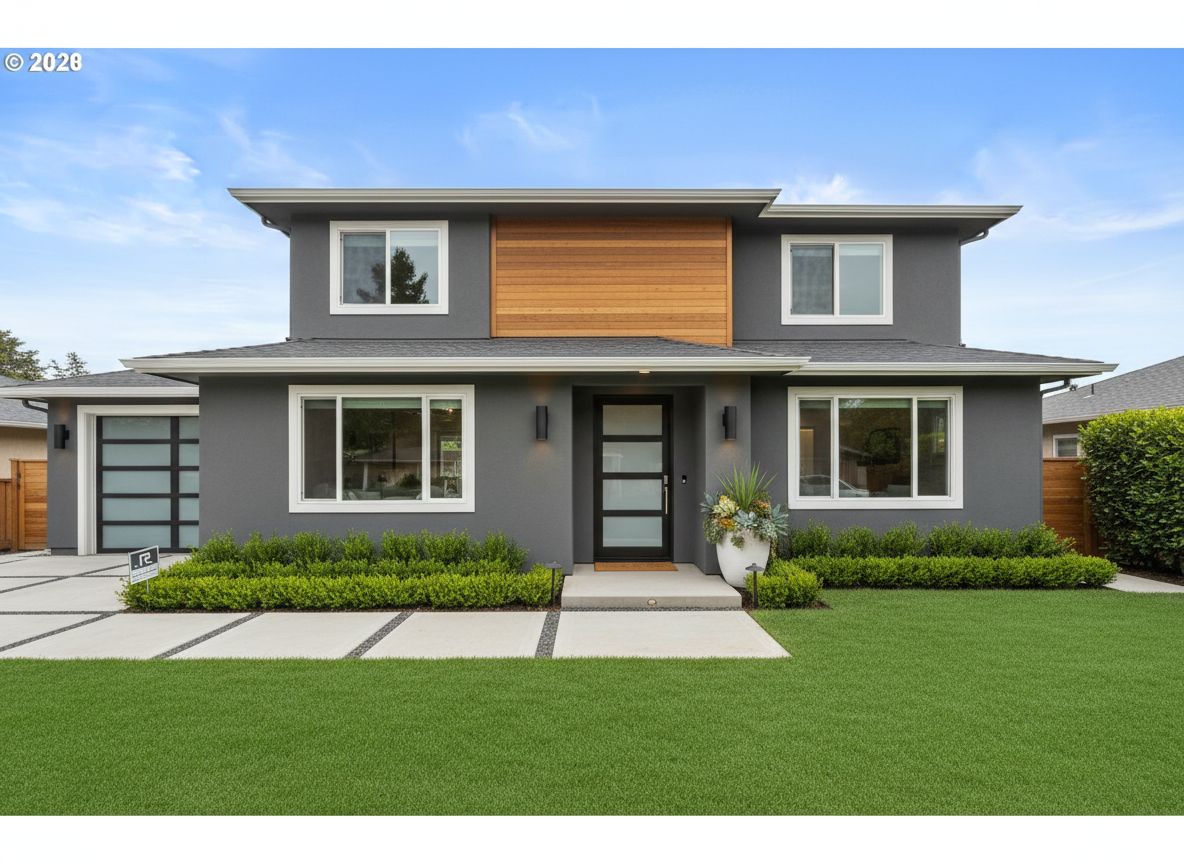
Mediterranean
Sun-drenched warmth inspired by coastal European villas. Terracotta, arches, and rich earth tones throughout.
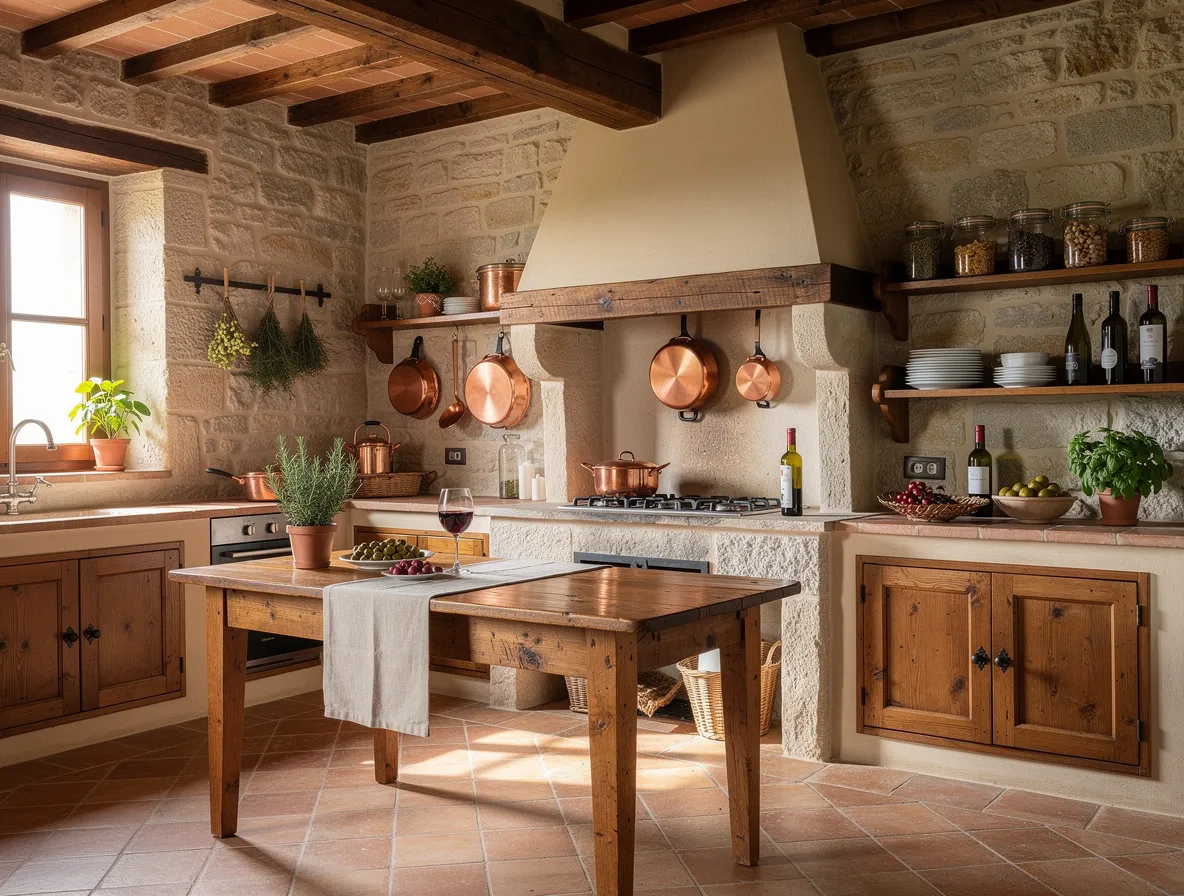
Tuscan
Stone walls, terracotta floors, and exposed wooden beams evoke the rustic elegance of the Italian countryside.
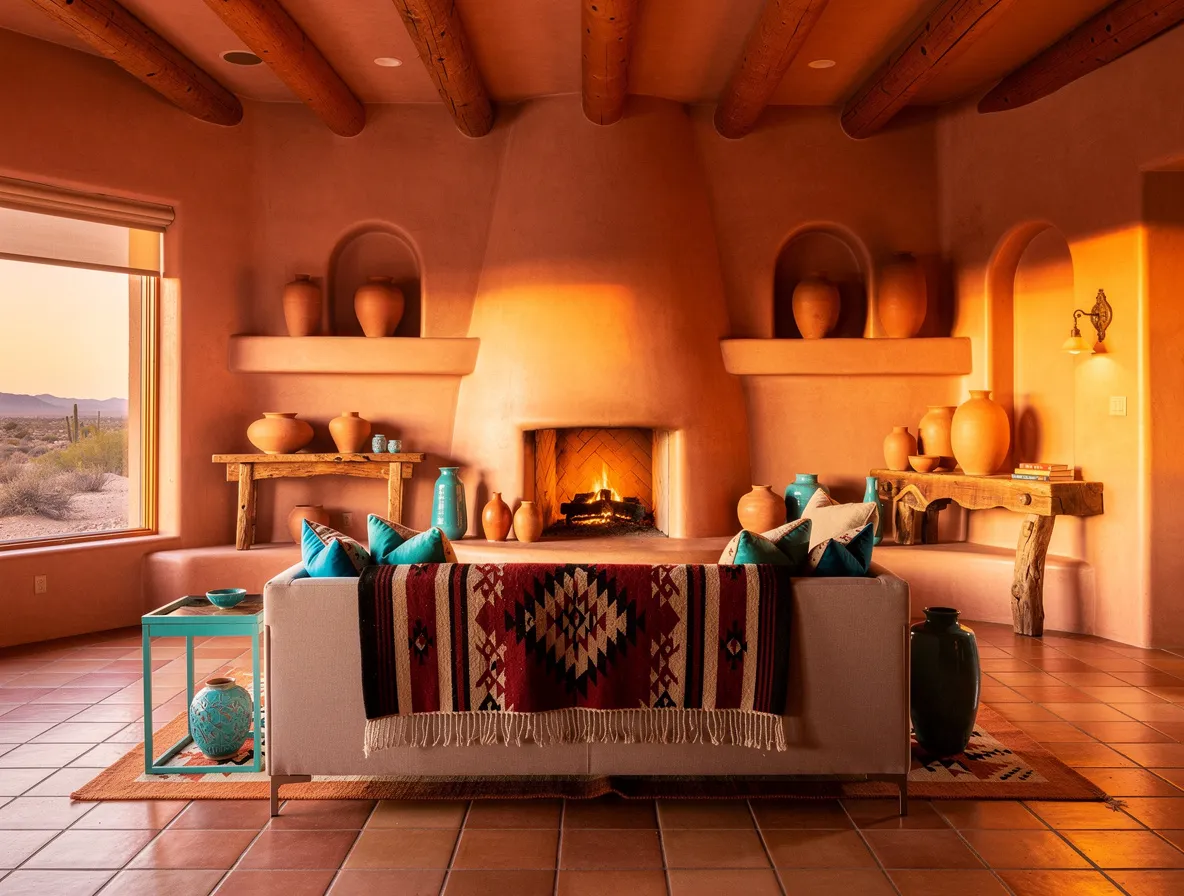
Southwest
Adobe walls, Navajo textiles, and turquoise accents bring the vibrant spirit of the American desert into your home.
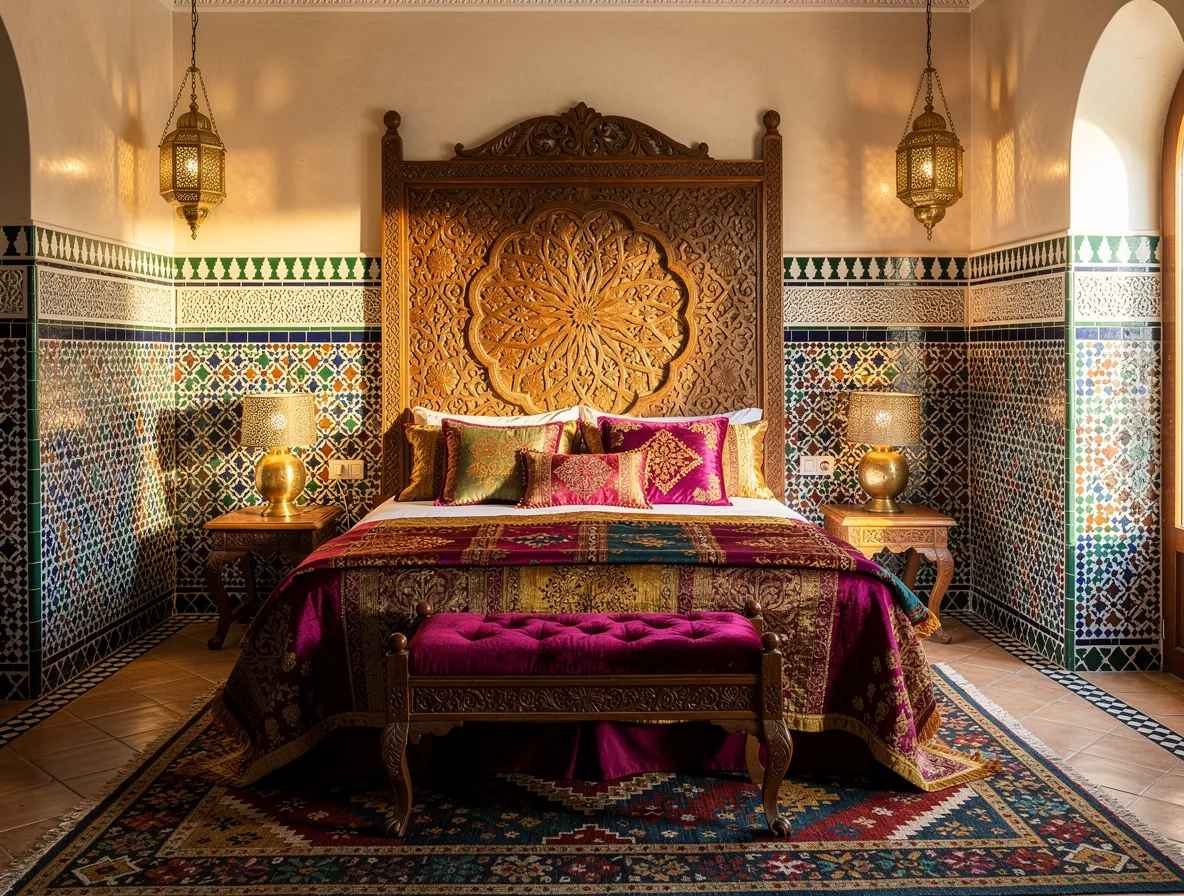
Moroccan
Ornate carved headboards, colorful mosaic tiles, and brass lanterns immerse your space in exotic, jewel-toned beauty.
Common Questions
Spanish Design: FAQ
What defines Spanish interior design?
Terracotta tile floors, arched doorways and windows, wrought iron details, brightly colored handmade tiles (azulejos), thick whitewashed plaster walls, carved wood ceilings, and strong contrast between dark wood and white walls.
What is the difference between Spanish and Mediterranean design?
Spanish design has a stronger Moorish and Islamic heritage - more geometric tile patterns, more elaborate wrought ironwork, more dramatic contrast. Mediterranean is broader and lighter in atmosphere.
What colors are typical in Spanish interiors?
White plaster walls as a base, with strong accents of cobalt blue, deep terracotta, saffron yellow, and olive green. These are the colors of Andalusian tiles and the Spanish landscape.
How do I incorporate Spanish design without a full renovation?
Azulejo tile panels, wrought iron candle holders, a carved wooden cabinet, and a terracotta pot collection on an outdoor ledge can establish Spanish character in any space. The tiles are the single most impactful Spanish design element.
Ready to Transform Your Space?
Upload a photo and see it in spanish style - or any of our 80+ other styles - in seconds.