Design a Dining Room That Draws Everyone to the Table.
Upload your dining room photo and see it transformed with new table styles, lighting, wall treatments, and seating - photorealistically, in seconds.
365
days a year your dining room works for you
23%
higher sale price for homes with styled dining rooms
30s
to see your dining room redesigned
About This Room
Why Dining Room Design Matters
The dining room is the most social room in a home - the place where families gather every day and where the best conversations happen over holidays. Yet it is often the most neglected room in a renovation budget, treated as merely functional when it has the potential to be genuinely beautiful. A well-designed dining room creates a sense of occasion even for an ordinary Tuesday dinner, and it photographs remarkably well for real estate listings where a styled dining space can make the difference between a viewer clicking through or moving on.
What You Can Visualize
Every Element, Before You Commit
Layout Guide
Dining Room Layout Options Explained
The layout you choose shapes how the space feels and functions every single day.
Rectangular Table
The most versatile dining layout. A rectangular table seats more people in a given footprint than any other shape and is equally comfortable for two people or twelve. The standard choice for most dining rooms.
Round Table
A round table encourages conversation because everyone faces everyone else equally. No "head of the table" dynamic. Works beautifully in square rooms up to about 12 feet square before a round table starts to feel insufficient.
Oval Table
Combines the seating capacity of a rectangle with the conversational flow of a round table. No corners to walk into - a practical advantage in smaller dining rooms. The most elegant choice for formal dining rooms.
Open Plan Dining
Dining table positioned between the kitchen and living area in an open-plan space. The back of the dining chairs should face the kitchen so diners look out toward the living area - the most natural arrangement for conversation flow.
Banquette Seating
Built-in bench seating along one or two walls replaces dining chairs on those sides. Saves space, adds storage underneath, and creates a bistro or restaurant feeling. Particularly effective in kitchen-dining rooms.
Style Directions
Popular Styles for Your Dining Room
Click any style to explore it in depth, then visualize it in your space.
Scandinavian
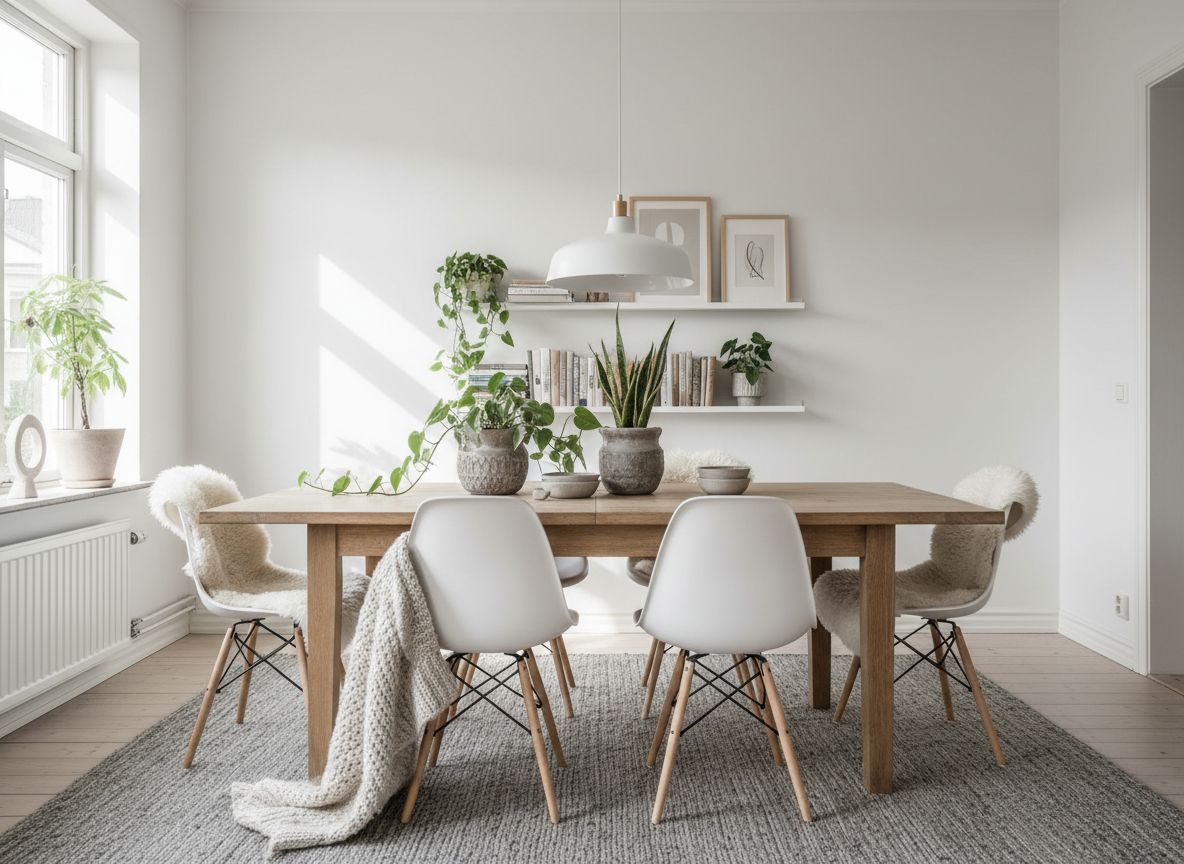
Light wood, minimal pendant, white and natural tones
Explore styleModern Farmhouse
Long farmhouse table, mixed chairs, Edison bulb pendant
Explore styleTraditional
Formal table, upholstered chairs, statement chandelier
Explore styleMid-Century Modern
Tapered legs, sculptural pendant, warm wood tones
Explore styleContemporary
Mixed materials, statement pendant, bold accent wall
Explore styleExpert Advice
Dining Room Design Tips That Actually Work
Size the table to the room
Leave a minimum of 36 inches between the edge of the table and any wall so chairs can be pulled out comfortably. 48 inches is more comfortable. In a 12x12 room, an 8-foot table is probably too long - use 72 inches as your maximum.
Hang the pendant at the right height
The bottom of the pendant light should sit 30-36 inches above the tabletop. This provides good task lighting without the fixture getting in the way of eye contact across the table. For 9-foot ceilings, raise by 3 inches per additional foot of ceiling height.
Mix your chairs
Matching all eight chairs around a dining table looks like a furniture showroom. Use upholstered carver chairs at the ends with simpler wooden or cane chairs along the sides - this variation creates a more curated, less catalog look.
The rug should extend beyond the chairs
A rug under a dining table that is too small creates a frustrating result - chairs off the rug when pulled out. The rug should extend at least 24 inches beyond every side of the table so chairs stay on it when in use.
Create a destination with the lighting
The dining room pendant or chandelier is the single most impactful piece in the room. Choose something with genuine presence - a fixture that is 50-60% of the table width is a good starting proportion. Larger is almost always better in a dining room.
Common Mistakes
Dining Room Design Mistakes to Avoid
These are the decisions homeowners most commonly regret - and they are all avoidable.
Table too large for the room
The most common dining room mistake - a table that seats 10 in a room that only comfortably fits 6. You end up permanently squeezing past chairs and the room feels like a ship's mess hall. Measure accurately and add blue tape to the floor before buying.
Pendant too small or too high
A fixture that reads as too small over a large dining table ruins the room. And a pendant hung too high (more than 36 inches above the table) loses its intimacy and fails as task lighting. Both are surprisingly common and both look unfinished.
No art on the dining room walls
Dining rooms with bare walls feel unfinished and impersonal. A large mirror, an oversized single piece of art, or a gallery wall transforms the room from a place where you eat to a place where you want to linger.
All hard surfaces
A dining room with a hard floor, wooden table, and wooden chairs is acoustically brutal - every conversation echoes. A rug, upholstered chairs, curtains, and art all absorb sound and make long meals together genuinely more comfortable.
Common Questions
Dining Room Design FAQ
What size dining table do I need?
Allow 24 inches of table width per seated person and at least 12 inches of table depth from the table edge to the center. For comfortable seating: a 6-person table needs 72x36 inches, an 8-person needs 84-96x36 inches. Always confirm with blue tape on the floor first.
How do I choose a dining room chandelier?
A general rule: the chandelier diameter in inches should equal the room dimensions in feet added together. For a 12x14 room: 12+14=26 inch chandelier. Hang it 30-36 inches above the tabletop. Go bolder than you think - understated chandeliers almost always disappoint.
Should I use a rug in the dining room?
Yes - a rug defines the dining zone, absorbs sound, protects the floor, and adds warmth and texture. Choose a low-pile or flat-weave rug for easy cleaning. Natural fibers like jute look beautiful but stain easily - a washable polypropylene rug is more practical under a dining table.
Can I mix different chair styles in a dining room?
Absolutely - it is actually preferred in modern design. The most considered look uses one style for the long sides and a different (often upholstered) style for the ends. Alternatively, all chairs in the same silhouette but different colors creates cohesion with personality.
Explore Other Room Types
See Your Dining Room Redesigned in 30 Seconds.
Upload a photo of your current space and get a photorealistic redesign. No design experience needed.