Bamboo Design
The world's fastest-growing plant becomes the most versatile design material - bamboo interiors are natural, sustainable, warm, and beautifully tactile.
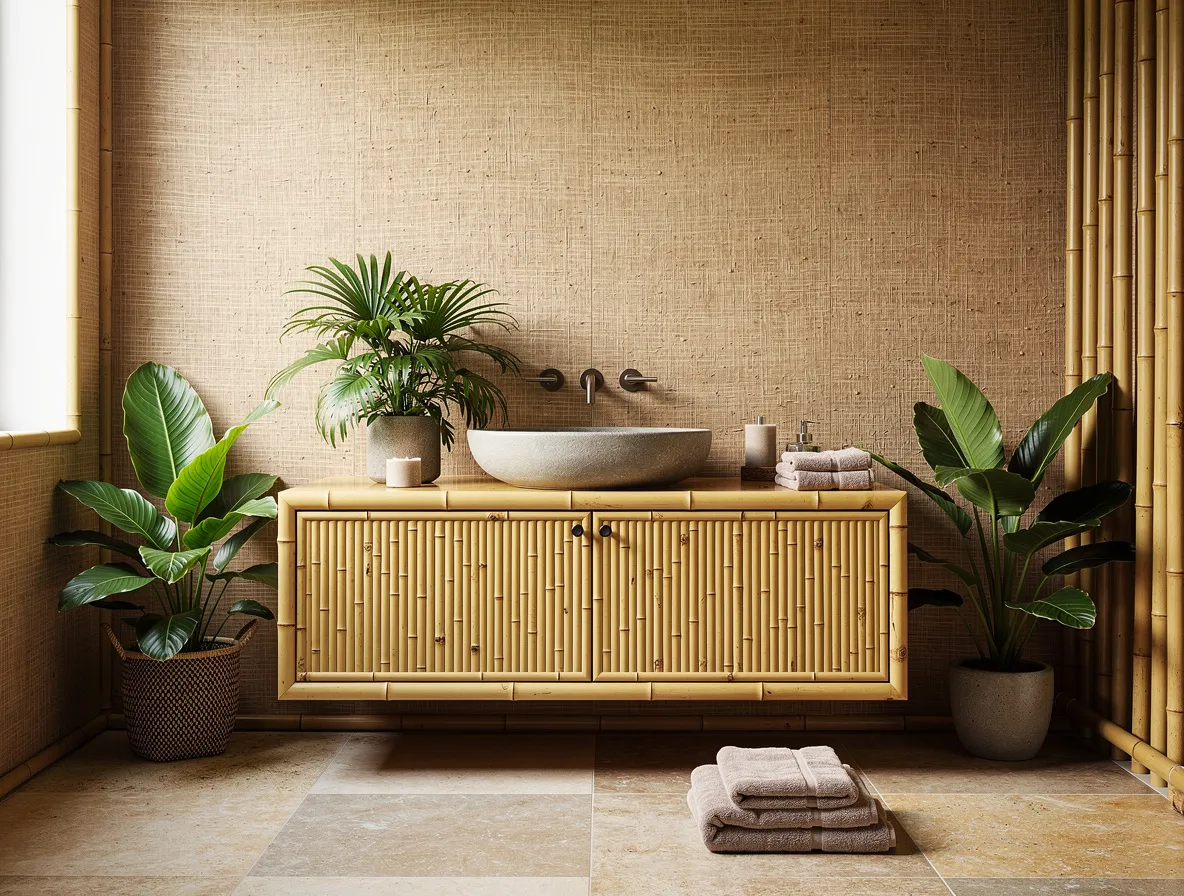
About the Style
What Is Bamboo Design?
Bamboo design celebrates the extraordinary material properties of the grass Phyllostachys and its relatives - the fastest-growing plant on earth, harder than most hardwoods when mature, and uniquely beautiful in both its structural and woven forms. Bamboo flooring, furniture, screens, and wall panels create warm, honey-toned interiors with a distinctive grain and a pleasingly organic quality. The material connects indoor spaces to tropical and subtropical landscapes.
Why People Love It
-
The most sustainable structural design material available - mature in 3-5 years
-
Strand-woven bamboo flooring is harder than oak and more dimensionally stable
-
The grain and node pattern of bamboo is uniquely beautiful and instantly recognizable
-
Living bamboo screens provide privacy, texture, and oxygen simultaneously
Key Characteristics
-
Bamboo flooring with distinctive joint nodes
-
Woven bamboo screens and wall panels
-
Bamboo furniture in natural or carbonized tones
-
Bamboo pendant lighting shades
-
Living bamboo in large planters as dividers
-
Natural fiber textiles - bamboo fabric, jute, linen
Color Palette
Materials
Ideal For
Room-by-Room
Bamboo Design in Every Room
How bamboo design translates across every space in your home
Living Room
Strand-woven bamboo floor, a living bamboo screen room divider, rattan furniture, bamboo pendant lights, and natural linen textiles.
Kitchen
Bamboo flooring, open bamboo shelving, bamboo cutting board collection, and woven bamboo pendant lights over the island.
Bedroom
Bamboo flooring, a woven bamboo headboard panel, bamboo fabric bedding, living bamboo in a large planter by the window.
Bathroom
Bamboo bath mat and accessories, bamboo-framed mirror, woven bamboo basket storage, and a bamboo ladder towel rail.
Exterior
A bamboo grove as a natural privacy screen, bamboo decking, bamboo fence panels, and bamboo wind chimes at the entry.
Visualize It First
See Bamboo Design in Your Space
Upload any photo and our AI transforms it into bamboo style in seconds
Upload a photo
Any room, any angle. Interior or exterior - phone photo is fine.
Select "Bamboo"
Choose this style from our library or describe it to the AI in plain language.
Get your design
Photorealistic result in seconds. Download in HD or 4K resolution.
Expert Advice
How to Achieve Bamboo Design
Practical tips from designers who work with bamboo style every day.
Install strand-woven bamboo flooring in a carbonized (dark) or natural finish - it outperforms most hardwoods and is genuinely sustainable.
Use living bamboo in oversized planters as room dividers - the culms grow vertically and provide privacy, sound absorption, and oxygen.
Source woven bamboo wall panels for accent walls - the texture and warmth they create is unique to this material.
Choose bamboo pendant shades over the dining table and kitchen island - the light that filters through woven bamboo is warm and intimate.
Combine bamboo with natural stone, linen, and unglazed ceramic for a consistent natural material palette.
Sustainability
Why Bamboo May Be the World's Most Remarkable Building Material
Bamboo is not a wood - it is a grass. And that biological fact makes it one of the most extraordinary materials available for interior design, with performance characteristics that no tree-based timber can match.
The Growth Rate Is Extraordinary
The Guinness World Record holder for fastest growing plant is Moso bamboo, which can grow 35 inches (89 cm) in a single day under optimal conditions. Most commercial bamboo reaches harvestable maturity in 3-5 years, compared to 25-80 years for hardwood trees used in flooring. This growth rate means bamboo can be harvested on a sustainable rotation that no tree-based timber can replicate.
Tensile Strength Greater Than Steel
Bamboo has a tensile strength of 28,000 pounds per square inch - greater than steel, which achieves 23,000 psi. Combined with its light weight, this gives bamboo an exceptional strength-to-weight ratio. In structural applications, bamboo can bear loads that would require significantly heavier steel sections. In Colombia, experimental bamboo houses have survived earthquakes that destroyed neighboring concrete structures.
Carbon Sequestration vs Timber
A hectare of bamboo sequesters up to 12 tonnes of CO2 per year, compared to 6 tonnes for a typical forest. Bamboo does not need to be killed for harvesting - the root system remains after cutting and rapidly regenerates new growth. When used in interior applications (flooring, paneling), the carbon absorbed during growth remains locked in the material for the life of the product.
The Processing Problem
Bamboo's credentials are complicated by its processing. Traditional handwork produces the most sustainable bamboo products. But many industrial bamboo products - strand-woven bamboo flooring, for example - use significant amounts of urea-formaldehyde adhesives in the compression process, which can outgas VOCs into interiors. Choosing FSC-certified, low-VOC bamboo products is essential to its sustainability credentials.
Style Pairings
Styles That Complement Bamboo
Mix bamboo with these styles for a layered, personal look.
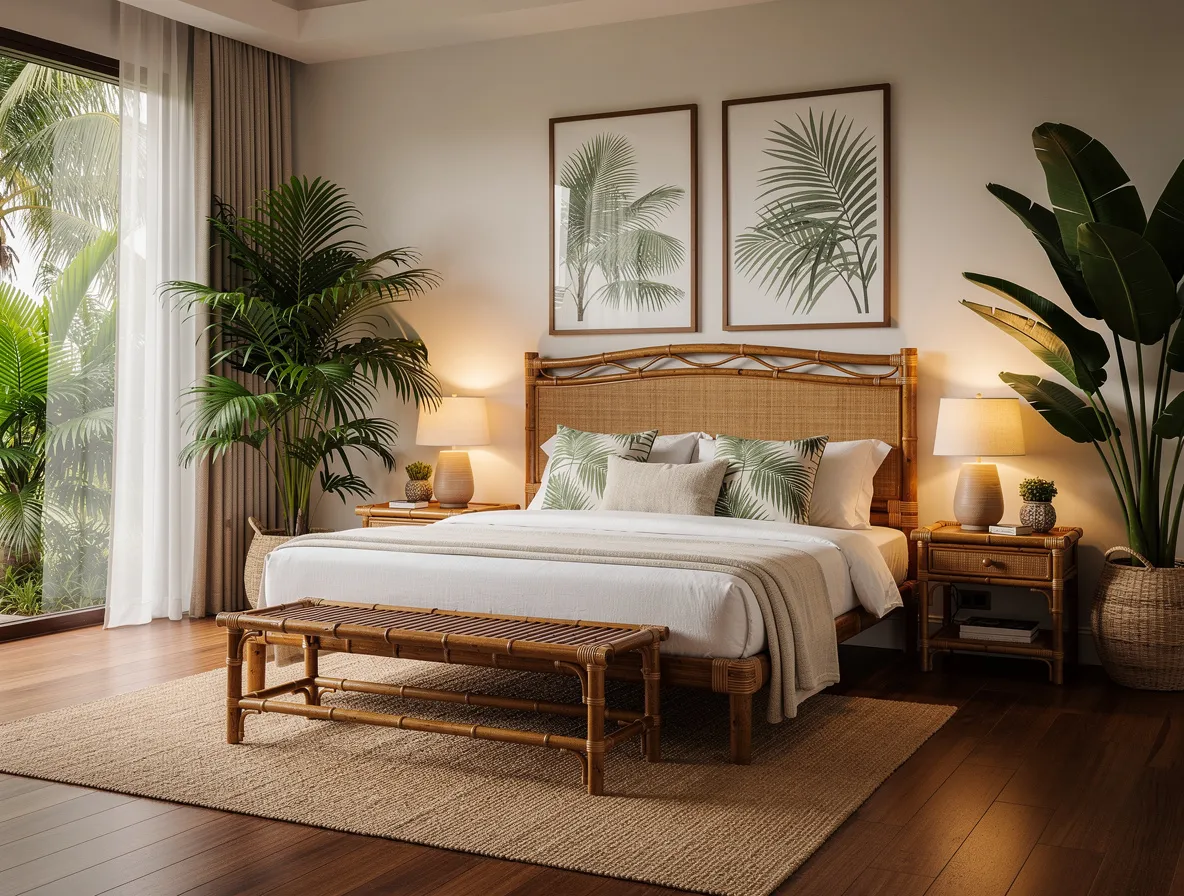
Tropical
Bamboo furniture, palm-leaf prints, and lush greenery create a vibrant, resort-inspired paradise at home.
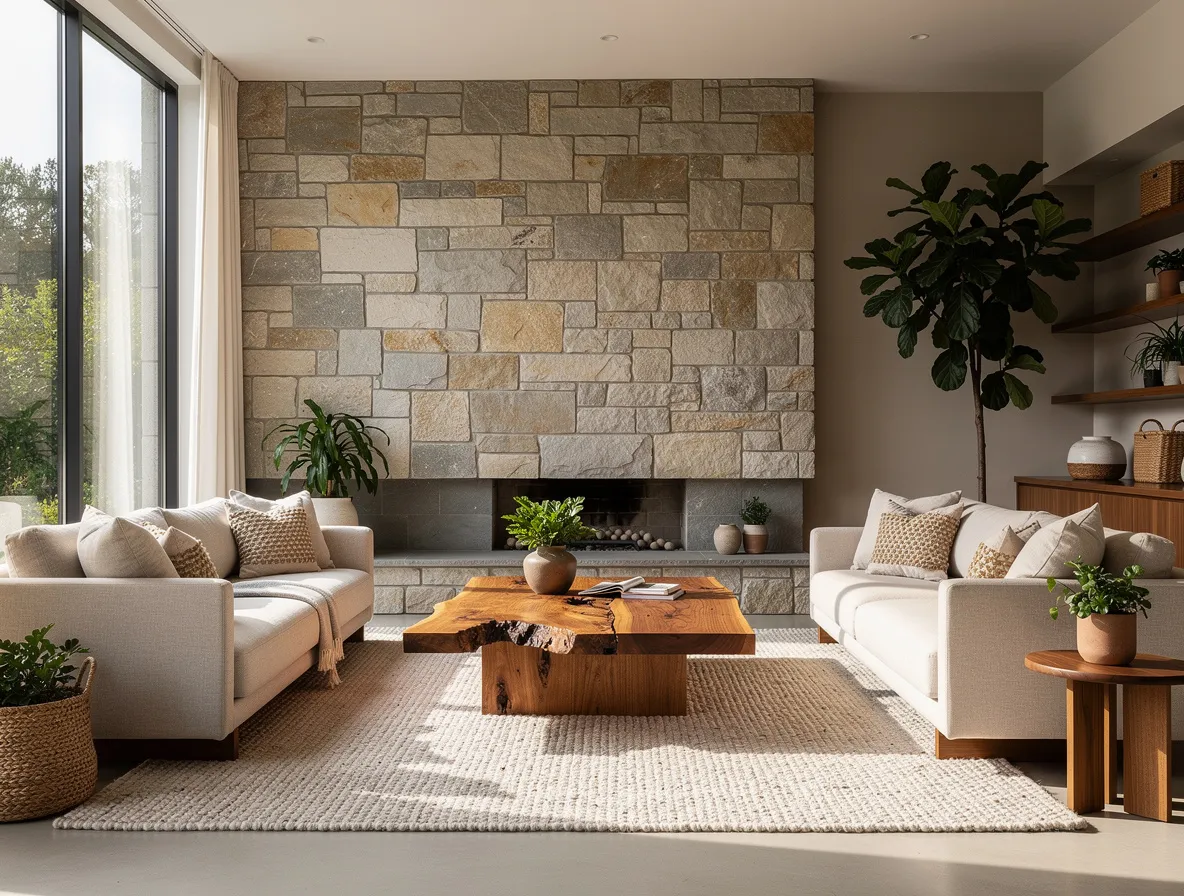
Organic
Natural materials, live-edge wood, stone accents, and woven textiles ground your space in organic beauty.
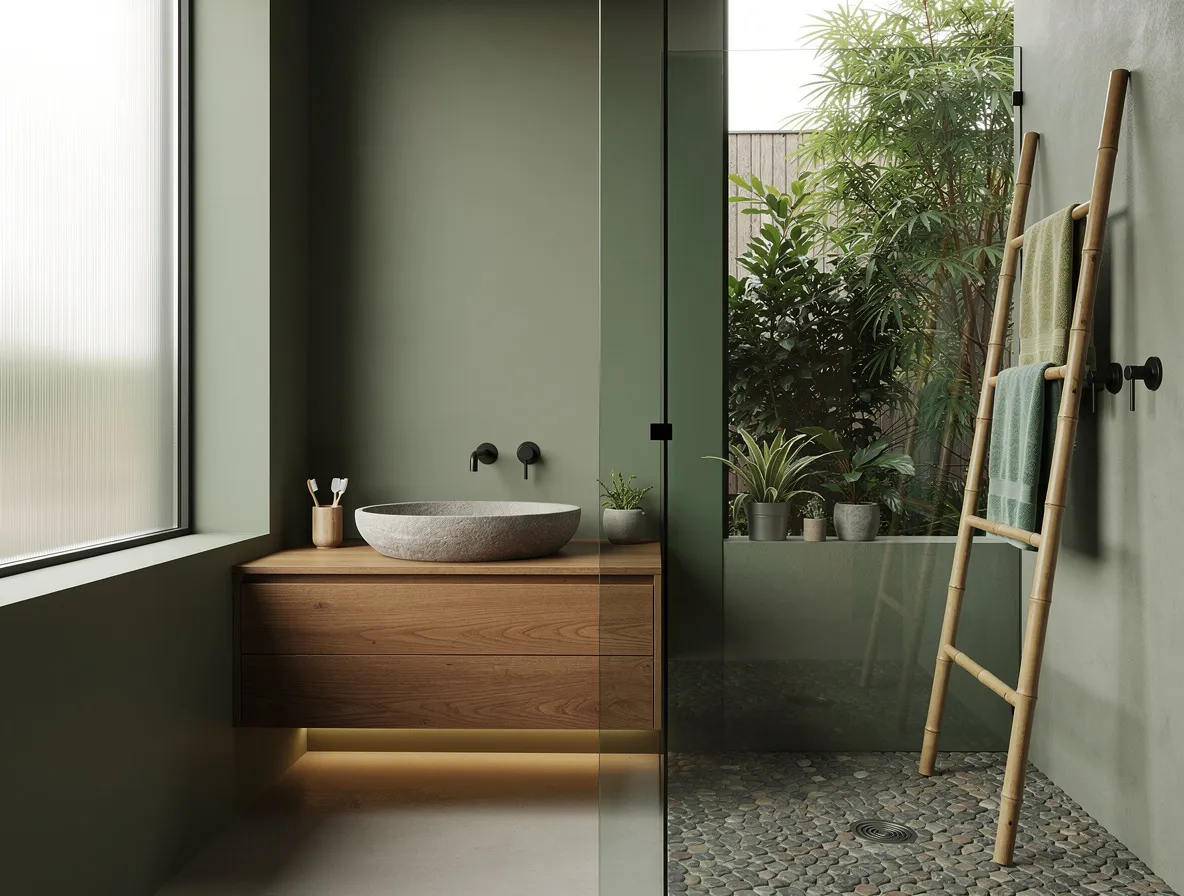
Natural
Stone basins, wooden vanities, and pebble accents bring the serenity of the outdoors into every room.
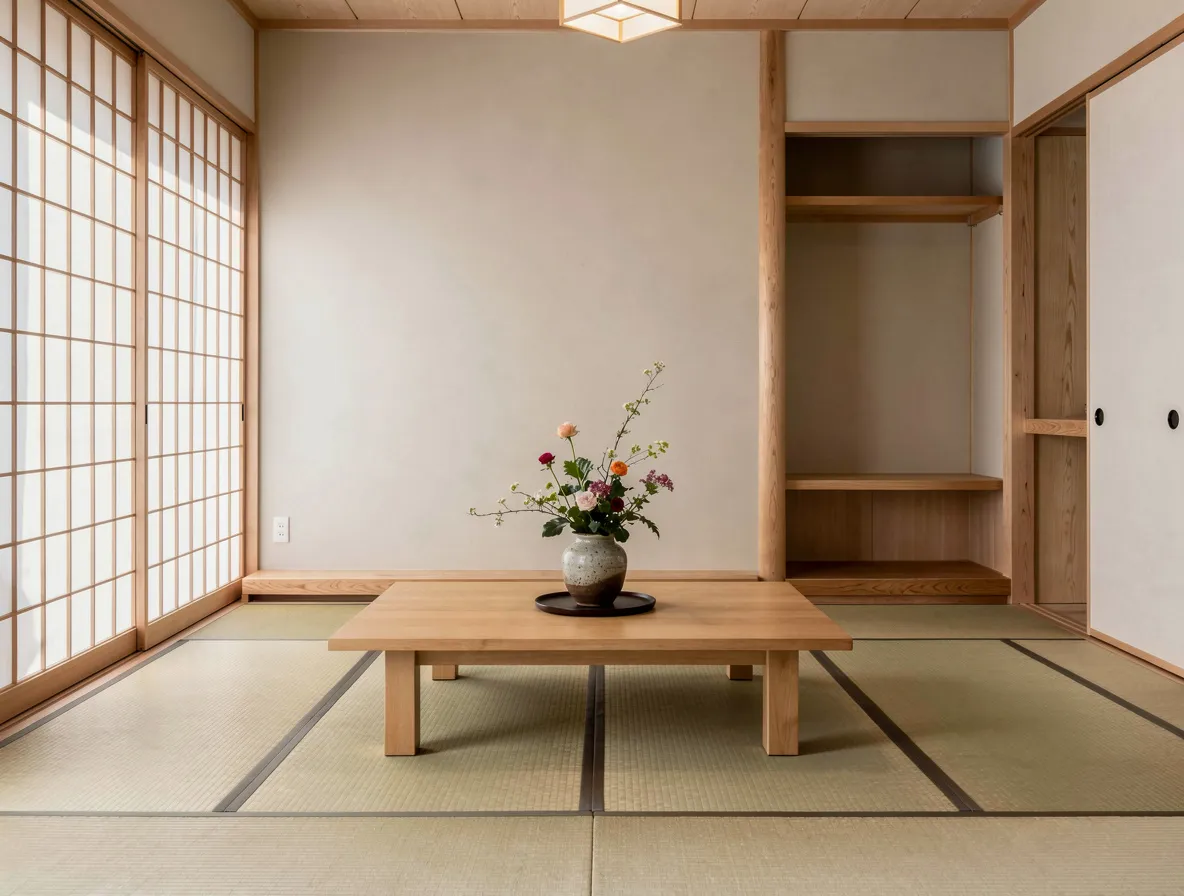
Japanese
Tatami mats, shoji screens, and low furniture bring the serene simplicity and harmony of Japanese minimalism.
Common Questions
Bamboo Design: FAQ
What is bamboo used for in interior design?
Flooring, wall paneling, furniture, blinds and window coverings, light fixtures, and decorative objects. Engineered bamboo flooring is one of the most popular sustainable flooring alternatives to hardwood.
Is bamboo flooring as durable as hardwood?
Strand-woven bamboo is harder than most hardwoods on the Janka scale. Standard bamboo flooring is softer and more prone to denting. Choose the appropriate type for your traffic level.
What does bamboo interior design look like?
Warm, natural, and clean-lined - bamboo has a fine, regular grain and a warm golden-cream tone that works well in Japandi, tropical, and natural interior styles. It reads as modern and sustainable simultaneously.
Is bamboo really sustainable?
Bamboo itself is highly sustainable - fast growth, carbon-sequestering, no need to kill the plant. The sustainability of specific bamboo products depends on the adhesives used and the certification of the source. Look for FSC certification and low-VOC adhesives.
Ready to Transform Your Space?
Upload a photo and see it in bamboo style - or any of our 80+ other styles - in seconds.