Craftsman Design
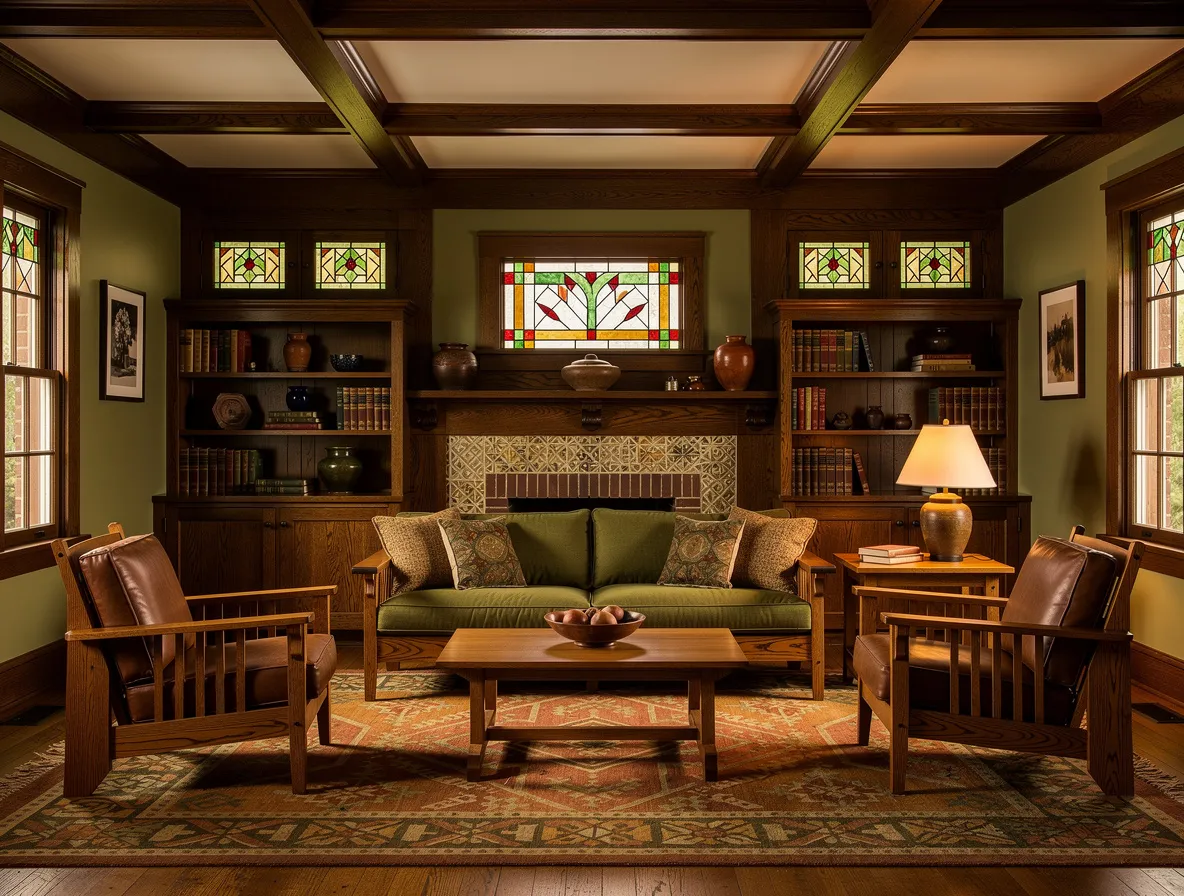
Arts and Crafts philosophy meets California sunshine - Craftsman design celebrates visible joinery, natural materials, and the inherent beauty of honest workmanship.
About the Style
What Is Craftsman Design?
The American Craftsman style emerged in the late 19th and early 20th centuries, championed by designers like Gustav Stickley and the architects Greene and Greene. A direct response to Victorian excess and industrial mass production, Craftsman design celebrates visible joinery, quarter-sawn oak, hand-hammered copper, built-in furniture, and a warm palette of earth tones and natural materials. The California Bungalow is its most beloved architectural expression.
Why People Love It
-
The most honest expression of visible quality craftsmanship in American design
-
Built-in furniture transforms the function and character of any room
-
Quarter-sawn oak develops a magnificent patina that improves with decades of use
-
The Craftsman philosophy of art in everyday objects is as relevant today as in 1905
Key Characteristics
-
Quarter-sawn oak with visible grain
-
Hand-hammered copper and bronze hardware
-
Built-in bookcases and window seats
-
Exposed structural joinery as decoration
-
Tapered square columns in covered porches
-
Earth tones inspired by the landscape
Color Palette
Materials
Ideal For
Room-by-Room
Craftsman Design in Every Room
How craftsman design translates across every space in your home
Living Room
Quarter-sawn oak built-ins flanking the fireplace, hand-hammered copper light fixtures, a ceramic tile fireplace surround, and Stickley-style seating.
Kitchen
Painted or oak cabinetry with simple hardware, ceramic tile splashback in a Craftsman earthy glaze, butcher block or stone countertop.
Bedroom
Built-in closets with simple copper hardware, an oak bed with visible mortise-and-tenon joints, and earth-tone textiles.
Bathroom
Ceramic tile in earthy Craftsman tones, a timber vanity with copper fixtures, and hand-crafted ceramic accessories.
Exterior
Tapered columns on stone piers, a deep covered porch, exposed rafter tails, knee braces in the gable, and unpainted bungalow siding.
Visualize It First
See Craftsman Design in Your Space
Upload any photo and our AI transforms it into craftsman style in seconds
Upload a photo
Any room, any angle. Interior or exterior - phone photo is fine.
Select "Craftsman"
Choose this style from our library or describe it to the AI in plain language.
Get your design
Photorealistic result in seconds. Download in HD or 4K resolution.
Expert Advice
How to Achieve Craftsman Design
Practical tips from designers who work with craftsman style every day.
Specify quarter-sawn (not flat-sawn) oak for furniture, floors, and built-ins - the medullary ray figure is uniquely beautiful and the defining Craftsman material.
Install a built-in bookcase flanking a fireplace - this is the single most characteristic and beautiful Craftsman room element.
Use hand-hammered copper or bronze hardware throughout - door handles, light switch plates, and cabinet hardware all contribute to the authentic Craftsman palette.
Glaze ceramic tile for the fireplace surround in a matte earthy color - green, amber, or brown Grueby-style tile is the period-authentic Craftsman choice.
Create a covered front porch with tapered square columns on stone or brick piers - the Craftsman porch is the public face of the interior philosophy.
Design History
Gustav Stickley and the American Arts and Crafts Movement
American Craftsman style was shaped more by one man - and one magazine - than by any other force. Gustav Stickley spent 20 years defining what American craft excellence should look like.
Stickley Visits England and Returns Changed
Gustav Stickley visited England in 1898, met Arts and Crafts designers including C.F.A. Voysey and Charles Rennie Mackintosh, and returned to his Syracuse, New York furniture factory with a new philosophy. He stopped making ornate Victorian reproductions and began designing sturdy, honest furniture in quarter-sawn oak with visible joinery - furniture that announced its construction method rather than concealing it.
The Craftsman Magazine Launches
Stickley launched The Craftsman magazine in October 1901, the same month he showed his first Arts and Crafts furniture collection. The magazine published house plans, garden designs, and furniture drawings that readers could order directly. For 15 years it was the most influential design magazine in America, disseminating Craftsman design principles to a national audience.
The Gamble House - Craftsman's Greatest Achievement
Henry and Charles Greene designed the Gamble House in Pasadena (1908-1909) for the heirs of Procter and Gamble. It is the most complete surviving example of American Craftsman architecture and interior design - the structure, built-in furniture, lighting fixtures, and even the front door glass were all designed as a unified whole. Every wooden joint is decorative as well as structural.
Stickley Goes Bankrupt and the Style Wins
Ironically, the mass reproduction of Craftsman design by competitors who could produce it more cheaply contributed to Stickley's own bankruptcy in 1916. But the style he had championed had already penetrated American domestic architecture thoroughly - bungalows with craftsman details, built-in bookcases and window seats, and quartersawn oak woodwork defined American middle-class housing for decades.
Style Pairings
Styles That Complement Craftsman
Mix craftsman with these styles for a layered, personal look.
Farmhouse
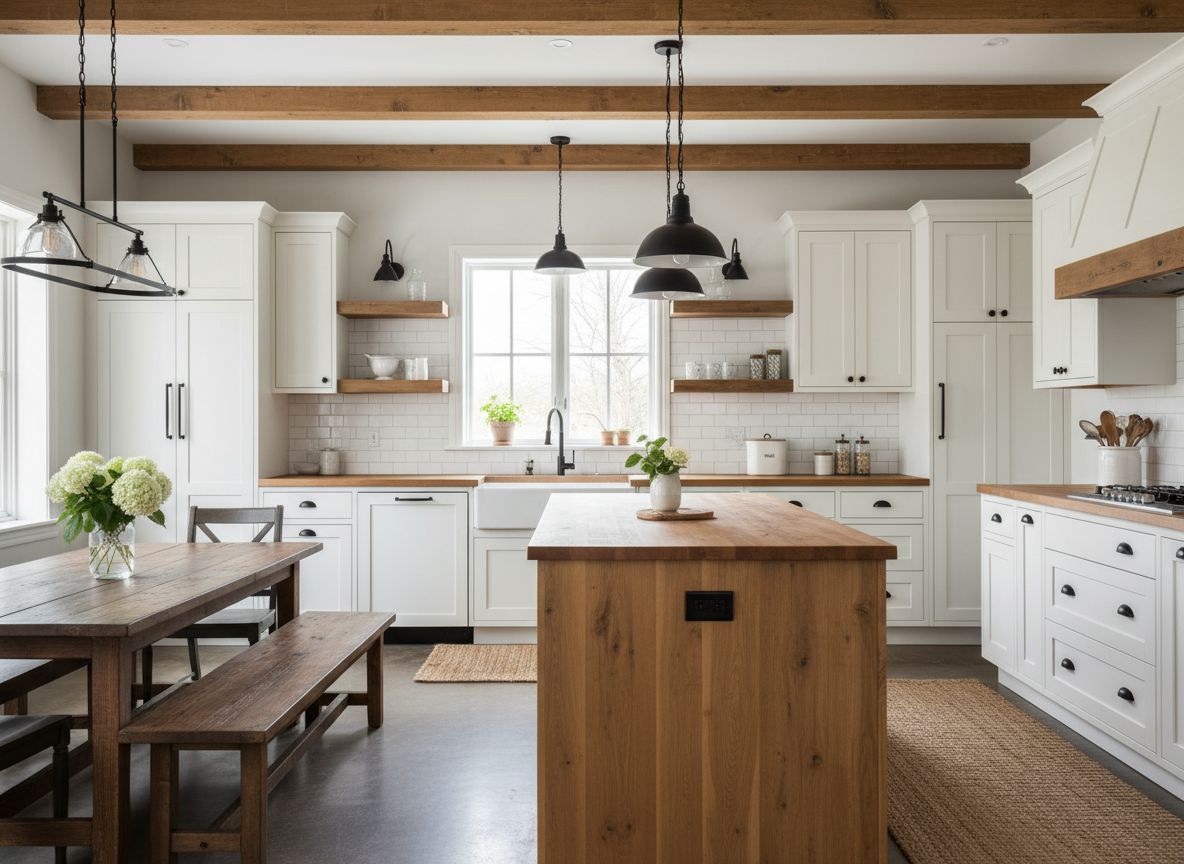
Warm, inviting spaces with rustic charm and modern comfort. Shaker cabinets, natural wood elements, and vintage-inspired fixtures.
Shaker
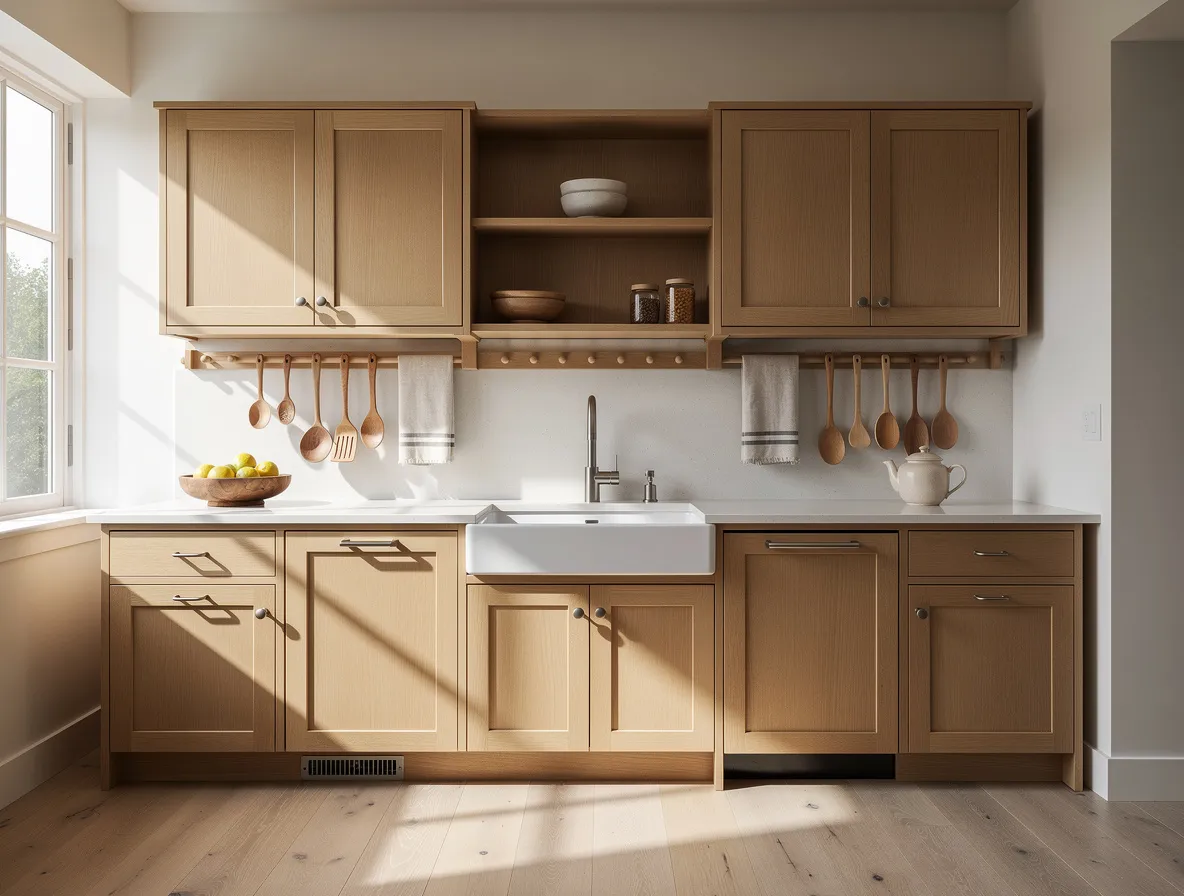
Flat-panel doors, peg rails, and simple hardware embody the clean, functional beauty of Shaker craftsmanship.
Arts & Crafts
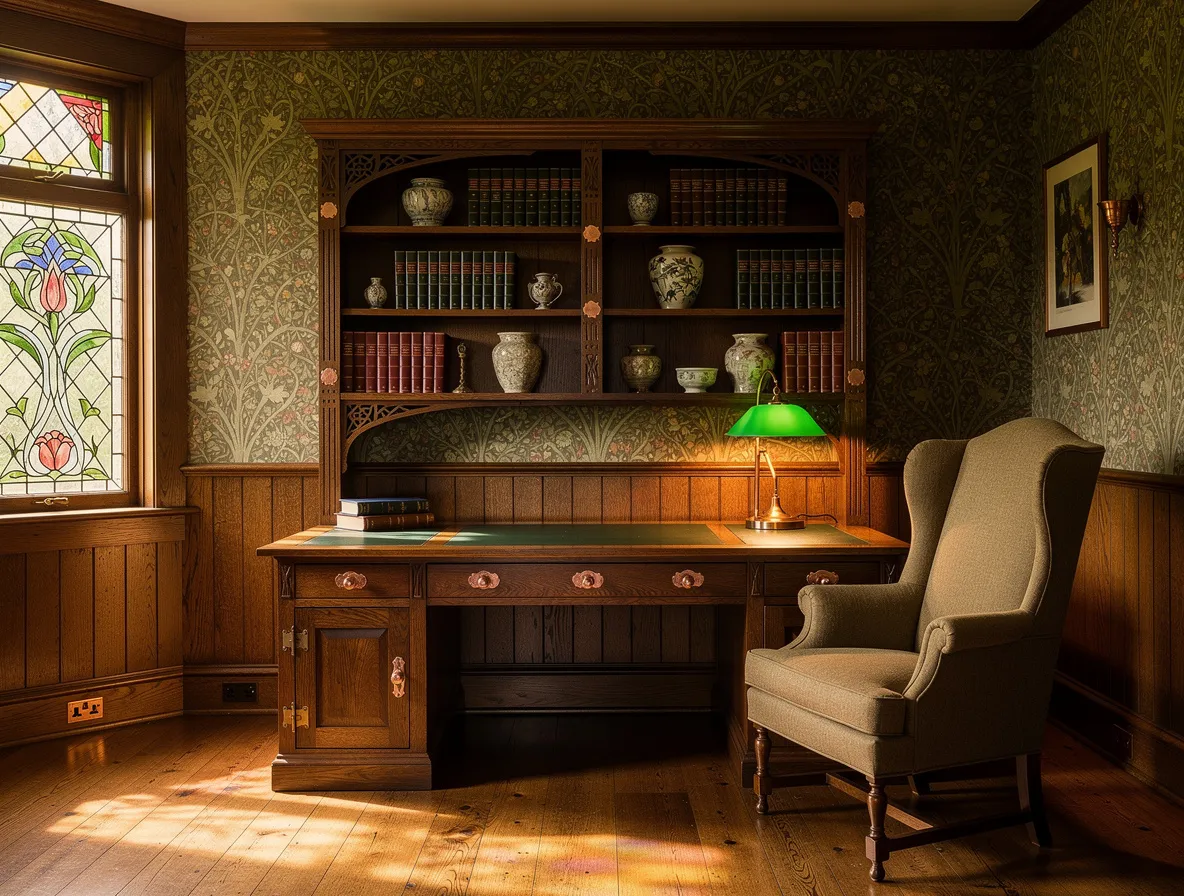
Handcrafted woodwork, William Morris wallpaper, and copper hardware honor the beauty of artisanal craftsmanship.
Mission
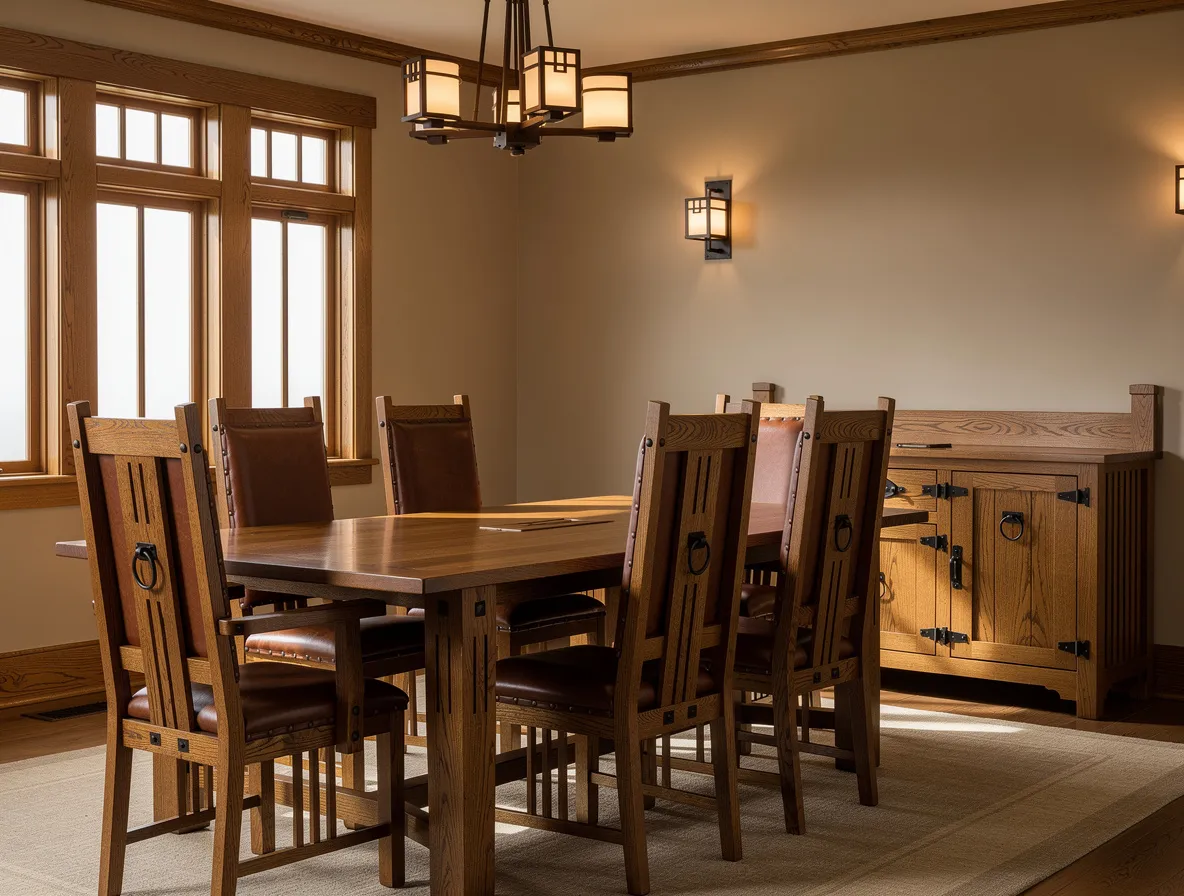
Solid oak furniture, straight lines, and leather upholstery define this proudly American design tradition.
Common Questions
Craftsman Design: FAQ
What defines Craftsman interior design?
Quarter-sawn oak woodwork with visible joinery, built-in furniture (bookcases, window seats, inglenook fireplaces), natural materials throughout, and an honest expression of how things are made rather than decorative concealment.
What is quarter-sawn oak and why is it important to Craftsman design?
Quarter-sawn oak is cut radially through the log, revealing a distinctive medullary ray pattern (ray fleck) that standard flat-sawn oak does not show. It is more stable, more durable, and considered more beautiful. Stickley used it as a mark of quality.
What colors are used in Craftsman interiors?
Warm earth tones - warm amber, olive green, rust red, warm brown, and sage. The palette is drawn from natural landscapes rather than fashionable color trends. Tile is often in Arts and Crafts matte glazes in green, brown, and blue.
What is the difference between Craftsman and Arts and Crafts design?
Arts and Crafts is the broader movement, originating in England with William Morris. Craftsman specifically refers to the American version as developed by Stickley, the Greene brothers, and their circle - it has a more robust, masculine character and uses American materials.
Ready to Transform Your Space?
Upload a photo and see it in craftsman style - or any of our 80+ other styles - in seconds.