Arts and Crafts Design
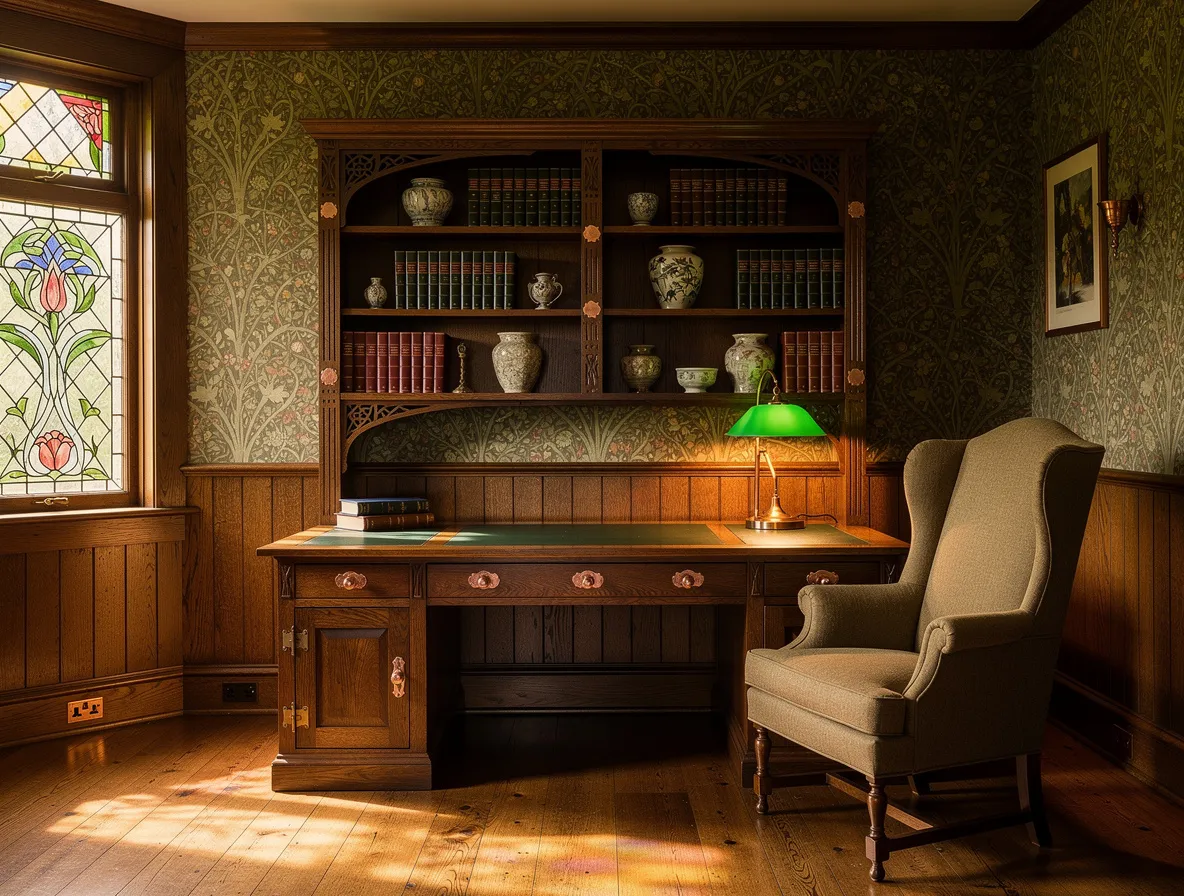
William Morris's revolutionary philosophy - beauty in everyday objects, handcraft over machine production, and natural materials in their truest form - defining interiors of genuine artistic integrity.
About the Style
What Is Arts and Crafts Design?
The Arts and Crafts movement emerged in Britain in the 1860s-80s as a direct response to the dehumanizing effects of industrialization on both workers and products. William Morris, Augustus Pugin, and later Charles Rennie Mackintosh championed handcraft, natural materials, regional building traditions, and the integration of art and everyday life. The movement produced some of the most beautiful wallpapers, textiles, tiles, and furniture ever made.
Why People Love It
-
William Morris patterns are among the most beautiful ever designed and remain in production today
-
The philosophy of art in everyday objects is the most human and relevant design tradition
-
Handmade ceramics and tiles are genuinely unique - each one different from the last
-
The inglenook fireplace is one of the most beautiful and human domestic architectural elements
Key Characteristics
-
William Morris wallpaper and textile patterns
-
Handmade ceramic tiles from Minton or De Morgan
-
Inglenook fireplace as room heart
-
Exposed timber beams and joinery
-
Hand-embroidered textiles and tapestries
-
Stained glass in windows and doors
Color Palette
Materials
Ideal For
Room-by-Room
Arts & Crafts Design in Every Room
How arts and crafts design translates across every space in your home
Living Room
An inglenook fireplace with built-in settles, William Morris wallpaper, an embroidered tapestry, hand-painted ceramic vases, and exposed timber beams.
Kitchen
Hand-painted ceramic tile splashback, timber cabinetry with simple iron hardware, a scrubbed pine table, and a dresser displaying Arts and Crafts pottery.
Bedroom
A Morris pattern wallpaper, simple oak furniture, embroidered bedspread, stained glass panel in the window, and hand-painted ceramic lamp base.
Bathroom
Handmade ceramic tile in a nature-inspired pattern, an oak timber vanity, simple iron hardware, and nature motif accessories.
Exterior
Patterned red brick with terracotta tile accents, hung tile or timber-framed upper floor, a garden with cottage planting, and stained glass in the porch.
Visualize It First
See Arts and Crafts Design in Your Space
Upload any photo and our AI transforms it into arts and crafts style in seconds
Upload a photo
Any room, any angle. Interior or exterior - phone photo is fine.
Select "Arts & Crafts"
Choose this style from our library or describe it to the AI in plain language.
Get your design
Photorealistic result in seconds. Download in HD or 4K resolution.
Expert Advice
How to Achieve Arts & Crafts Design
Practical tips from designers who work with arts & crafts style every day.
Use a genuine William Morris or Liberty of London wallpaper or fabric - the originals remain in production and are available for authentic period effect.
Create an inglenook fireplace with a built-in settle on each side - it is the single most important Arts and Crafts room element and transforms any living space.
Source William De Morgan, Minton, or Doulton tiles for the fireplace surround - period originals are available at auction; high-quality reproductions from specialist suppliers.
Install stained glass panels in doors and windows - a single Arts and Crafts-inspired stained glass panel transforms the light quality of an entire room.
Commission or source hand-embroidered textiles: a Morris-influenced cushion, a tapestry panel, or hand-stitched tablecloth expresses the core Arts and Crafts values.
Design History
William Morris and the Revolution Against Victorian Industry
The Arts and Crafts movement was not just an aesthetic choice - it was a political and moral response to industrialisation, founded on a belief that ugly objects cause ugly lives.
The Great Exhibition - What Morris Hated
The 1851 Great Exhibition in London's Crystal Palace was a showcase of Victorian industrial production - mass-manufactured objects in every style simultaneously, made by machines without craft knowledge. To young William Morris and his circle, this was a moral catastrophe. Their response was to return to handcraft - not as nostalgia but as resistance.
Morris, Marshall, Faulkner and Co.
William Morris and his friends - including Dante Gabriel Rossetti, Edward Burne-Jones, and Philip Webb - founded a design firm in 1861 to produce handmade decorative objects: wallpaper, textiles, stained glass, tiles, and furniture. The firm rediscovered medieval techniques of textile production, natural dyeing, and hand-weaving. Its work was expensive, beautiful, and deliberately countercultural.
The Movement Goes International
Arts and Crafts spread globally through exhibitions, publications, and emigrating designers. The Century Guild (1882), the Art Workers Guild (1884), and the Arts and Crafts Exhibition Society (1887) organized London's practitioners. In America, Elbert Hubbard's Roycroft community and Stickley's Craftsman workshops developed the American version. In Vienna, the Wiener Werkstatte. In Scotland, Charles Rennie Mackintosh.
The Red House as Manifesto
Morris commissioned Philip Webb to design his own home, Red House in Bexleyheath, in 1860. The building and its interior - with Morris's own hand-embroidered hangings, Webb's furniture, and Burne-Jones's windows - became the manifesto of what the movement stood for: a house designed by artists, made by hand, integrating building and content into a single work of art.
Style Pairings
Styles That Complement Arts & Crafts
Mix arts & crafts with these styles for a layered, personal look.
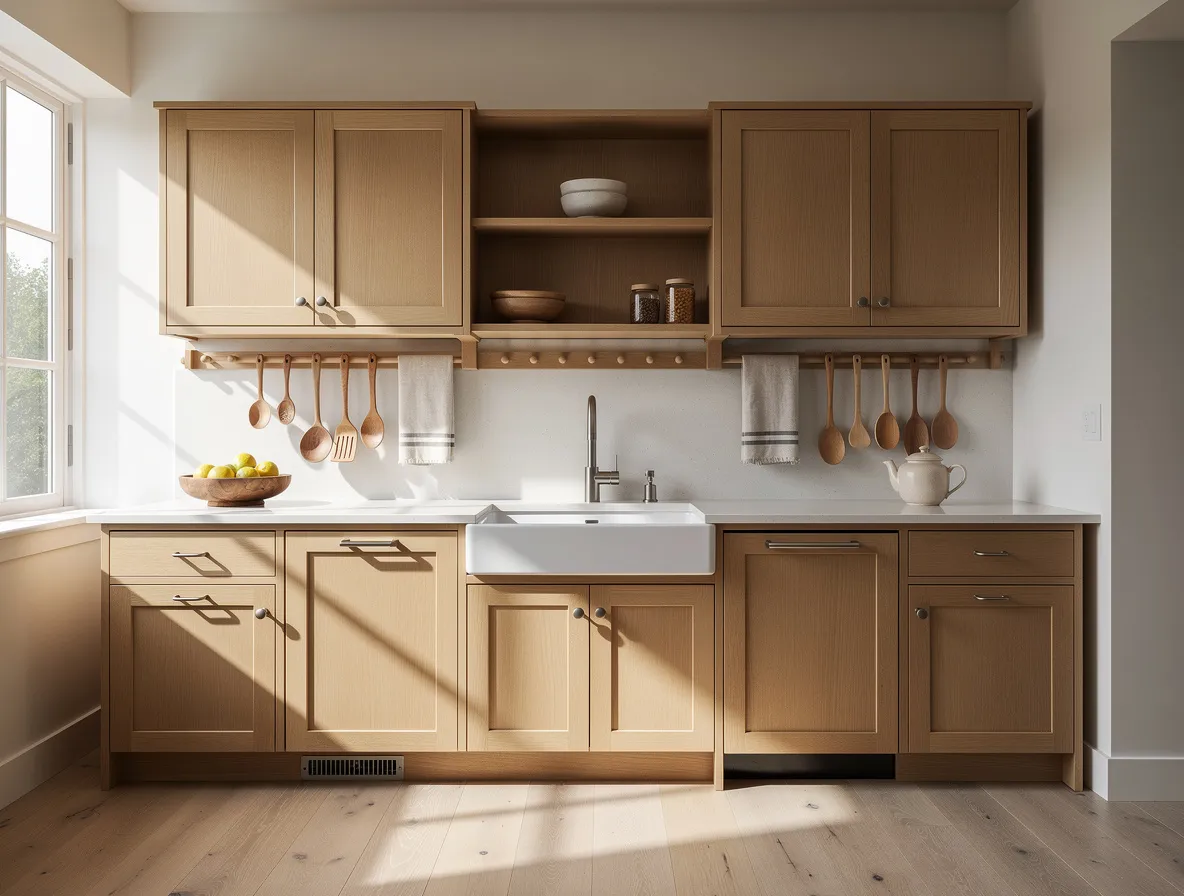
Shaker
Flat-panel doors, peg rails, and simple hardware embody the clean, functional beauty of Shaker craftsmanship.
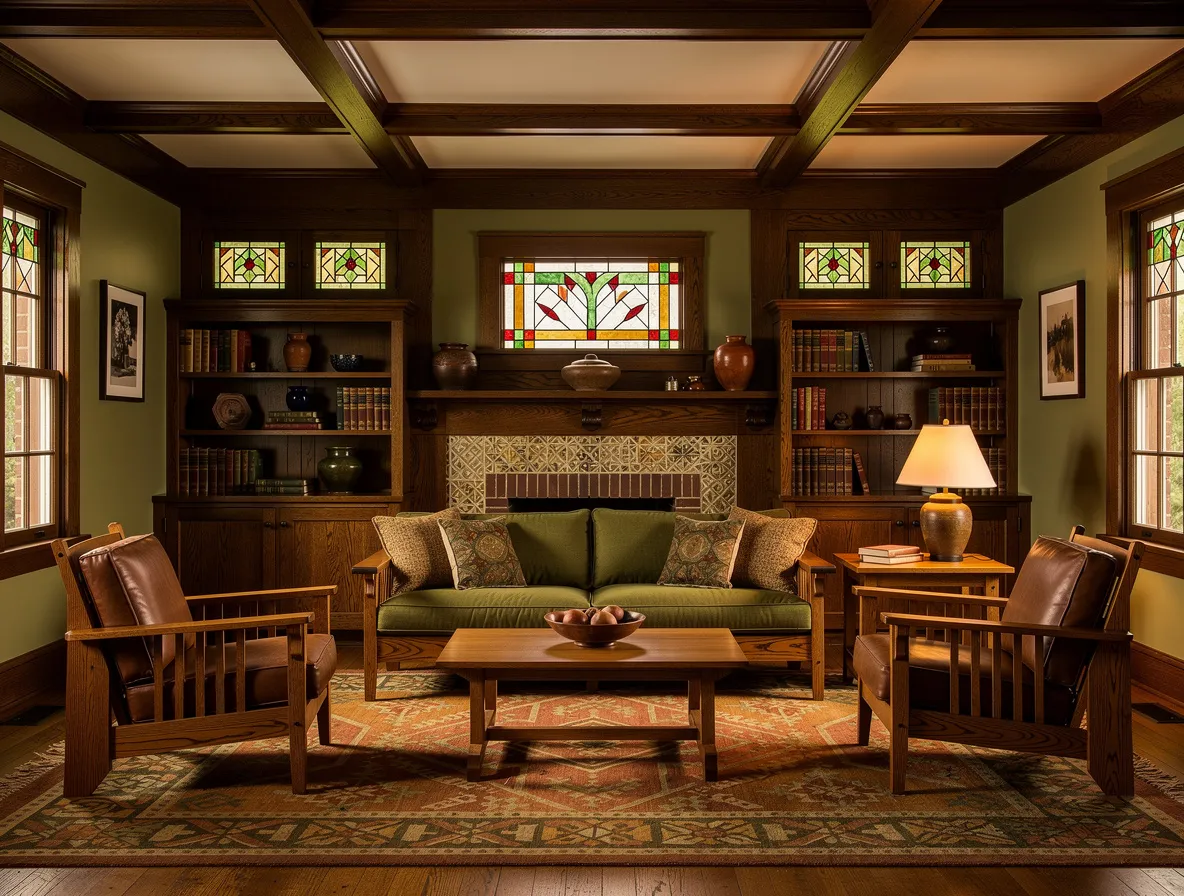
Craftsman
Built-in bookcases, rich wood trim, and stained glass accents celebrate the arts-and-crafts movement's legacy.
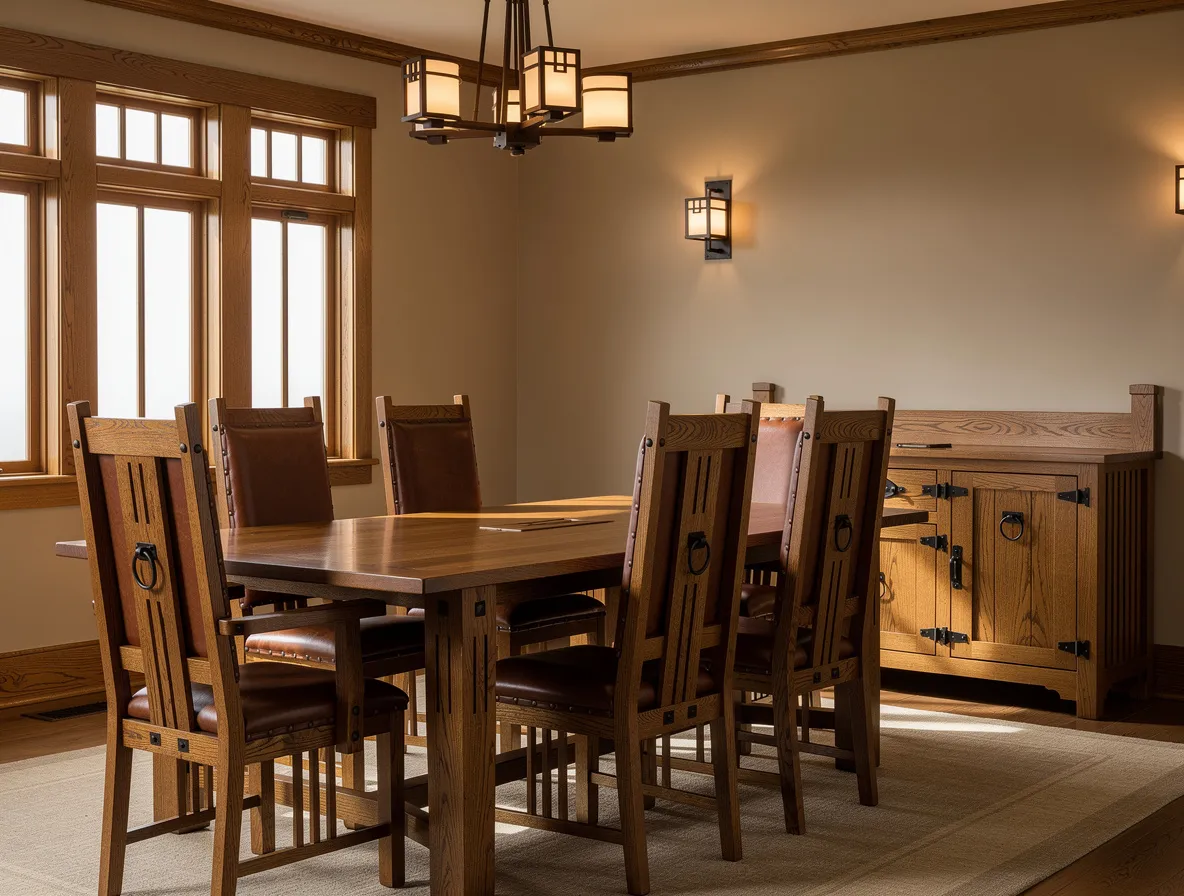
Mission
Solid oak furniture, straight lines, and leather upholstery define this proudly American design tradition.
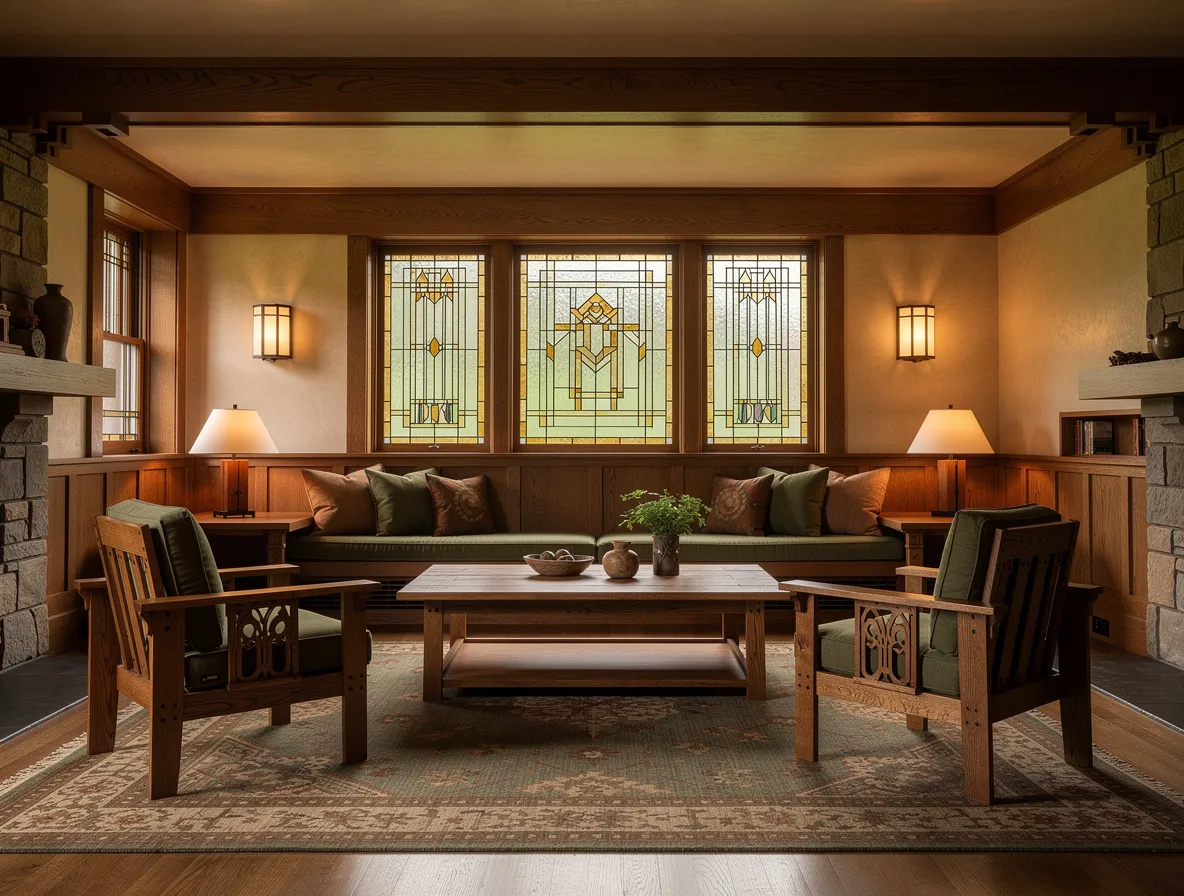
Prairie
Horizontal lines, art glass windows, and built-in seating inspired by Frank Lloyd Wright's iconic American vision.
Common Questions
Arts & Crafts Design: FAQ
What defines Arts and Crafts interior design?
Handmade objects, natural materials, visible joinery and construction, botanical and medieval motifs in pattern work, and an ethical position: beautiful objects made by skilled craftspeople are morally superior to ugly objects made by machines.
What is the most recognisable Arts and Crafts pattern?
William Morris's Strawberry Thief (1883) and Willow Bough wallpaper patterns are the most recognisable - richly detailed botanical designs in natural colors, still available as reproduction prints. They are the most widely reproduced wallpaper patterns in history.
What is the difference between Arts and Crafts and Craftsman?
Arts and Crafts originated in England with Morris as a reaction against industrial production - it is philosophical and moralistic. American Craftsman (Stickley) is more pragmatic - excellent craft quality in furniture and architecture without the full political context.
What colors are used in Arts and Crafts design?
Natural, botanical colors - olive green, warm ochre, rust red, earthy brown, and deep indigo blue. These were the colors achievable with natural dyes, which Morris preferred over chemical synthetic dyes as a matter of principle.
Ready to Transform Your Space?
Upload a photo and see it in arts and crafts style - or any of our 80+ other styles - in seconds.