Prairie Design
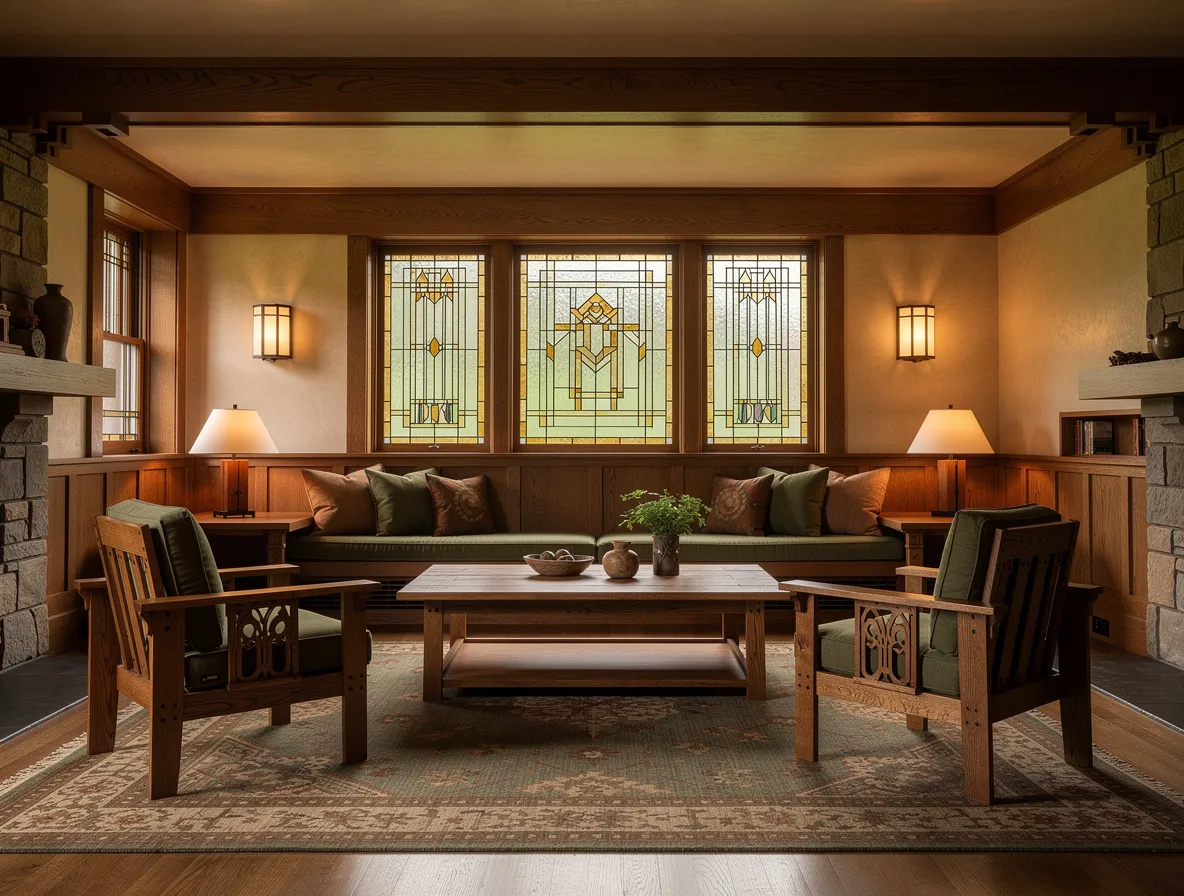
Frank Lloyd Wright's horizontal genius - Prairie design extends low, sweeping lines across the American landscape through organic integration of architecture, interior, and site.
About the Style
What Is Prairie Design?
Prairie style is Frank Lloyd Wright's original American contribution to world architecture - a horizontally-oriented domestic style that embraces the flat landscape of the Midwest. Long overhanging eaves, bands of leaded glass windows, built-in furniture, earth-tone materials, and the integration of interior and exterior as a continuous experience define the style. The 'organic architecture' philosophy holds that building and landscape should be inseparable.
Why People Love It
-
Frank Lloyd Wright is the greatest American architect, and Prairie is his greatest domestic style
-
The integration of interior and landscape creates a unique sense of connection to the land
-
Art glass windows create uniquely beautiful patterned light throughout the day
-
Built-in furniture makes every room feel architecturally complete
Key Characteristics
-
Strong horizontal lines throughout
-
Low overhanging eaves with deep overhang
-
Bands of art glass windows in geometric patterns
-
Built-in furniture as integral architecture
-
Earth and nature-inspired palette and materials
-
Central hearth as the organizing architectural element
Color Palette
Materials
Ideal For
Room-by-Room
Prairie Design in Every Room
How prairie design translates across every space in your home
Living Room
A central fireplace rising through the room as the vertical counterpoint to the horizontal architecture, built-in window seats, and art glass panels.
Kitchen
Horizontal cabinetry in quarter-sawn oak, a low ceiling with strong horizontal planes, earth-tone tile, and integration with the adjacent dining space.
Bedroom
Built-in wardrobes as architectural elements, horizontal banding at consistent height, and art glass in at least one window.
Bathroom
Earth-tone tile in a horizontal pattern, Roman brick or stone, simple Prairie-influenced geometric accessories.
Exterior
Long horizontal rooflines with deep overhangs, bands of art glass windows, Roman brick or stucco, and native prairie planting in horizontal layers.
Visualize It First
See Prairie Design in Your Space
Upload any photo and our AI transforms it into prairie style in seconds
Upload a photo
Any room, any angle. Interior or exterior - phone photo is fine.
Select "Prairie"
Choose this style from our library or describe it to the AI in plain language.
Get your design
Photorealistic result in seconds. Download in HD or 4K resolution.
Expert Advice
How to Achieve Prairie Design
Practical tips from designers who work with prairie style every day.
Emphasize horizontal banding in every room: a cornice at window head height, a continuous shelf at consistent height, a datum line that runs throughout.
Commission or source art glass (leaded geometric windows) for at least one significant window - the patterned light it creates is the most distinctively Prairie interior element.
Design built-in furniture as architecture rather than furniture - Wright's Robie House built-ins are literally part of the building, not placed in it.
Use Roman brick (long, thin, horizontal bricks) for any masonry work - Wright specified Roman brick to reinforce the horizontal aesthetic.
Plant the site with low, horizontal plantings in layers that mirror the architecture - Prairie-style gardens are as important as the building.
Design History
Frank Lloyd Wright and the Architecture of the American Landscape
Prairie style was a direct visual argument: American architecture should look like America, not like Europe. Frank Lloyd Wright spent his career developing this argument into one of the most distinctive design vocabularies in history.
Wright Leaves Sullivan and Starts the Prairie School
After being fired from Louis Sullivan's firm for moonlighting, Wright established his own practice in Oak Park, Illinois. His first houses were still transitional, but his 1901 'House in a Prairie Town' article in Ladies Home Journal articulated the design vision he would spend the next 30 years refining: horizontal, rooted in the landscape, integrated with nature.
Robie House - The Prairie Masterpiece
Frederick Robie's house in Chicago's Hyde Park district (1908-1910) is the definitive Prairie interior - the extraordinary cantilever of the main floor, the continuous band of art-glass windows, the built-in furniture and lighting, and the central fireplace that divides living from dining without a wall. Every element was designed by Wright as part of an integrated whole.
Fallingwater - Prairie Principles at Their Peak
Fallingwater (Bear Run, Pennsylvania) is Wright's most famous building - a weekend house cantilevered over a waterfall in a Pennsylvania forest. The interior continues Prairie principles at their most sophisticated: concrete terraces hovering over the stream, a living room hatch opening directly to the water below, and stone floors incorporating the bedrock of the site itself.
Usonian Houses - Prairie for Everyone
Wright designed Usonian houses as affordable Prairie-inspired homes for middle-income Americans - compact open plans, carports instead of garages, radiant floor heating, and the characteristic horizontal board-and-batten exterior. The interiors used local wood in exposed construction, built-in furniture, and the Prairie color palette of earth tones. They were his attempt to make his philosophy accessible without compromise.
Style Pairings
Styles That Complement Prairie
Mix prairie with these styles for a layered, personal look.
Organic
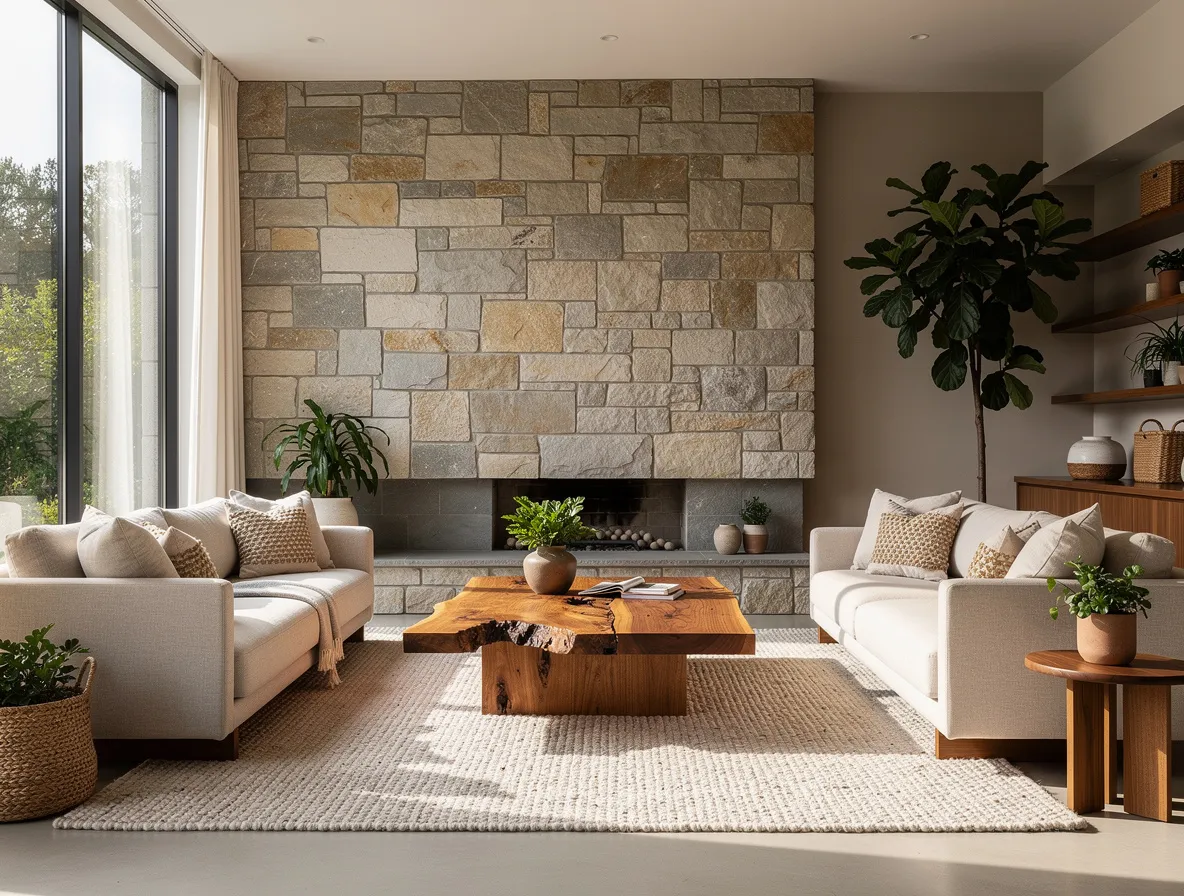
Natural materials, live-edge wood, stone accents, and woven textiles ground your space in organic beauty.
Craftsman
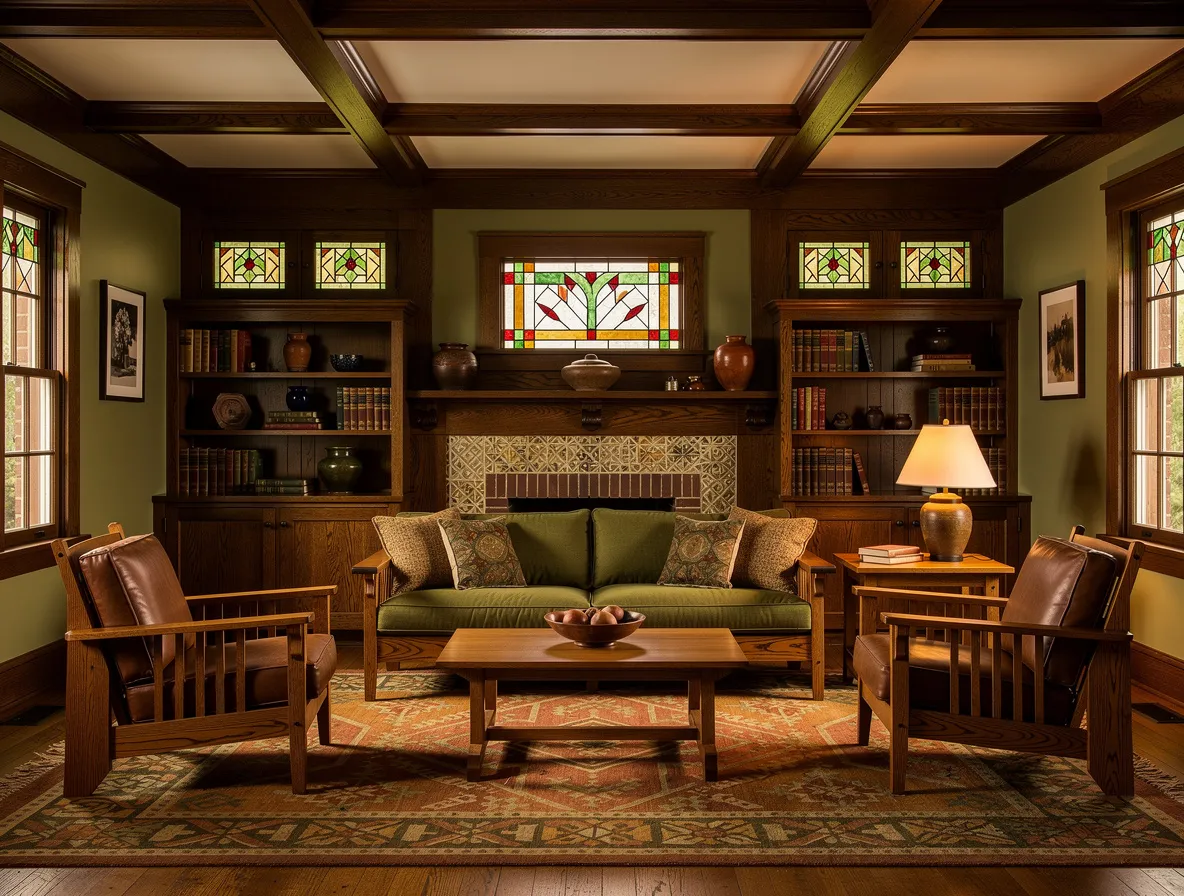
Built-in bookcases, rich wood trim, and stained glass accents celebrate the arts-and-crafts movement's legacy.
Arts & Crafts
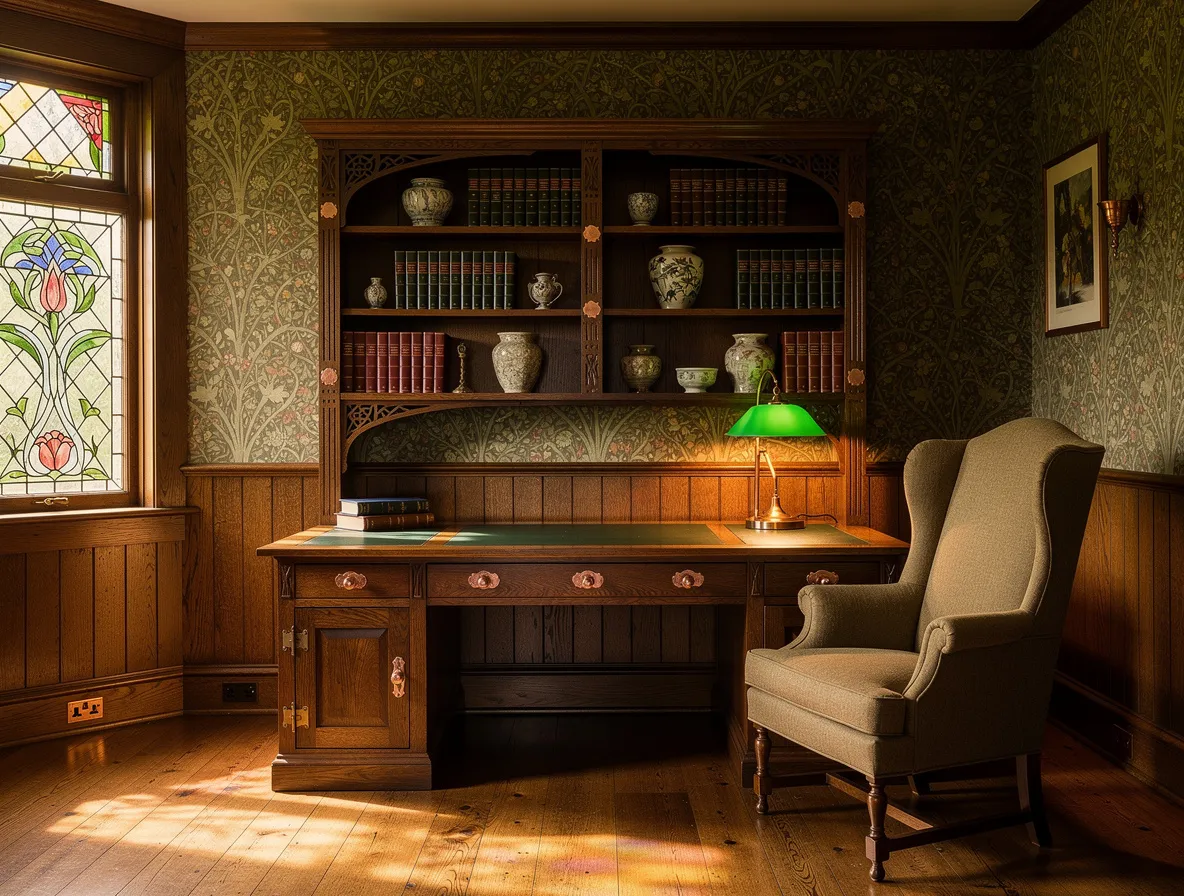
Handcrafted woodwork, William Morris wallpaper, and copper hardware honor the beauty of artisanal craftsmanship.
Mission
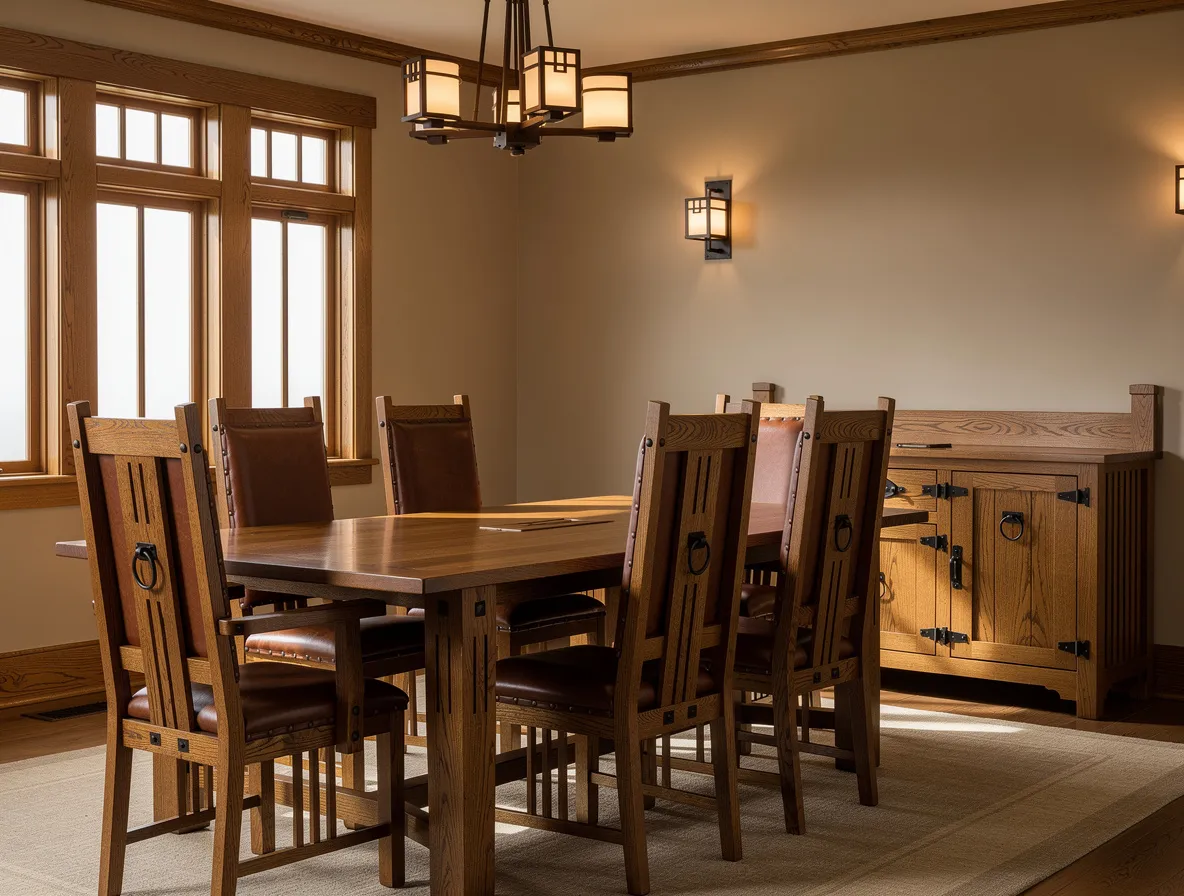
Solid oak furniture, straight lines, and leather upholstery define this proudly American design tradition.
Common Questions
Prairie Design: FAQ
What defines Prairie interior design?
Strong horizontal emphasis, integration with the landscape through overhanging eaves and earth-tone colors, the central fireplace as a room anchor, built-in furniture and lighting, and art-glass details in geometric nature-inspired patterns.
What colors are used in Prairie interiors?
Earth tones drawn from the American Midwest landscape - warm amber, ochre, rust red, forest green, warm brown, and deep gold. Wright specified his own paint colors for every project, but the palette was always landscape-derived.
What materials are signature to Prairie design?
Brick and masonry (often incorporating local stone), warm-toned hardwood for built-ins and trim, concrete for structural elements, and art glass (leaded colored glass in geometric patterns) as a unifying decorative element.
Can Prairie design be applied to a conventional home?
Some elements transfer well: a dominant horizontal emphasis in furniture selection, earth-tone palette, a central fireplace as the main room feature, and simple geometric pattern work in textiles. The architectural cantilevers and built-ins require new construction.
Ready to Transform Your Space?
Upload a photo and see it in prairie style - or any of our 80+ other styles - in seconds.