Mission Design
Spanish mission architecture's serene simplicity meets Craftsman joinery in Mission design - rectilinear, honest, and deeply rooted in the American Southwest.
About the Style
What Is Mission Design?
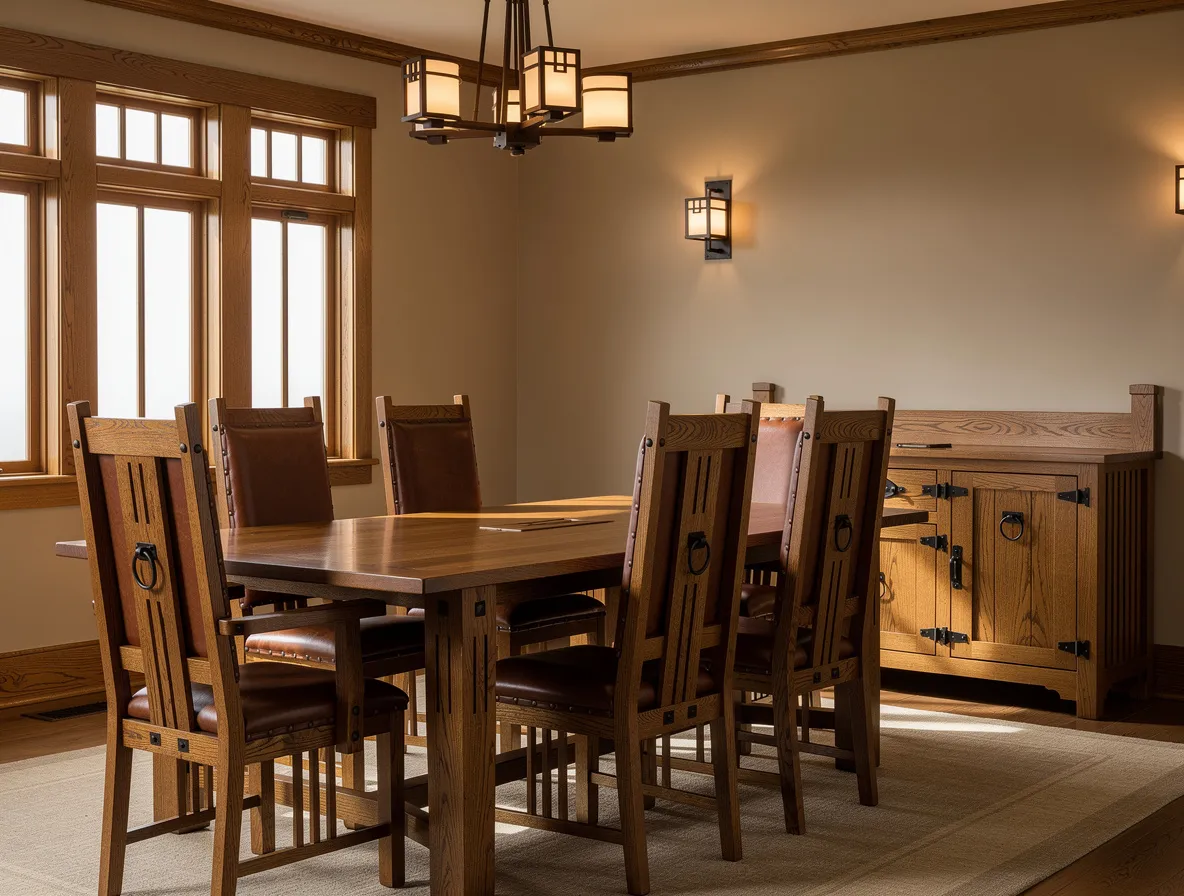
Mission style draws from the adobe and timber architecture of California's Spanish missions and the American Craftsman furniture tradition, producing interiors of severe, beautiful simplicity. Dark quartered oak with visible mortise-and-tenon joints, simple straight lines without curve or ornament, leather upholstery, and a warm earth-tone palette define Mission furniture. The style influenced Gustave Stickley's famous Craftsman furniture and was central to the broader American Arts and Crafts movement.
Why People Love It
-
The most severe and honest furniture tradition in American design history
-
Mortise-and-tenon and through-tenon joinery is both beautiful and supremely durable
-
The dark oak and leather combination is warm, masculine, and magnificently functional
-
Stickley Mission furniture is among the most collected and valued American design
Key Characteristics
-
Rectilinear forms with no curve or ornament
-
Dark quartered oak with visible mortise-and-tenon joints
-
Flat-plank construction with exposed through-tenons
-
Leather upholstery or simple woven seat cushions
-
Heavy, deliberate proportions
-
Earth-tone palette derived from adobe architecture
Color Palette
Materials
Ideal For
Room-by-Room
Mission Design in Every Room
How mission design translates across every space in your home
Living Room
Dark quartered oak settle, a Stickley Morris chair in brown leather, amber glass strap-metal chandelier, and earth-tone textiles and tile.
Kitchen
Dark oak cabinetry with simple iron hardware, terracotta tile floor, adobe-inspired wall color, and copper cookware displayed openly.
Bedroom
A Mission oak bed with flat-plank construction and through-tenon details, simple leather-trimmed furniture, and earth-tone bedding.
Bathroom
Adobe tile in terracotta tones, dark oak vanity, copper or iron fixtures, and simple leather or linen accessories.
Exterior
Adobe or stucco walls in warm earth tones, a tiled roof overhang, tapered square porch columns, and native Southwest planting.
Visualize It First
See Mission Design in Your Space
Upload any photo and our AI transforms it into mission style in seconds
Upload a photo
Any room, any angle. Interior or exterior - phone photo is fine.
Select "Mission"
Choose this style from our library or describe it to the AI in plain language.
Get your design
Photorealistic result in seconds. Download in HD or 4K resolution.
Expert Advice
How to Achieve Mission Design
Practical tips from designers who work with mission style every day.
Source authentic Stickley, Roycroft, or Limbert Mission furniture rather than mass reproductions - the quality of craftsmanship is the entire point of Mission style.
Use dark oil-finished quartered oak for any custom joinery - the rectilinear forms and mortise-and-tenon details are non-negotiable Mission elements.
Upholster Mission furniture in brown or tan leather with visible tack trim - it is the period-authentic choice and ages beautifully.
Create a strap-metal chandelier with amber glass panels - this is the most characteristic Mission lighting form and an exact historical reference.
Apply an earth-tone palette: deep terracotta walls, adobe or saltillo tile floors, and heavy timber elements reference the Spanish mission architecture the style honors.
Design History
The Spanish Missions That Built California Design
Mission interior design traces directly to 21 Spanish Franciscan missions built along the California coast between 1769 and 1833 - structures that survived American occupation and became the founding myth of California architecture.
Father Serra Builds the First Mission
Junipero Serra established Mission San Diego de Alcala in 1769 - the first of 21 missions built in a chain along El Camino Real (the Royal Road). The missions used adobe construction with thick walls, tile roofs, and simple rounded arches - forms developed for the California climate that required no specialized building knowledge or imported materials.
The Mission Building Type
The interior characteristics of California missions became the defining elements of Mission design: thick adobe or plaster walls in warm white, terracotta tile floors, simple wooden furniture with visible joinery, wrought iron hardware, small windows with deep reveals, and central courtyards with fountain or garden. These forms developed for functional reasons (thermal mass, light control, water collection) and were later adopted as style.
The Mission Revival
California's Mission Revival movement of the 1890s-1920s rediscovered and romanticised the original missions. The 1915 Panama-California Exposition in San Diego featured entire streets of Mission Revival buildings - curvilinear gable ends, red tile roofs, arcaded corridors, and white plaster walls. This established the Southern California domestic architectural vocabulary that persists today in Spanish Colonial and Mediterranean residential design.
Mission Furniture Becomes a National Style
Gustav Stickley's Craftsman furniture was often marketed as 'Mission' style in the early 1900s - a deliberate reference to California mission simplicity. The term stuck, and Mission furniture became a nationally recognised style: straight-line oak furniture with mortise-and-tenon joinery and visible construction. By 1910, Mission furniture was available in every American city through Sears Roebuck catalogue.
Style Pairings
Styles That Complement Mission
Mix mission with these styles for a layered, personal look.
Shaker
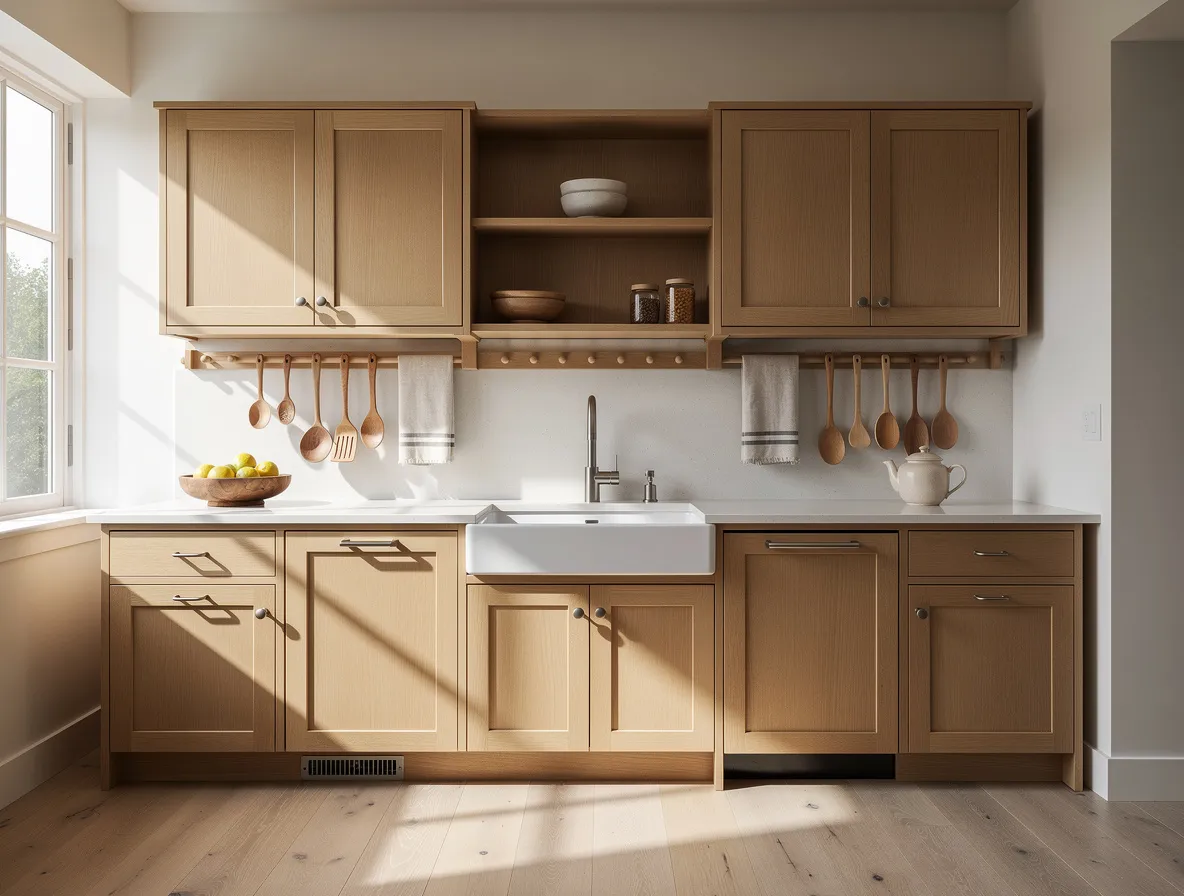
Flat-panel doors, peg rails, and simple hardware embody the clean, functional beauty of Shaker craftsmanship.
Craftsman
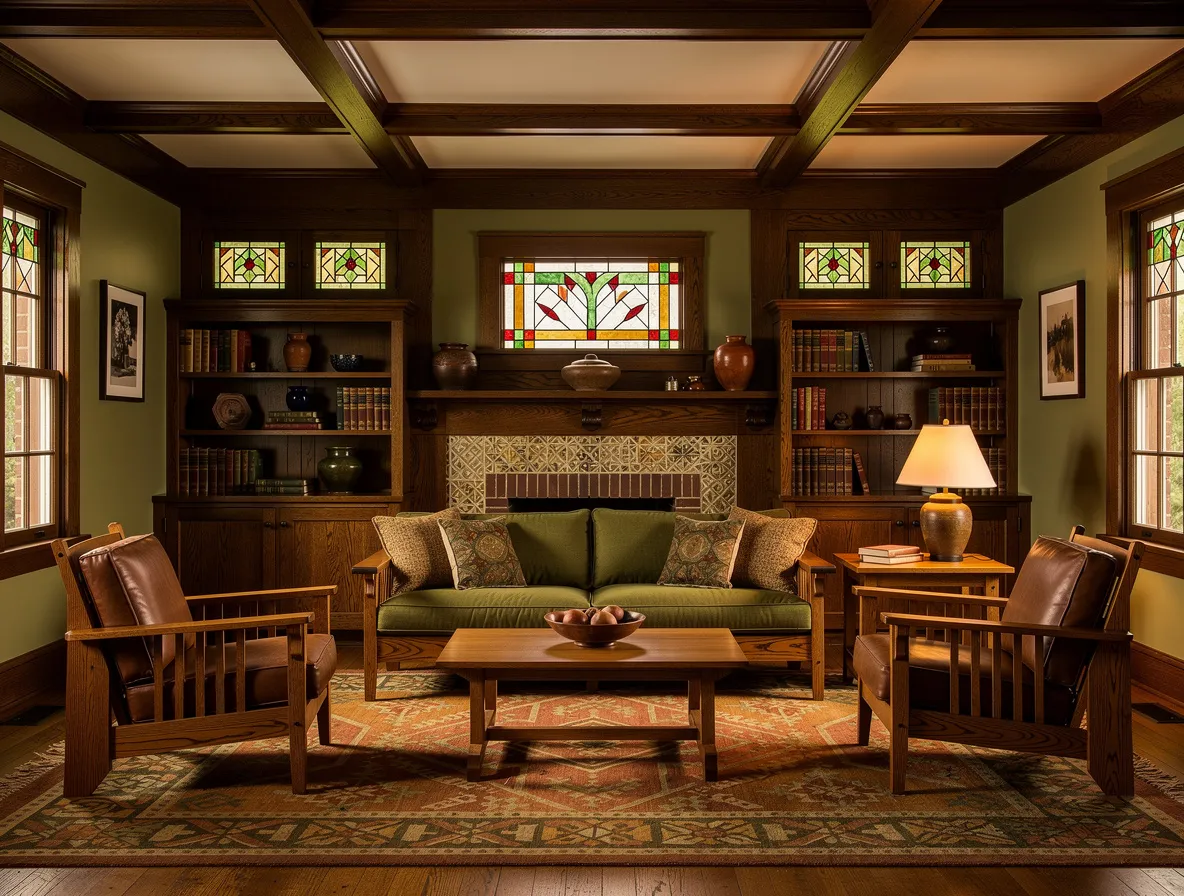
Built-in bookcases, rich wood trim, and stained glass accents celebrate the arts-and-crafts movement's legacy.
Arts & Crafts
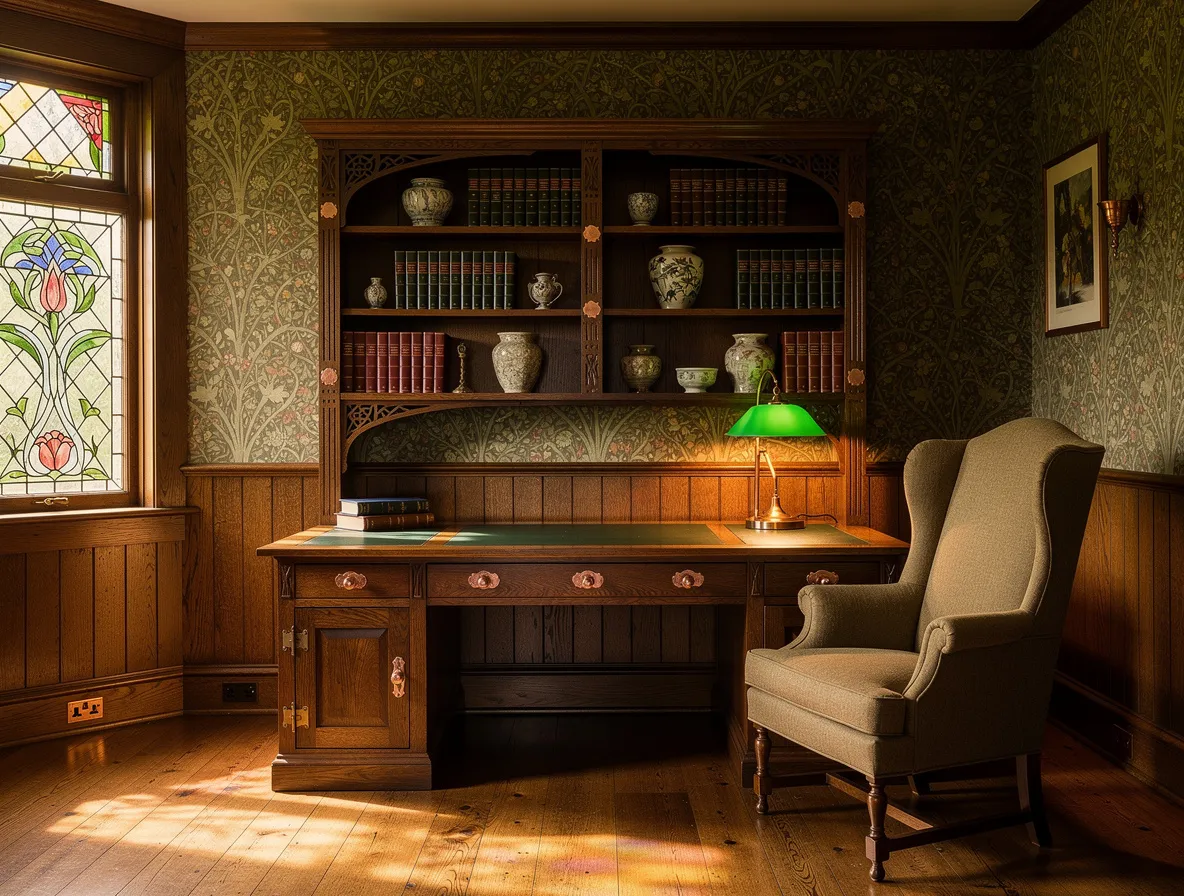
Handcrafted woodwork, William Morris wallpaper, and copper hardware honor the beauty of artisanal craftsmanship.
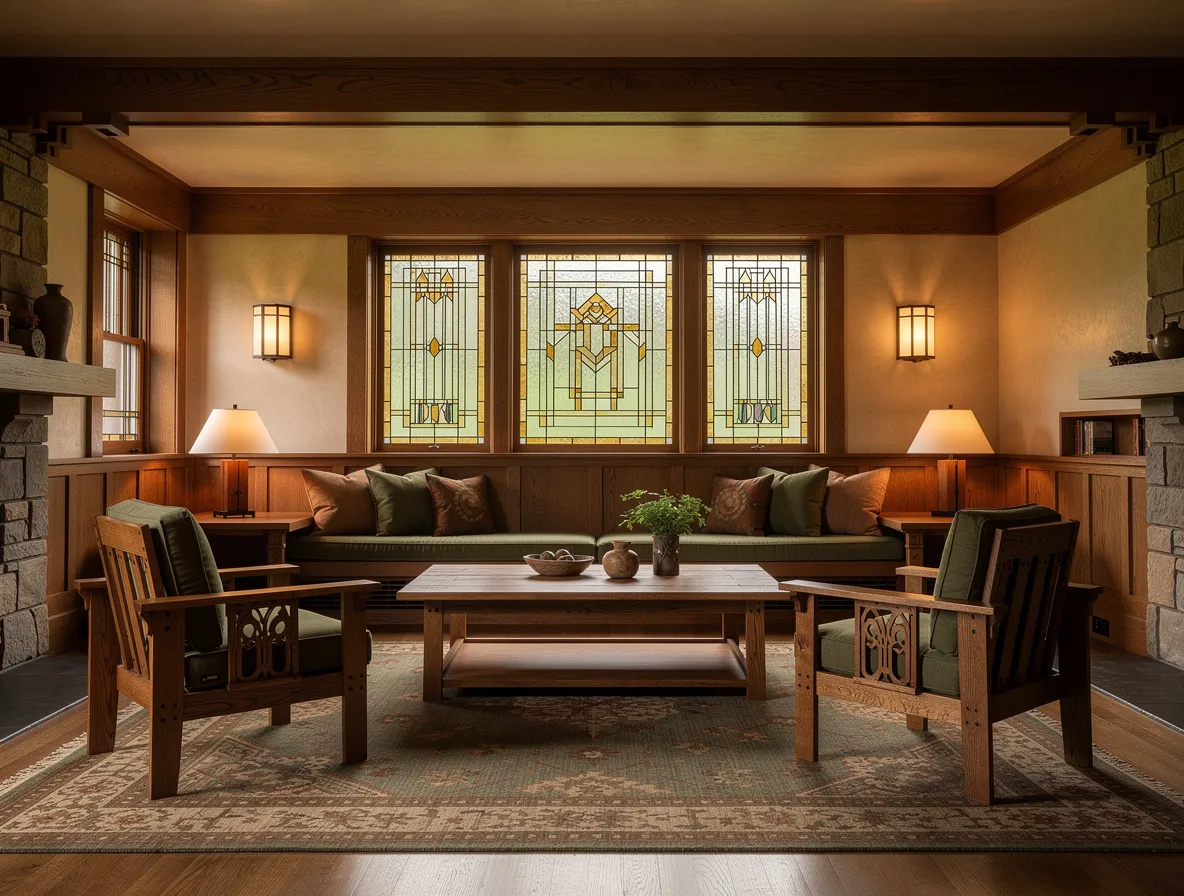
Prairie
Horizontal lines, art glass windows, and built-in seating inspired by Frank Lloyd Wright's iconic American vision.
Common Questions
Mission Design: FAQ
What defines Mission interior design?
Straight-line solid oak furniture with visible joinery, adobe or white plaster walls, terracotta tile or wooden plank floors, simple wrought iron hardware, and a warm color palette inspired by the California landscape.
What is the difference between Mission and Craftsman design?
Mission specifically references California Spanish colonial architecture and its furniture. Craftsman is broader - it draws from the American Arts and Crafts movement of which Mission is one regional expression. The furniture styles overlap significantly.
What colors are used in Mission design?
Warm white and adobe tan for walls, terracotta and warm brick for floors, warm oak and walnut for furniture, and wrought iron (dark brown to black) for hardware. The palette is warm, earthy, and sun-bleached.
Can Mission design work in a non-California home?
Yes - the design vocabulary (simple oak furniture, tile floors, white plaster walls, arched details) translates to any climate. The Mission aesthetic reads as warm, honest, and slightly Spanish wherever it is applied.
Ready to Transform Your Space?
Upload a photo and see it in mission style - or any of our 80+ other styles - in seconds.