Georgian Design
Perfectly proportioned, symmetrically elegant, and rooted in classical scholarship - Georgian design is architecture as philosophy expressed in every room.
About the Style
What Is Georgian Design?
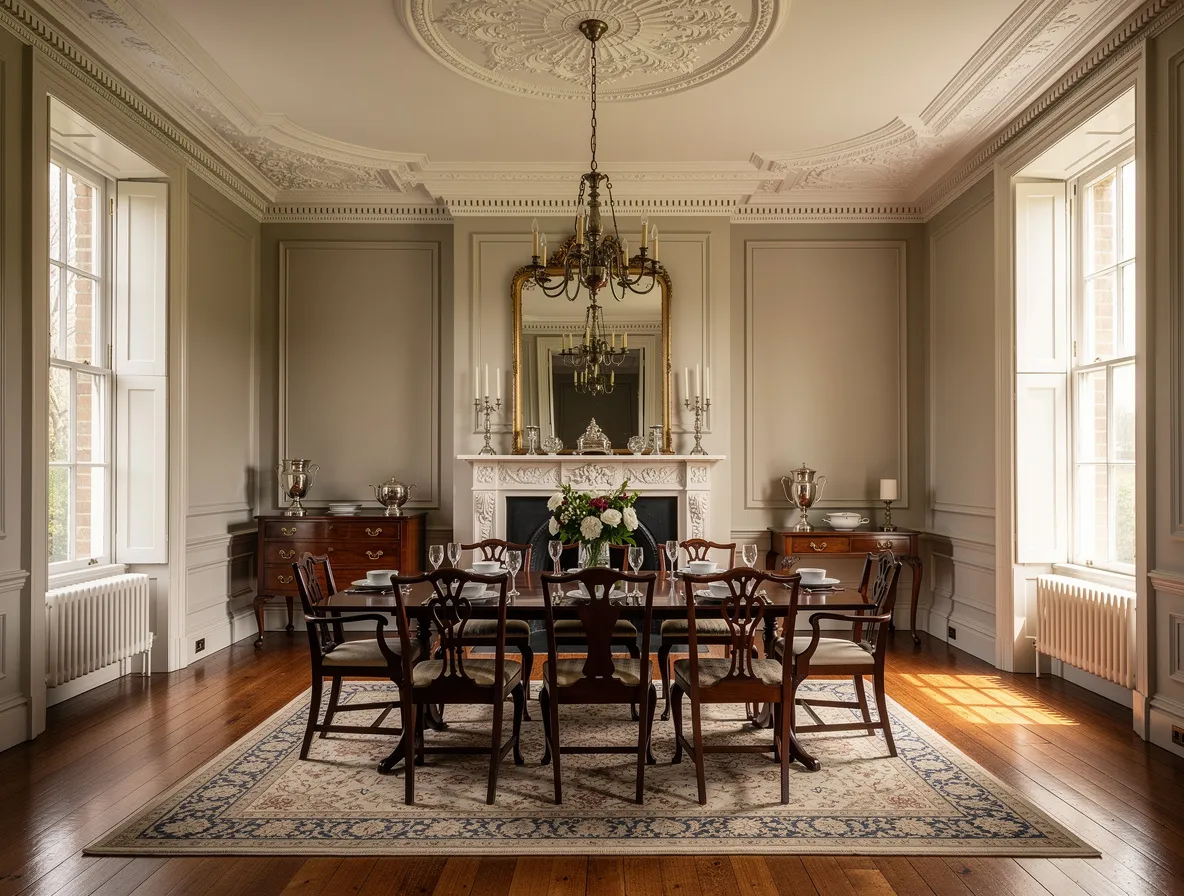
Georgian design (1714-1830) represents Britain's most refined and disciplined architectural period. Inspired by Italian Renaissance master Andrea Palladio and ancient Rome, it prized symmetry, classical proportion, and restrained ornament. Interior features include sash windows, Adam-style plasterwork, mahogany furniture, Wedgwood-inspired color schemes, and a formal organizing logic that makes even modest rooms feel considered.
Why People Love It
-
The most disciplined and scholarly of all period design traditions
-
Perfect proportion creates rooms that feel naturally comfortable and right
-
Restraint means the style scales from grand mansion to modest terrace
-
Original Georgian homes are among the most sought-after properties globally
Key Characteristics
-
Perfect symmetry in all room arrangements
-
Adam-style plasterwork cornices and ceiling roses
-
Sash windows with deep reveals
-
Mahogany Chippendale or Hepplewhite furniture
-
Wedgwood-influenced palette - sage, stone, Pompeian red
-
Carved chimneypiece as primary room focal point
Color Palette
Materials
Ideal For
Room-by-Room
Georgian Design in Every Room
How georgian design translates across every space in your home
Living Room
Sage green walls with white Adam plasterwork cornice, a carved marble fireplace, mahogany Chippendale furniture, silk damask curtains, and a chandelier.
Kitchen
Painted dresser in Georgian green, a stone-flagged or quarry tile floor, a range in the hearth opening, and simple shelving with period pottery.
Bedroom
Mahogany tester bed with white linen hangings, stone-colored walls, a pediment-topped wardrobe, and a Hepplewhite dressing table with oval mirror.
Bathroom
Period-style freestanding bath, marble floor, paneled walls painted in stone or Wedgwood blue, and polished nickel fittings throughout.
Exterior
Symmetrical brick or stucco facade, sash windows with glazing bars, a classical doorcase with columns or pilasters, and a painted iron railing at the basement.
Visualize It First
See Georgian Design in Your Space
Upload any photo and our AI transforms it into georgian style in seconds
Upload a photo
Any room, any angle. Interior or exterior - phone photo is fine.
Select "Georgian"
Choose this style from our library or describe it to the AI in plain language.
Get your design
Photorealistic result in seconds. Download in HD or 4K resolution.
Expert Advice
How to Achieve Georgian Design
Practical tips from designers who work with georgian style every day.
Restore or install period-correct cornice profiles - Georgian cornices use identifiable ovolo, dentil, and egg-and-dart details, all historically documented.
Paint shutters and woodwork the same color as walls rather than white - this is historically accurate Georgian practice and creates greater room depth.
Arrange furniture in symmetrical pairs: two armchairs flanking a fireplace, matching console tables either side of a door, twin beds with matching nightstands.
Choose a Wedgwood-influenced palette - the pale blue-green, stone, and terracotta of Josiah Wedgwood directly inspired Georgian decorating schemes.
Hang a convex mirror, gilt-framed portrait, or architectural drawing above the chimneypiece - these were period-correct overmantel choices in fine Georgian rooms.
Design History
The Mathematical Beauty Behind Georgian Design
Georgian design was not decorative instinct - it was a system, built on precise mathematical proportions derived from classical antiquity and codified into rules that any educated craftsman could follow.
Palladio's Four Books of Architecture
Andrea Palladio published his treatise on architecture in 1570, codifying the proportional rules of classical Roman buildings into a system accessible to the 16th-century architect. Georgian architecture is essentially Palladianism at a domestic scale - his rules for column heights, window proportions, and room ratios became the grammar of Georgian design.
The Four Georges and Their Different Tastes
Each Georgian monarch shaped a distinct sub-style. Early Georgian (1714-1760) was formal and restrained. Mid-Georgian brought the Rococo lightness of Robert Adam. Late Georgian became the Greek Revival under Regency influence. This is why "Georgian" actually encompasses a wide range of expressions from severely classical to elegantly ornate.
Robert Adam Creates the English Interior
Robert Adam returned from studying Rome's ruins and invented a decorative language that transformed English interiors - delicate plasterwork medallions, painted panels, mahogany doors with colored inlay. His interiors at Syon House and Osterly Park are the pinnacle of Georgian achievement. Every element, including the carpet, was designed as part of a unified whole.
Bath - The Perfect Georgian City
John Wood the Elder and his son John Wood the Younger designed Bath as a showcase of Georgian urban planning - The Circus (1754) and Royal Crescent (1775) demonstrated that domestic architecture could achieve the grandeur of Roman public buildings. Bath became the model for Georgian town planning worldwide.
Style Pairings
Styles That Complement Georgian
Mix georgian with these styles for a layered, personal look.
Traditional
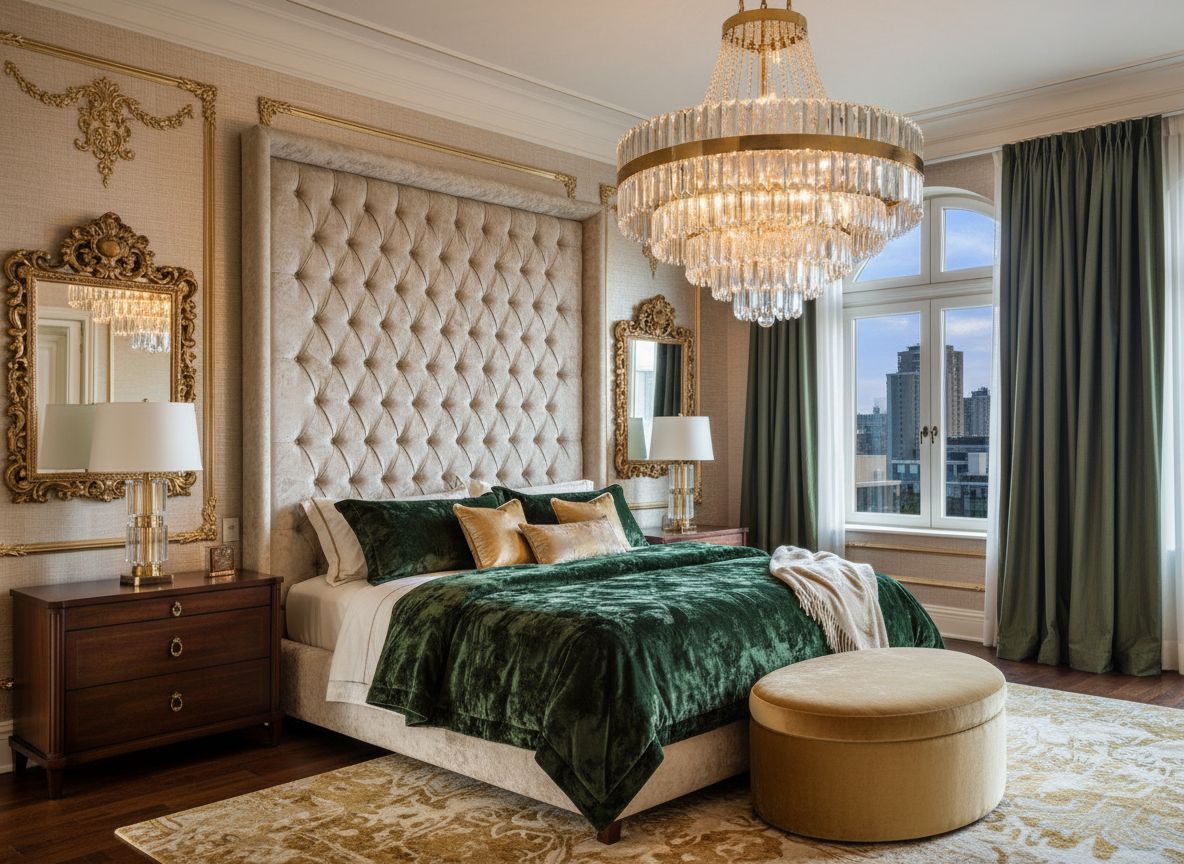
Timeless elegance with ornate details and rich finishes. Crown molding, raised panels, and classic palettes for sophisticated spaces.
Classic
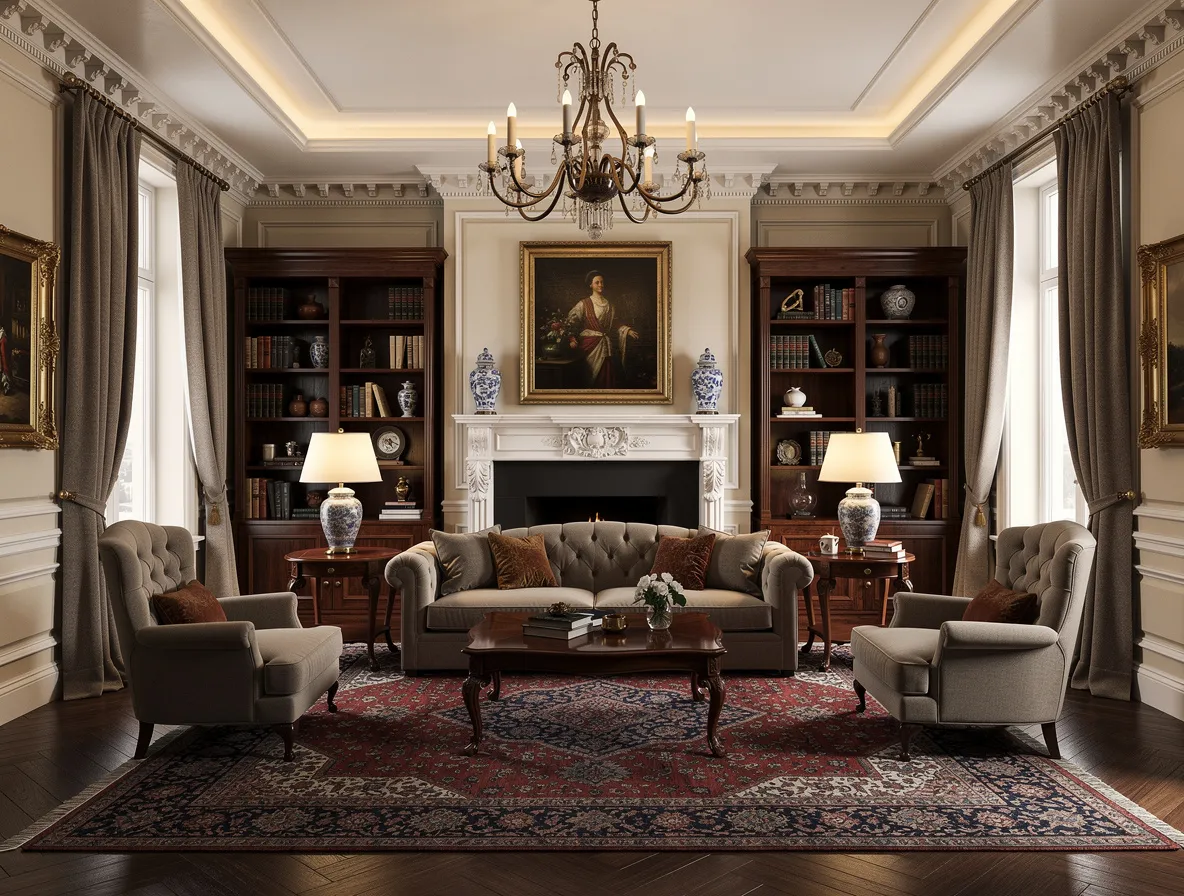
Elegant furnishings, balanced symmetry, and crown molding with rich wood tones create a look that never fades.
Colonial
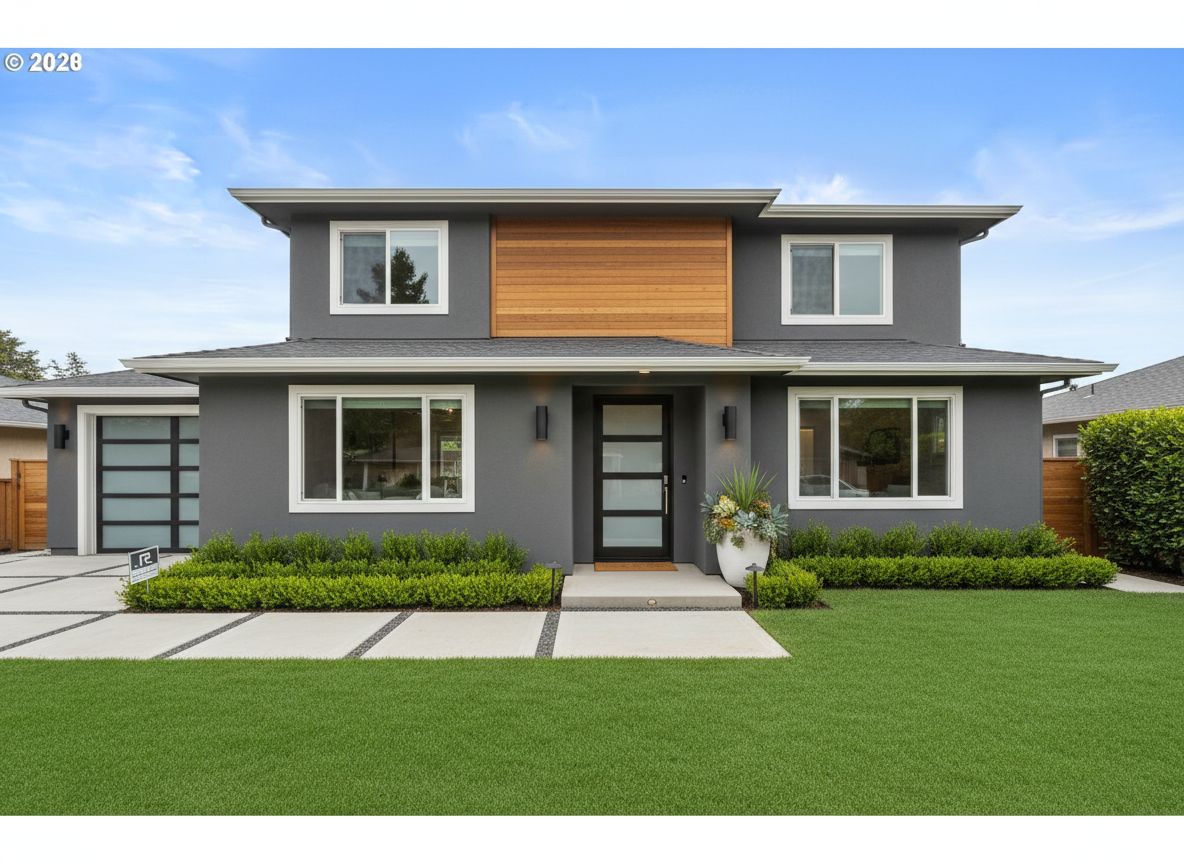
Classic American architecture with symmetrical design, formal layouts, and stately details inspired by early American homes.
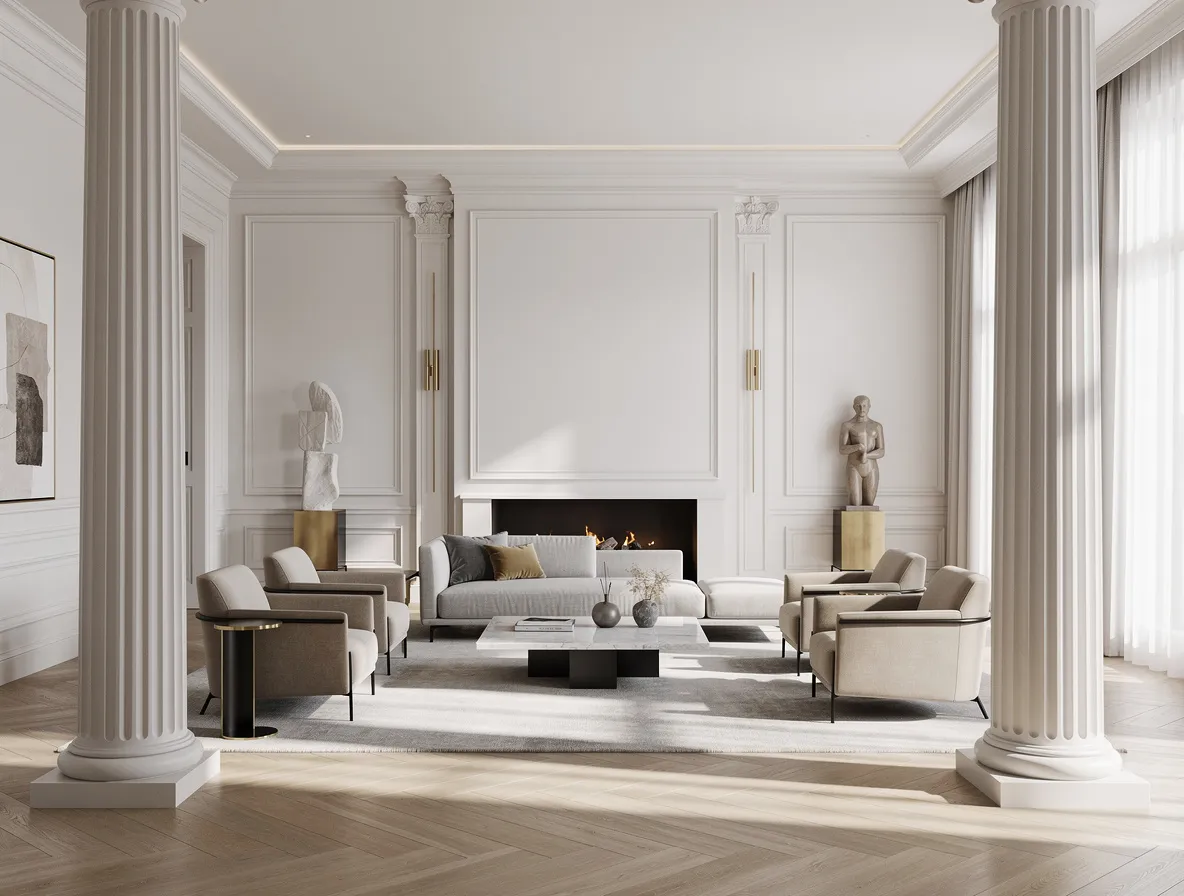
Neo-Classic
Updated classical proportions with modern materials — symmetrical layouts and clean columns with elegant restraint.
Common Questions
Georgian Design: FAQ
What defines Georgian interior design?
Symmetry, proportion, and classical architectural details - cornices, dado rails, paneled walls, and sash windows. The palette is restrained: stone, cream, soft green, and blue-gray with white woodwork.
What is the Georgian color palette?
Early Georgian used warm stone and cream tones. Robert Adam introduced pale greens, blues, and lilac with white plasterwork. Late Georgian added deeper stone greens and Pompeian reds inspired by newly excavated Roman sites.
Can you achieve a Georgian interior in a modern home?
Yes - install dado rails and cornices, use symmetrical furniture arrangements, and choose a historically accurate paint color. The Georgian interior is essentially about proportion and restraint, which works in any space.
What furniture is associated with Georgian design?
Chippendale, Hepplewhite, and Sheraton furniture styles - all characterised by elegant proportions, tapered legs, and restrained carving. Wing chairs, side tables in pairs, and long case clocks are Georgian signatures.
Ready to Transform Your Space?
Upload a photo and see it in georgian style - or any of our 80+ other styles - in seconds.