Opulent Design
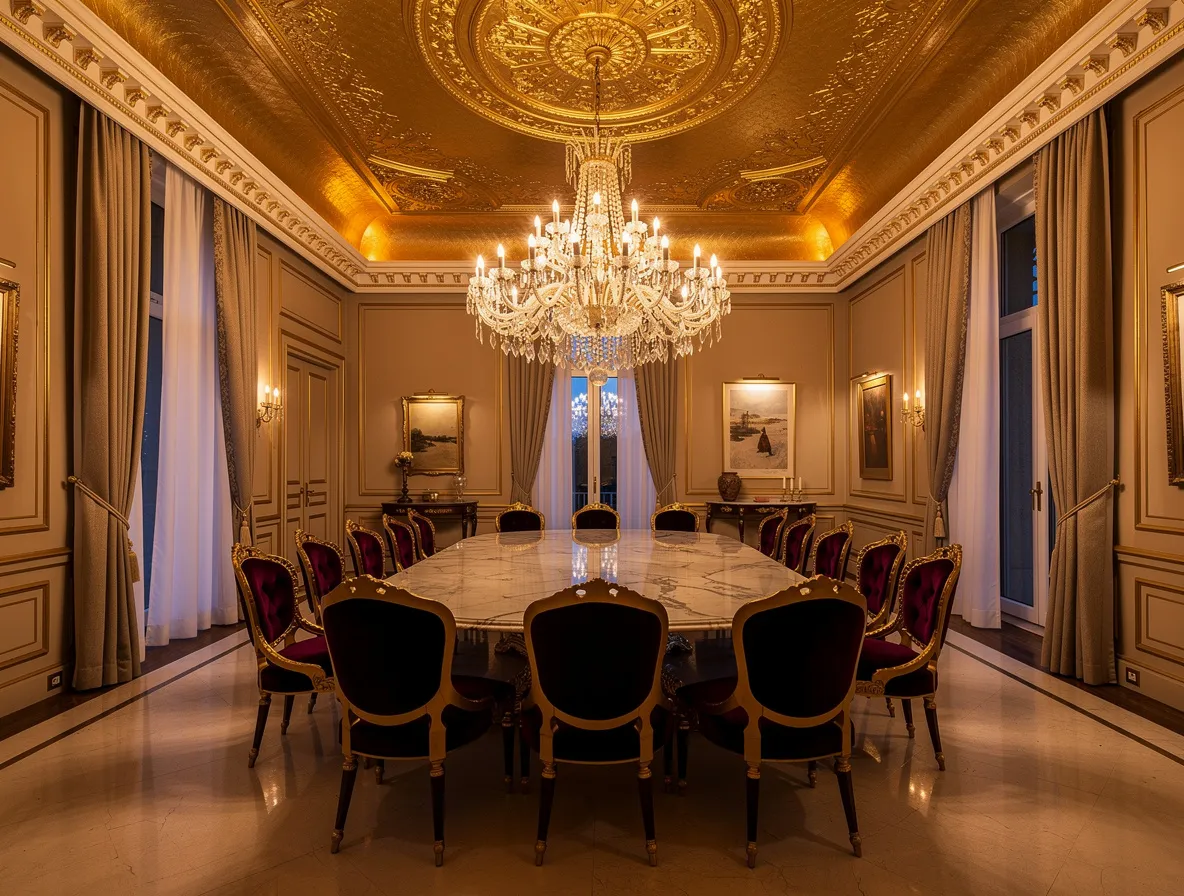
Overwhelming abundance of the finest materials - opulent design celebrates maximum richness, layered luxury, and the sheer pleasure of aesthetic excess without apology.
About the Style
What Is Opulent Design?
Opulent design is the most abundant expression of interior luxury - not refined restraint but generous, unapologetic richness. Layers of silk and velvet, walls of marble and gilded molding, crystal of every kind, baroque furniture with elaborate carving, and every surface treated as an opportunity for beauty define opulence. It references European palace design and the great tradition of decorative arts patronage.
Why People Love It
-
Maximum visual richness and sensory pleasure in every room
-
Gilded molding and crystal chandelier light create transformative effects
-
Each material chosen is the finest possible - quality felt in every touch
-
The tradition of opulent design connects the home to centuries of great patronage
Key Characteristics
-
Multiple layers of luxury material in every room
-
Gilded molding on walls and ceilings
-
Crystal and glass in multiple forms
-
Silk and velvet layered throughout
-
Ornate, heavily carved furniture
-
The finest natural stone used abundantly
Color Palette
Materials
Ideal For
Room-by-Room
Opulent Design in Every Room
How opulent design translates across every space in your home
Living Room
Gilded moldings, silk damask walls, a crystal chandelier, velvet sofas in crimson, malachite-topped table, and marble floor.
Kitchen
In an opulent home, the kitchen is secondary to a banquet room - gilded chairs, a crystal centrepiece, and silk on every wall.
Bedroom
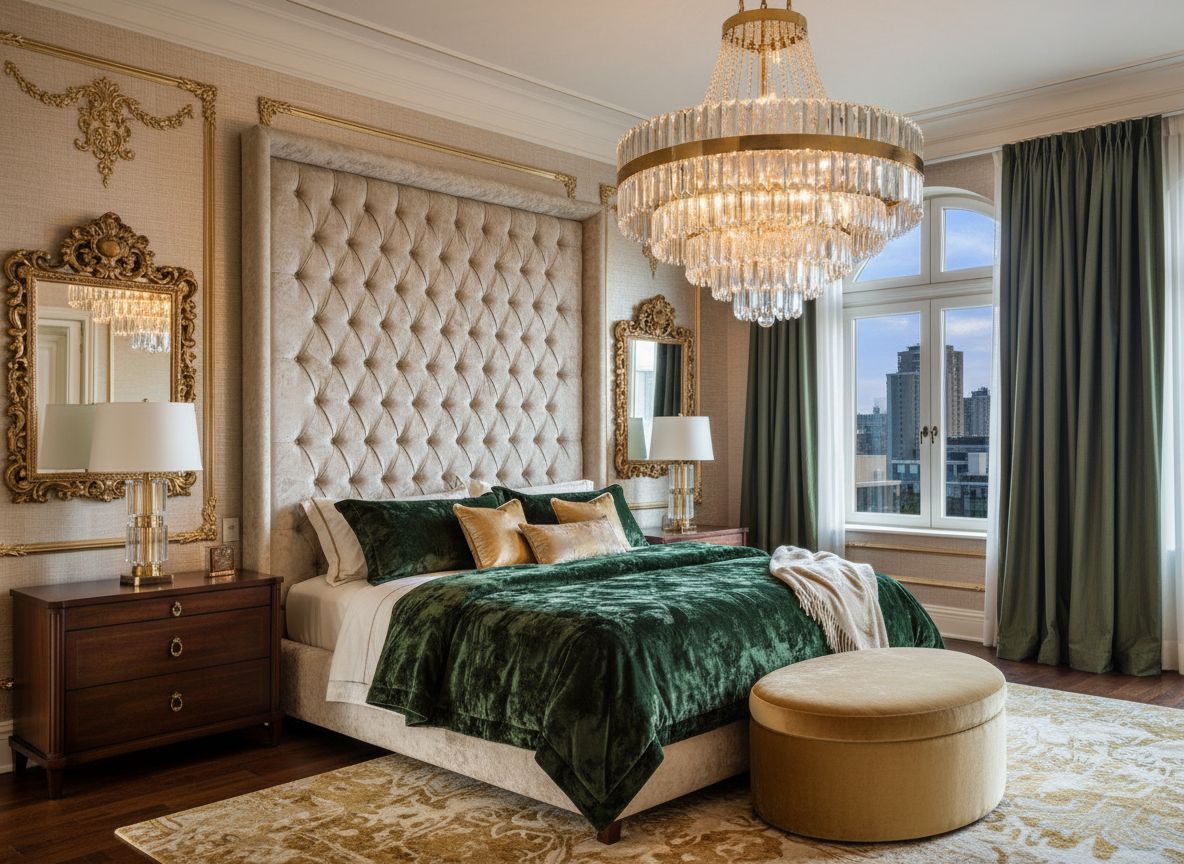
A silk-canopied state bed, walls in silk fabric, gilded mirror, crystal bedside lamps, and a marble floor with a silk rug.
Bathroom
Onyx or malachite feature walls, gilded bronze fixtures, a carved stone bath, crystal accessories, and heated marble floor.
Exterior
Classical stone facade with gilded entrance gates, symmetrical sculptural urns, formal parterre garden, and illuminated water features.
Visualize It First
See Opulent Design in Your Space
Upload any photo and our AI transforms it into opulent style in seconds
Upload a photo
Any room, any angle. Interior or exterior - phone photo is fine.
Select "Opulent"
Choose this style from our library or describe it to the AI in plain language.
Get your design
Photorealistic result in seconds. Download in HD or 4K resolution.
Expert Advice
How to Achieve Opulent Design
Practical tips from designers who work with opulent style every day.
Commission an interior architect to plan the layering - opulence without discipline becomes chaos. Structure the richness within a coherent architectural framework.
Use malachite, onyx, or lapis lazuli as a single accent surface - a malachite table or onyx backlit bar panel delivers opulence at its most concentrated.
Apply gold leaf (not gold paint) to architectural moldings - real gold leaf has a depth and variation that metallic paint cannot approximate.
Layer silk and velvet textiles: silk cushions on velvet upholstery, silk curtains over velvet pelmets. The layering of luxury fabrics is the essence of opulence.
Commission custom designed crystal lighting - a chandelier designed specifically for the room delivers an effect no standard product achieves.
Design History
How Gilded Age America Built the Most Expensive Private Homes in History
Between 1880 and 1915, American industrial fortunes funded private homes of such extraordinary scale and cost that they have never been equalled in relative terms.
The Breakers - Vanderbilt's 70-Room Cottage
Cornelius Vanderbilt II's Newport summer home, designed by Richard Morris Hunt, cost $7 million in 1895 - equivalent to roughly $250 million today. Its Great Hall was modeled on a Genoese palace courtyard. The Breakers established the Gilded Age benchmark: if you can afford to holiday in a 70-room house, you have made it.
Ochre Court and the Newport Arms Race
Newport, Rhode Island hosted an arms race of opulent summer homes among the Vanderbilt, Belmont, and Astor families. Ochre Court (1892), Marble House (1892), Belcourt Castle (1894) - each successive 'cottage' attempted to outspend and outamazing the previous one. Stanford White and Richard Morris Hunt were the architects of record for this extraordinary moment in domestic opulence.
J.P. Morgan's Library
J.P. Morgan's private library in Manhattan (1902-1906), designed by Charles McKim, contained three rooms of extraordinary opulence - silk wall coverings in three different Renaissance-inspired designs, a ceiling painted in trompe l'oeil fresco, and bookcases of antique carved oak. The private library as an expression of personal power and cultural authority became the Gilded Age standard.
The End of the Gilded Age
The federal income tax (1913) and World War I (1914) ended the Gilded Age. The generation that inherited these houses found them impossible to maintain without the servant armies (typically 30-80 staff) that made them function. Many were demolished; the survivors became museums. The Gilded Age interior remains the most extreme expression of domestic opulence in American history.
Style Pairings
Styles That Complement Opulent
Mix opulent with these styles for a layered, personal look.
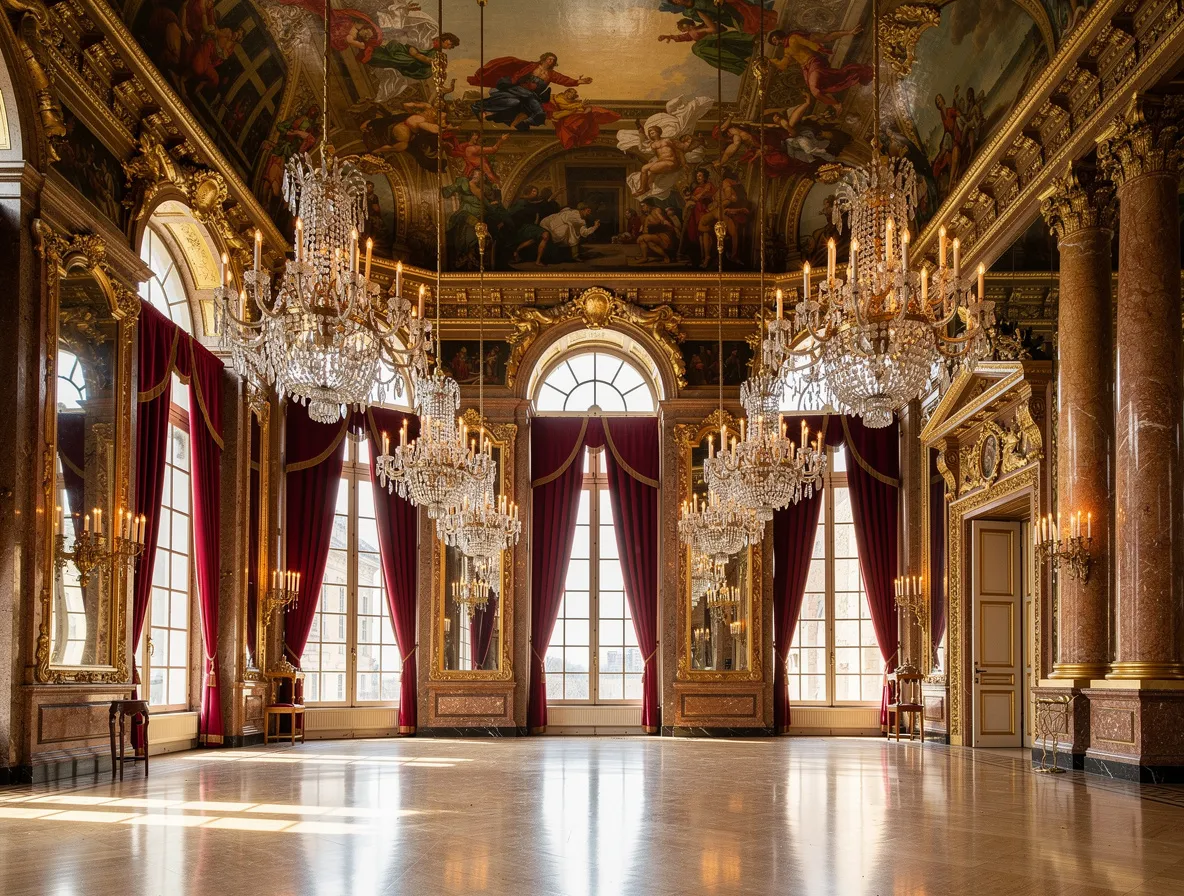
Baroque
Dramatic opulence with ornate gold gilding, dramatic ceiling details, heavy velvet drapes, and crystal chandeliers.
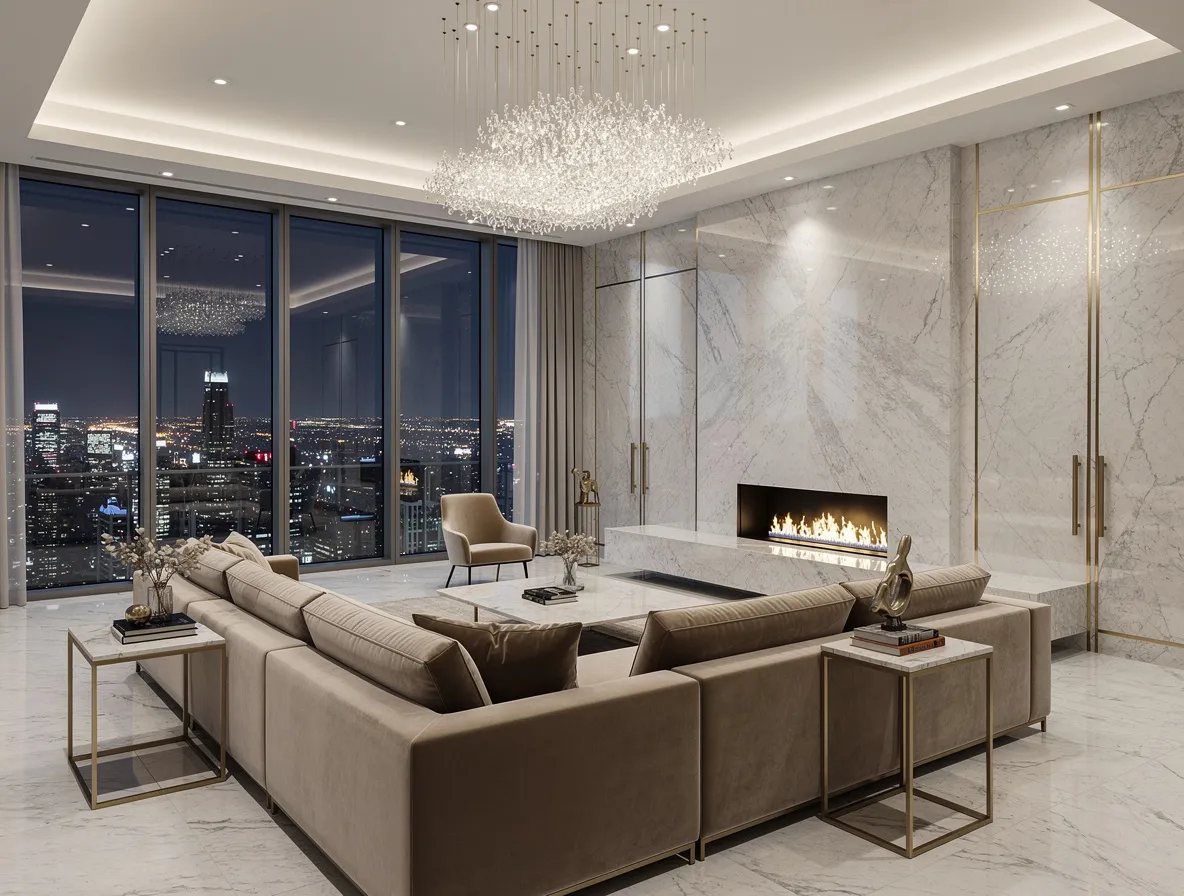
Luxury
Floor-to-ceiling marble, designer furniture, gold accents, and crystal chandeliers for spaces that exude opulence.
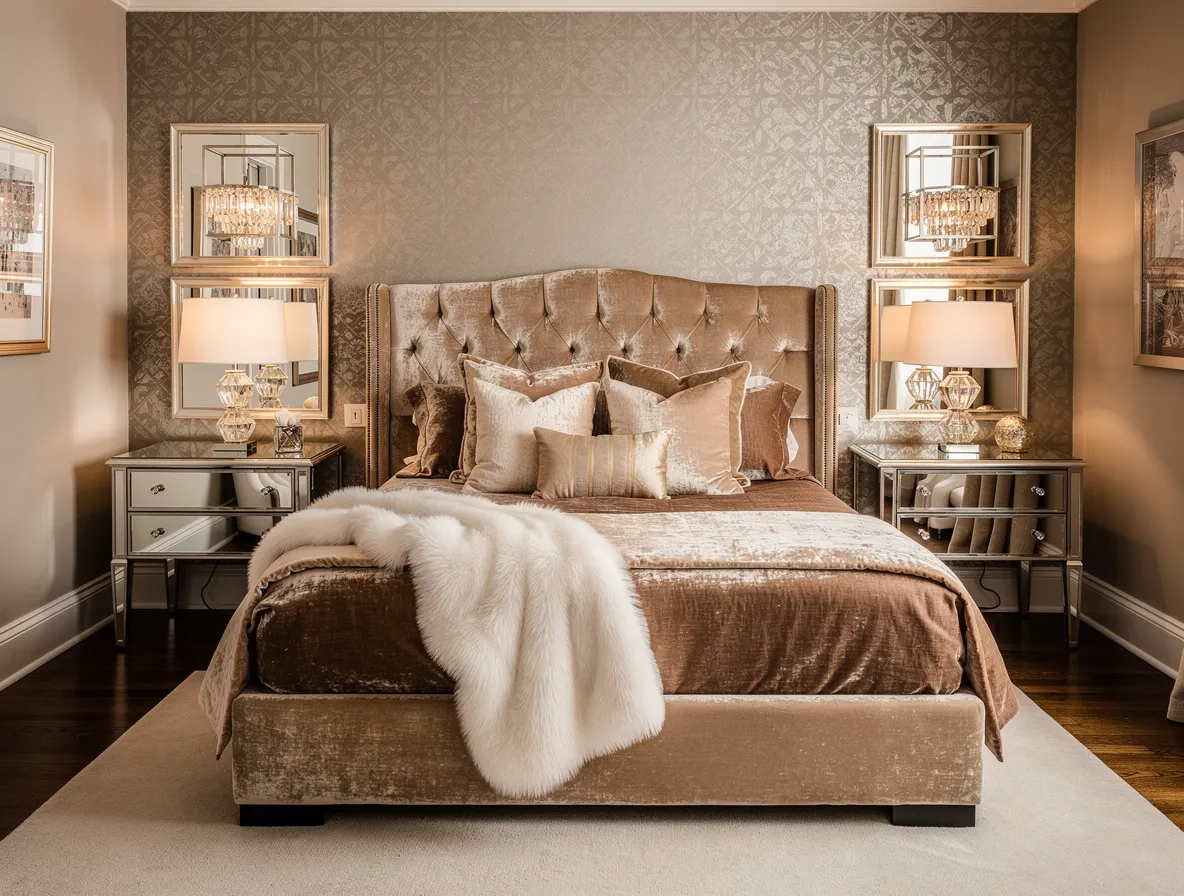
Glamorous
Mirrored furniture, faux fur throws, crystal lamps, and metallic wallpaper for a dazzling Hollywood-inspired bedroom.
Art Deco
Glamorous geometric patterns, rich colors, and luxurious materials inspired by the roaring 1920s aesthetic.
Common Questions
Opulent Design: FAQ
What defines opulent interior design?
Maximum visual richness - gilded surfaces, rich fabrics (silk, velvet, tapestry), ornamental plasterwork, dark polished wood, heavy draping, and an explicit intention to demonstrate extraordinary wealth and cultural aspiration.
What is the difference between opulent and luxury design?
Luxury is restrained and requires knowledge to appreciate. Opulence announces itself loudly - it wants to be immediately, obviously impressive. Luxury uses quality; opulence uses quantity and spectacle.
What materials are used in opulent interiors?
Gilt plasterwork and ormolu, silk and velvet upholstery, inlaid parquetry floors, marble in multiple colors, crystal chandeliers, ornate carved wood, and precious stone or semi-precious stone in decorative inlay.
Can opulent design elements be incorporated modestly?
Yes - a single opulent piece against a simpler background has great impact. A gilded mirror, a crystal chandelier in a small dining room, or a silk damask cushion can bring opulent drama without full-room commitment.
Ready to Transform Your Space?
Upload a photo and see it in opulent style - or any of our 80+ other styles - in seconds.